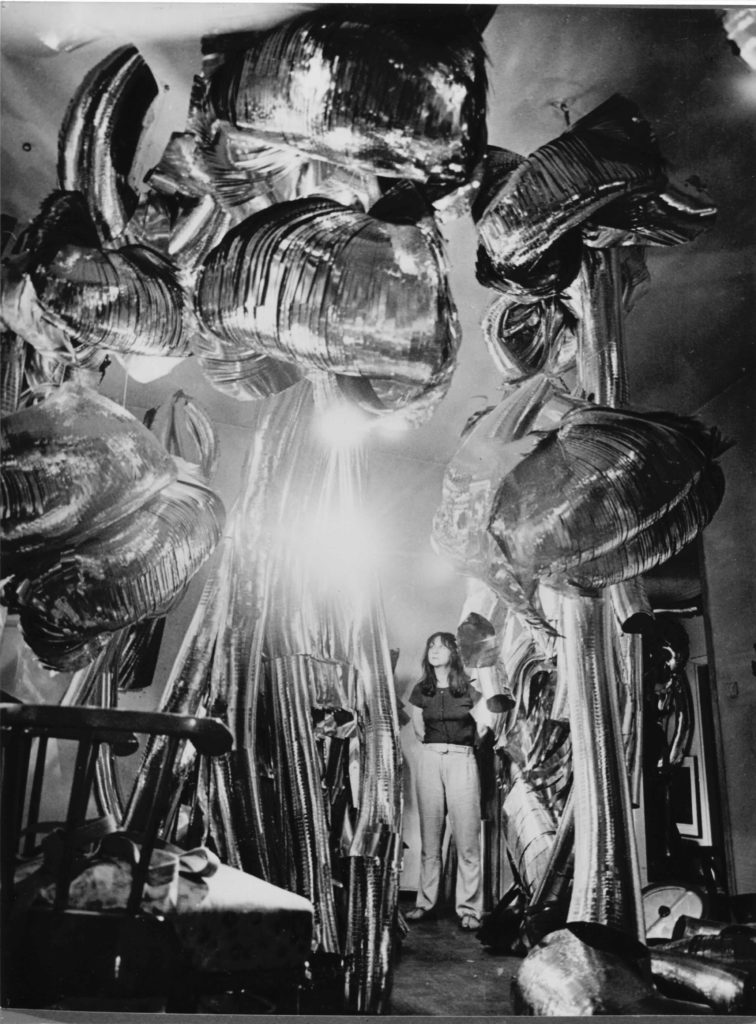
1966. Photograph by Renato Rinaldi.
Courtesy of Archivio Merz. © SIAE
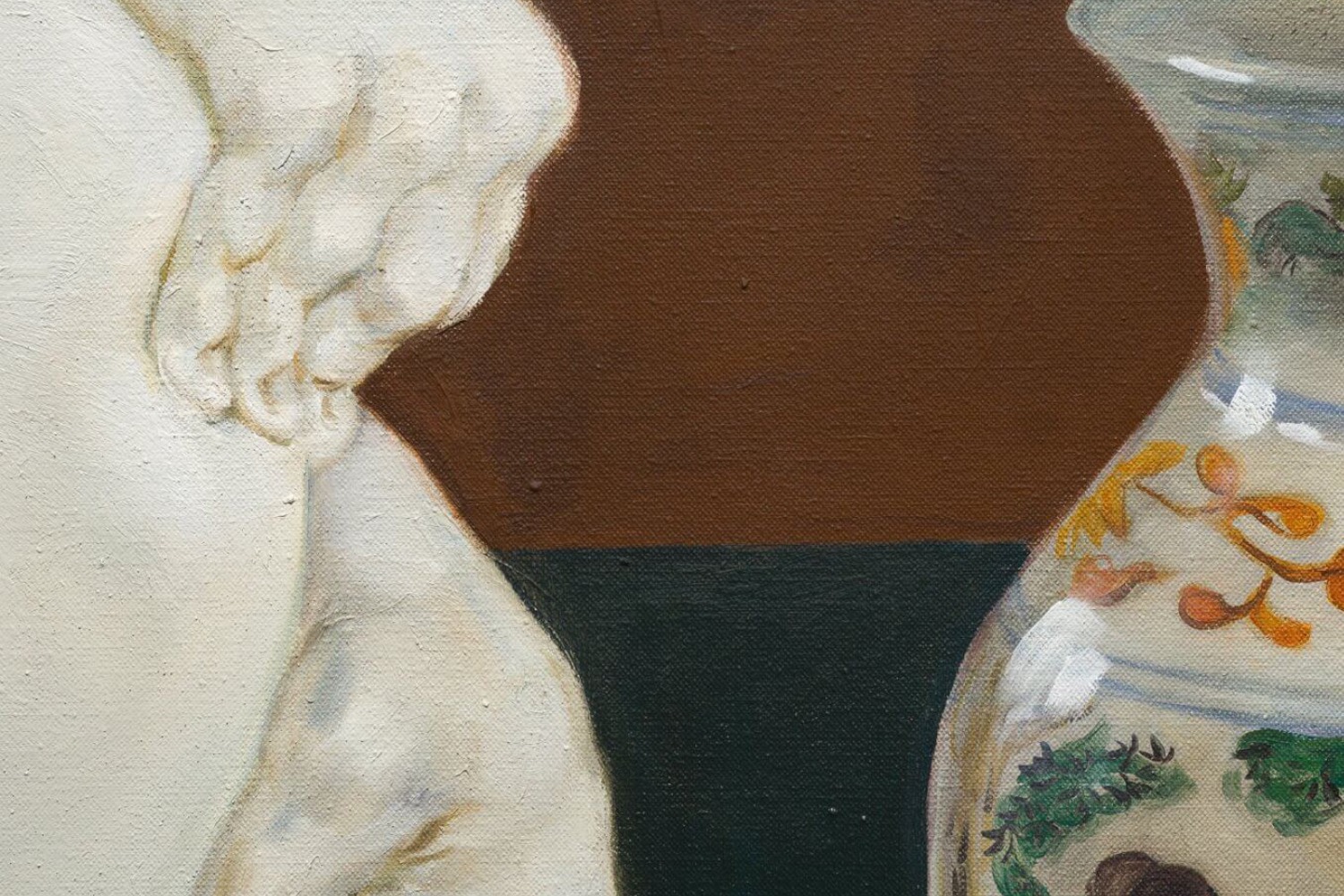
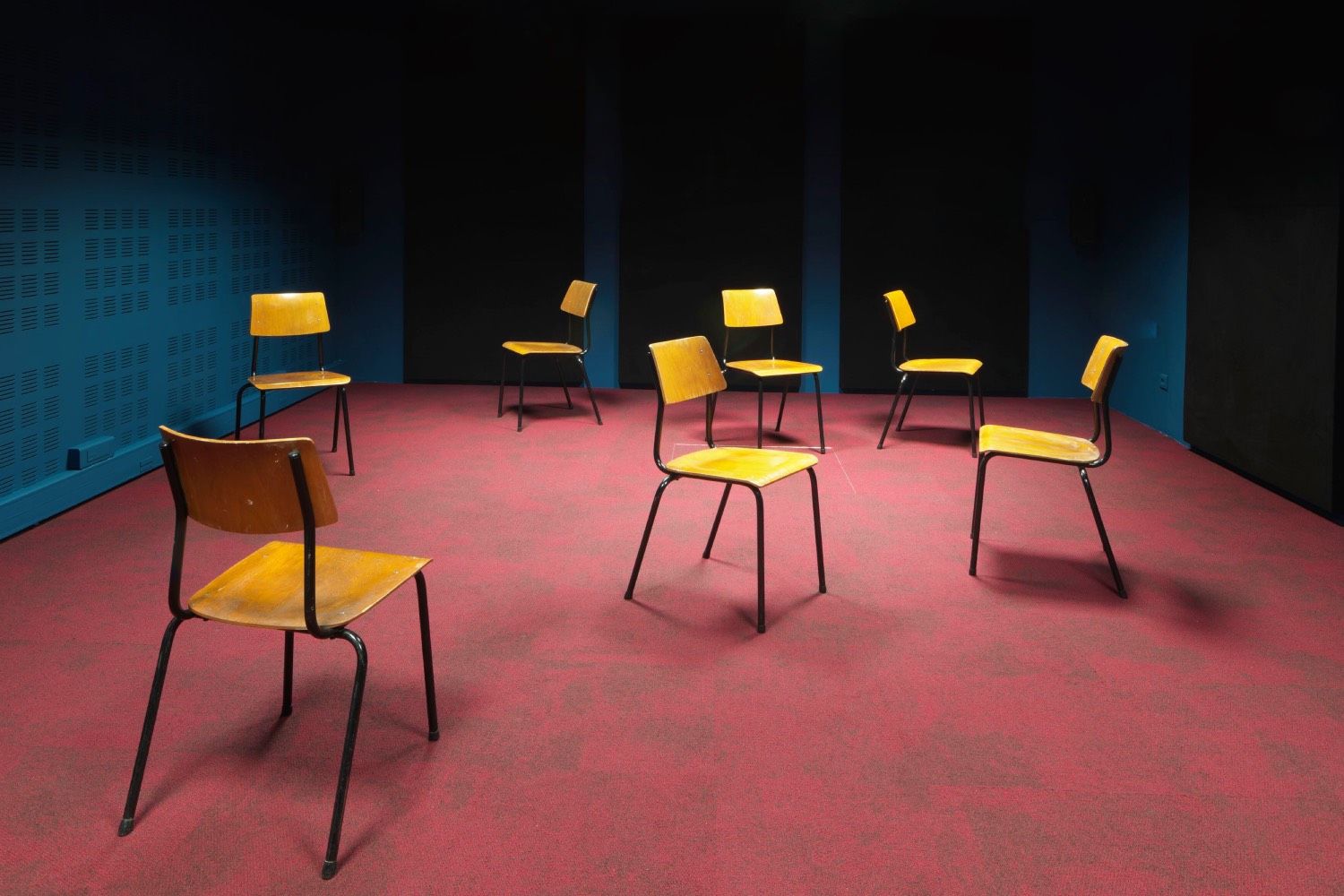
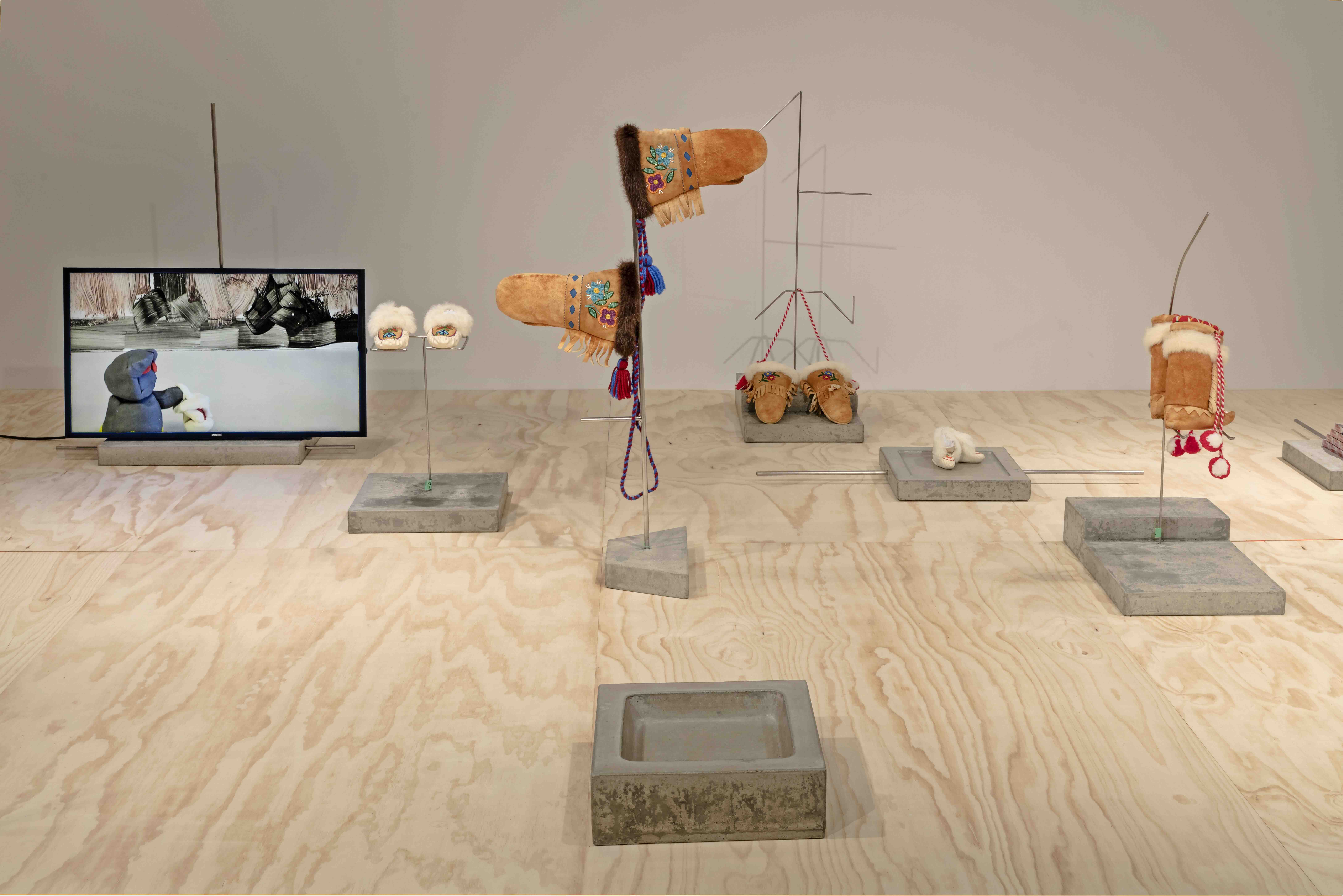
“Magical Realism: Imagining Natural Dis/order” — which reconsiders our relationship to the planet at a time of climate emergency — opened at WIELS, Brussels, in late May. Some five kilometers away, the European Commission announced a softening of its 2040 climate targets, infusing them with “pragmatism.”[1] Pragmatism, or realism, is often invoked to maintain status quo, signifying what is and isn’t conceivable within late capitalism (the only conceivable reality). Overlapping with the diplomatic calendar of the European commission, “Magical Realism” is the third of WIELS’s exhibitions addressing “the international agenda” through contemporary art-making. Rubbing shoulders with target-setting-cum-carbon-offsetting “realists,” it seeks to reconcile an artificial opposition: Magic vs Reality. Twenty-seven artists and fifteen new commissions stretch across three floors and the ARGOS centre for audiovisual arts, summoning a diversity of worlds beyond “rational” thought.
[1] See Zoe Wise, “Brussels to propose ‘pragmatic’ 90 percent climate target for 2040,” Politico, May 27, 2025, https://www.politico.eu/article/european-commission-emissions-target-teresa-ribera-climate-change/
The exhibition opens with Suzanne Jackson’s environmental abstractions (2019–23) — floating planes of acrylic gel holding scraps, rags, lace, and paint as if suspended in a spiderweb — which manage to avoid tropes associated with ecologically inclined art. Jackson has never been one for literalism. In 1970, the Black Panthers criticized an exhibition of hers for lacking “didacticism and purpose.” Jackson responded, saying that her viewer’s “fantasies / […] might relate / to their own / reality, more / than to yours.”[2] Reminding us that art, like life, holds multiple realities. In the exhibition catalogue, Federico Campagna contends that “worlds cannot be measured by how much they coincide with reality, because reality […] is not bound by the limits of our cognitive apparatus […] each world is fundamentally a fiction.”[3]
[2] Jackson quoted in Hilton Als, “Suzanne Jackson’s Natural World,” The New Yorker, September 30, 2024, https://www.newyorker.com/magazine/2024/10/07/suzanne-jackson-art-review.
[3] Federico Campagna, “On Shifting Cosmogonies,” Magical Realism (Wiels, 2025), 63.
Opposite Jackson, Otobong Nkanga’s Oikos (2025): post-apocalyptic scorched earth, charred tree trunk and condensation-filled glass terrariums fulfill a more familiar ecological vernacular of decay and resurgence. Throughout the show things are on the verge of ending and beginning. Aquario Acetobacter (2023), Anne Marie Mae’s fermentation tank brews “sensorial skins” from bacteria. Referencing the pesticides used on bananas in her native Guadeloupe, Minia Biabiany’s abstractions of blackened roots are shown alongside delicate drawings, on banana leaf, of indigenous medicinal plants. Poison is never far from remedy. Maarten Vanden Eynde and Musasa’s Material Matters (2018–19), pictograms on linen canvas, depict periodic elements and their applications; each is a pharmakon, capable of facilitating health treatments and unimaginable violence.
Artificial intelligence plays a role in endings and beginnings. Adrián Villar Rojas’s The End of Imagination II (2022) — a monstrous mass of suspended machinery materialized by human fabricators — was composed by prompting a ‘‘time engine” to create “an impossible object.” Outsourcing composition to AI is marketed as collaborating with your “co-agent.” It’s also hastening the end of our imaginative capacities. Villar Rojas’s sculpture shares its title with Arundhati Roy’s text on how the nuclear bomb (to which AI has been compared) signified “the end of imagination.” The bomb also prompted ontological glitches; one scientist, witnessing India’s 1998 detonations, said, “I can now believe stories of Lord Krishna lifting a hill,” confusing symbolism and empiricism.[4] Due to its inscrutability, AI is said to work like magic.
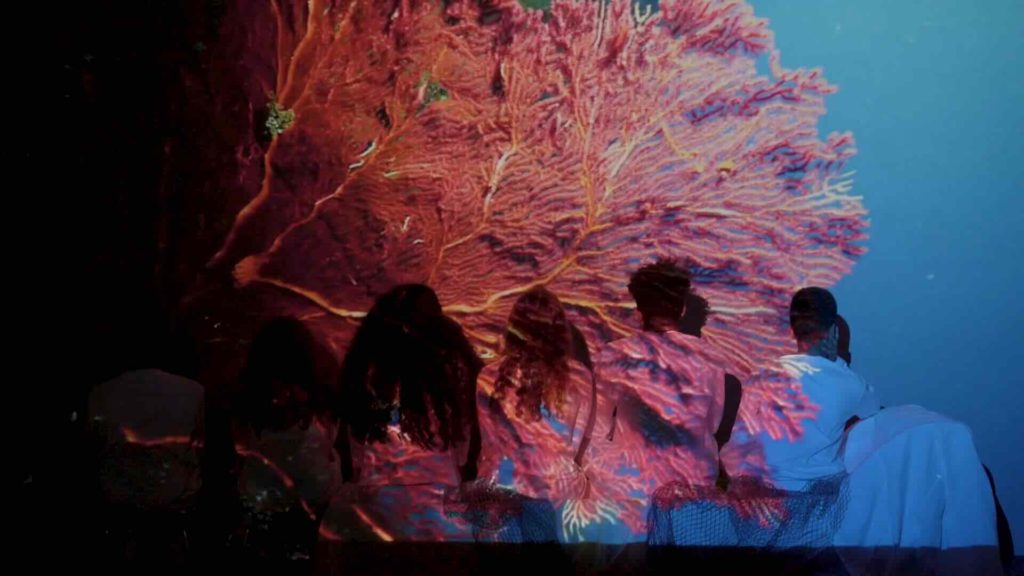
Anthropologist Claude Lévi-Strauss stressed not “to reduce magical thought to a moment, or even a phase, of technical and scientific evolution […]. Like a shadow anticipating its own body, it is, in a sense, as complete as that body […]. Magical thought forms […] a well-articulated system.” Therefore instead of opposing magic and science or subsuming them into one another, “we would do better to view them as parallel, as two modes of knowledge.”[5] Over at ARGOS, Pauline Julier’s Neapolitan Triptych (2017–19) applies magic and science to Vesuvius. Three screens, running simultaneously, play out three modes of knowing a volcano: scientific monitoring, thick description, and ritual devotion to San Gennaro, a protective patron. One screen tells of Pliny the Elder who journeyed to Vesuvius to describe what no man had described before, only to be killed by it. Recounting the eruption, the surviving Younger Pliny felt “the whole world was dying with me and I with it.”[6] One could easily balk at this statement’s narcissism, but it holds a devastating beauty; we make our worlds and they die with us. This “worlding” Philippe Descola described as “the process of stabilization of certain features of what happens to us.” Our worlds “are just clusters of qualities, [only] some of which we detect.”[7]
The question is then, as Lévi-Strauss (Descola’s teacher in fact) posed, not “whether contact with a woodpecker’s beak cures toothache, but whether […] the woodpecker’s beak and the toothache ‘go together.’”[8] And Neapolitan Triptychshows, yes, San Gennaro, Pliny, and volcanology do “go together.” So do the worlds of artists and diplomats. It is time then to recognize not simply that our worlds are composed differently, but also, as Descola urges, “to understand how they are composed without automatic recourse to our own […] to recompose them so as to make them more amenable to a wider variety of inhabitants, human and nonhuman.”[9] “Magical Realism” is at its most successful precisely when showing works in which different knowledge systems “go together” and in doing so provide frameworks for us to go on.
[4] Arundhati Roy, “The End of Imagination,” in The Short Millennium? ed. Ken Coates (Spokesman Books, 2000), 5.
[5] Claude Lévi-Strauss, Wild Thought, trans. Jeffrey Mehlman and John Leavitt (University of Chicago Press, 2021) 16.
[6] Cited in Julier, Neapolitan Triptych, 2017–19.
[7] Philippe Descola, “Modes of being and forms of predication,” Hau: Journal of Ethnographic Theory, 4:1 (2014): 273–4.
[8] Claude Lévi-Strauss, Wild Thought, 12.
[9] Descola, “Modes of being,” 279.