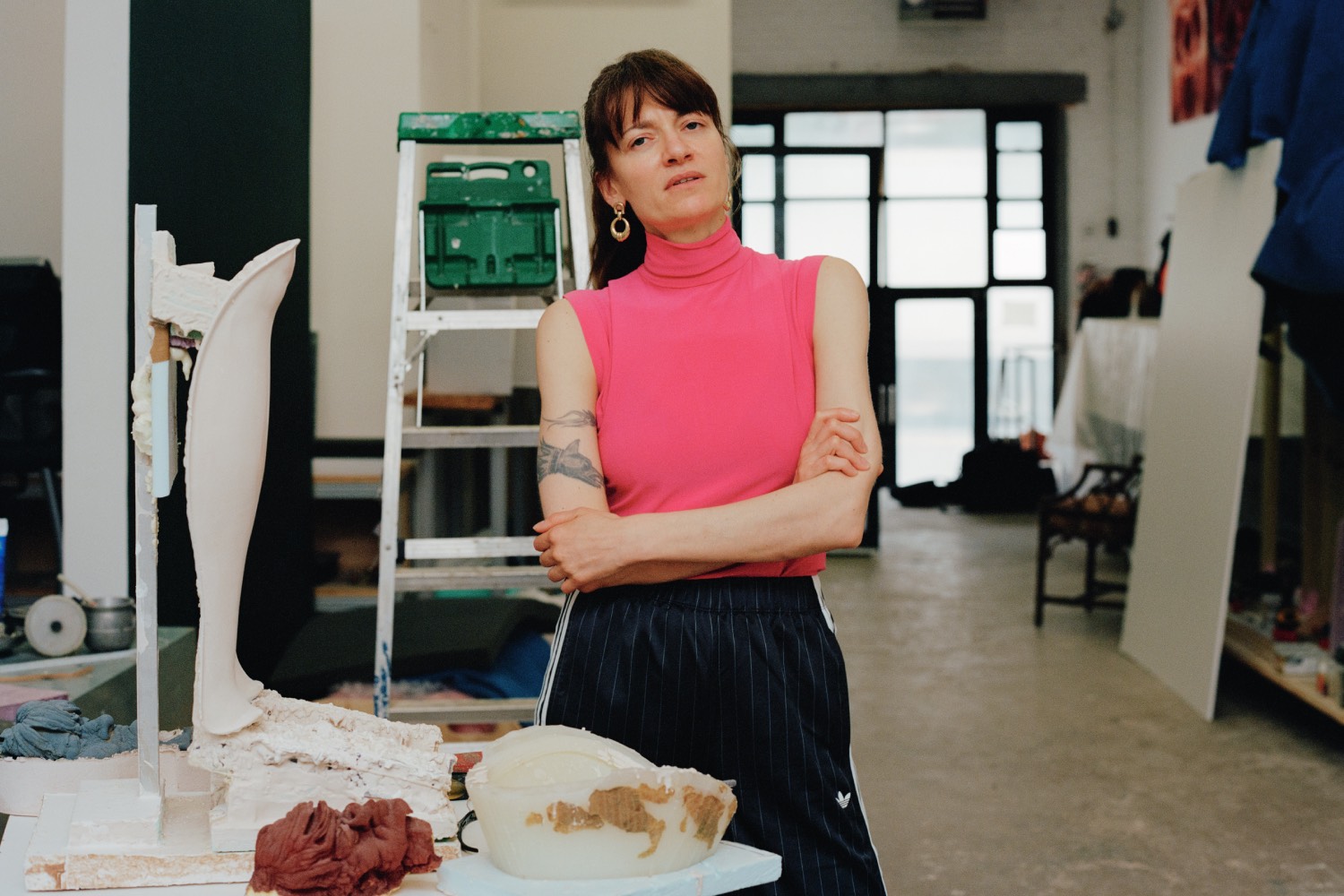
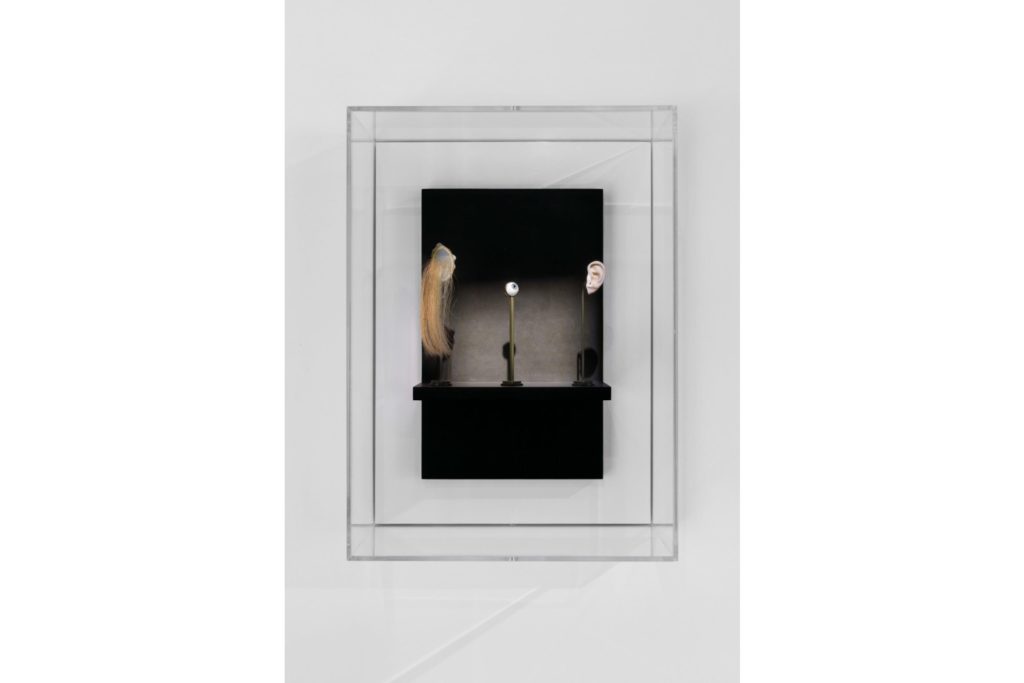
Are we the body, or are we the soul? This age-old philosophical dilemma is at the heart of a striking dual exhibition, “De Anima,” at the Swiss Institute, curated by director Stefanie Hessler. Featuring the American sculptor Elizabeth King and Swiss painter Louise Bonnet, the show uses minimalism and corporeality to probe questions of identity, embodiment, and the mystery of being. The title of the exhibition evokes Aristotle’s De Anima, a foundational treatise written in 350 BC, in which the philosopher contemplates the nature of the soul as the animating force of the body. Similarly, the two artists question the origins of humanness, the framing mechanism of where exactly it comes from. Where is that sacred place; how can we touch it even if only through a mind’s eye?
The solitude of a solitary soul is what we see in Elizabeth King’s half-machines and half-sculptures. A balance between robotic and figurative attributes, continually pursued by the American artist across the decades, is even more visible here. A hand, carved from English boxwood, two silent stop-frame animations, an intentionally miniaturized copper-plated steel figure of porcelain, glass eyes, hair, and an artificial eyeball provide a laboratory, an insight into a highly idiosyncratic quest to find and maybe relive some lives. These works are complemented by a vast, fascinating collection of studio objects and glass eyes sourced by the artist in the 1980s from eye hospitals, taxidermy stores, and flea markets, adding to the mystery.
The silence in King’s work is not empty but full of observation, of questions. Untitled Articulated Figure (1974–78), suspended weightlessly, gazes at us as much as we gaze at it, evoking the quiet shock of a child discovering their anatomy in a medical diagram. One is reminded of a typical childhood moment of first encountering an anatomic atlas, the disbelief of looking inside one’s muscles, arteries, and bones. King shows us that indeed we are all of this basic construct, and all the other roles and personas are somewhat of a grafted nature, a superfluous addendum. King uses puppets, automatons, and medical models as entryways to ask questions about what makes us, humans, individuals.
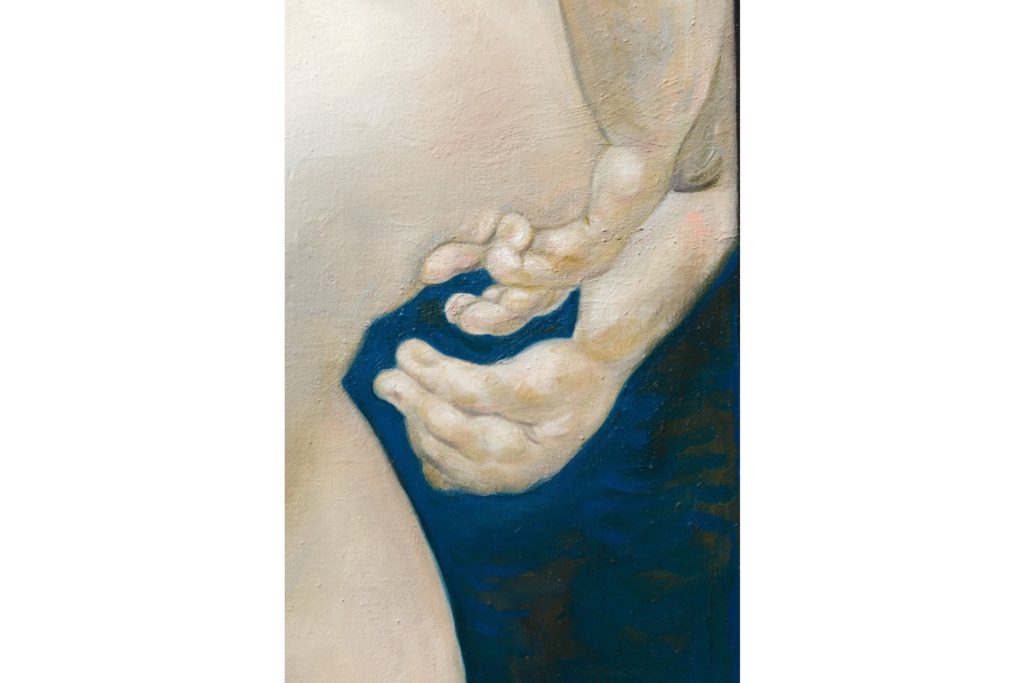
This solitude and default setting provides a strong and intentional contrast with Louise Bonnet’s Rabelaisian bodies on canvas. Figures are stretched, enlarged, engorged, and encroaching on intimate painted spaces. Painted with delicacy and warmth, the spaces we see are abstract yet feel safe, overtly referencing sixteenth-century Dutch genre paintings. Bodies are larger than life, almost bloated and self-important, self-centered to make a statement. To make them more relatable, Bonnet uses the intimacy of gestures and small details. A figure turning away from an iris flower, buttocks also turning away from a chamomile bouquet, a naked figure zipping up an invisible pair of pants next to a chinoiserie treasure, a multi-nipple white vase mirroring a multi-nipple flash nearby, two lonesome lemons or apples hanging next to an enlarged crouching or reposing silhouette, hands manipulating a foot next to a half-eaten purple fig on a plate. Bonnet reportedly consulted the Special Operations Executive manual — an instruction guide for British spies during World War II — when creating this series. It offered directives on how to appear native in a foreign land, warning, for example, that putting hands in one’s pockets could betray a cover. Her figures perform humanity, their forms begging the question: How do we know when someone is truly “human”?
The virtue of tradition helps us to navigate the presented conundrum by trying to find a middle ground. This presentation underlines a dilemma of our everyday life: Could we still find a soul within our bodies, despite (or due to) all the services, apps, appetites, and obsessions through which we pay homage to the physical? A viewer leaves with answers. The mild synthesis proposed by Aristotle, the soul being the actuality of the natural body, holds little ground, as the body feels much less natural, more AI-generated today. As King said in one of her lectures, “The brain does not listen to itself; only when the words come out of the mouth can it listen and see what’s there.”[1] Both artists help to further the discourse in purely visual form, providing a ground for a conversation.
[1] https://thesizesofthings.com/bibliography/documentary-video/elizabeth-king-artist-in-residence-dartmouth-college-2008/