Raque Ford’s recent projects treat language as a pop refrain inflected with drag, residue, and feedback. Her texts get tested: what briefly snags attention, what repeats in the mind, what diagnoses desire, what refuses to settle into a neat moral. Her viewer is hailed and heckled by dramatically shifting scales of voice and authorship, caught in double binds of larger-than-life imperatives and wound-soothing syllables. Her writing — often fan letters that delight in, as she puts it, the psychic state of being chronically online — renders codified tensions as a bodily event that flips failure, success, indulgence, and disgust into each other.
Sweetness that bites. Across dance floors, receipt-printers, and billboards, Ford obsessively choreographs and commands rituals of oversharing and underexplaining, routing proximity through distortion, despair through hope, and exposure through consolation. A fundamental question arises: How do/can we get so close to the heart of our interiority and not recognize it anymore?
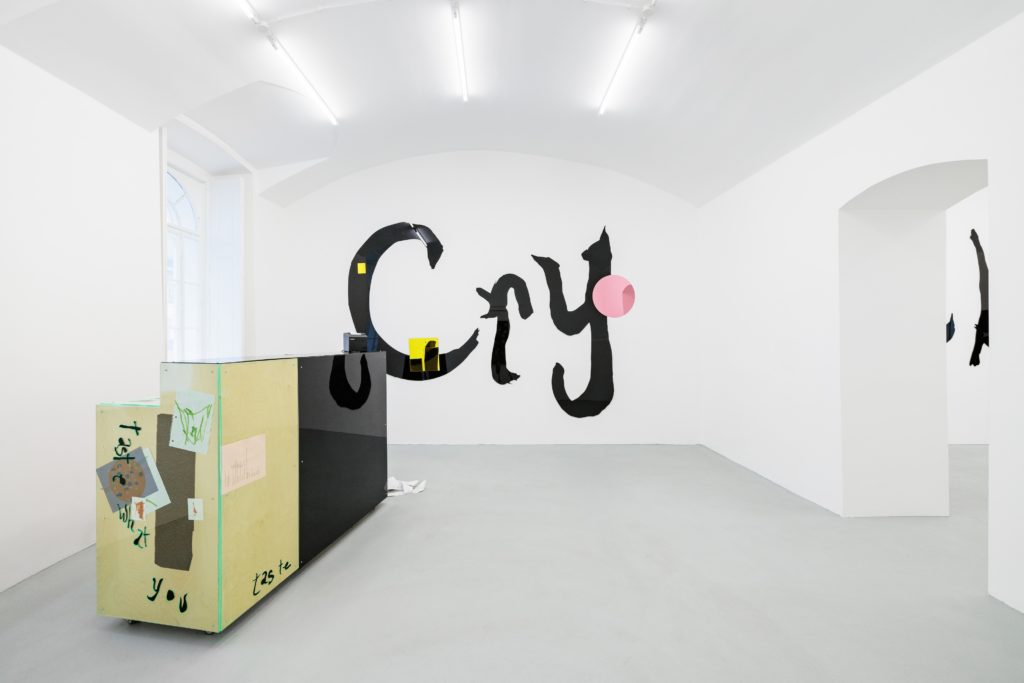
Qingyuan Deng: In “Cry Baby” (2025) at Kunstverein Gartenhaus, the space is filled with haunting references to language — for example, a slick brush-script silhouette with a hot-pink translucent disc lodged in the letterform, or overflowing paper ribbons from a smoked-glass table — that collapse the private/collective and personal/social. When you’re pulling from pop songs, overheard speech, fiction, and diaristic notes, what tells you a fragment is alive or charged enough to enter the work, versus just being noise?
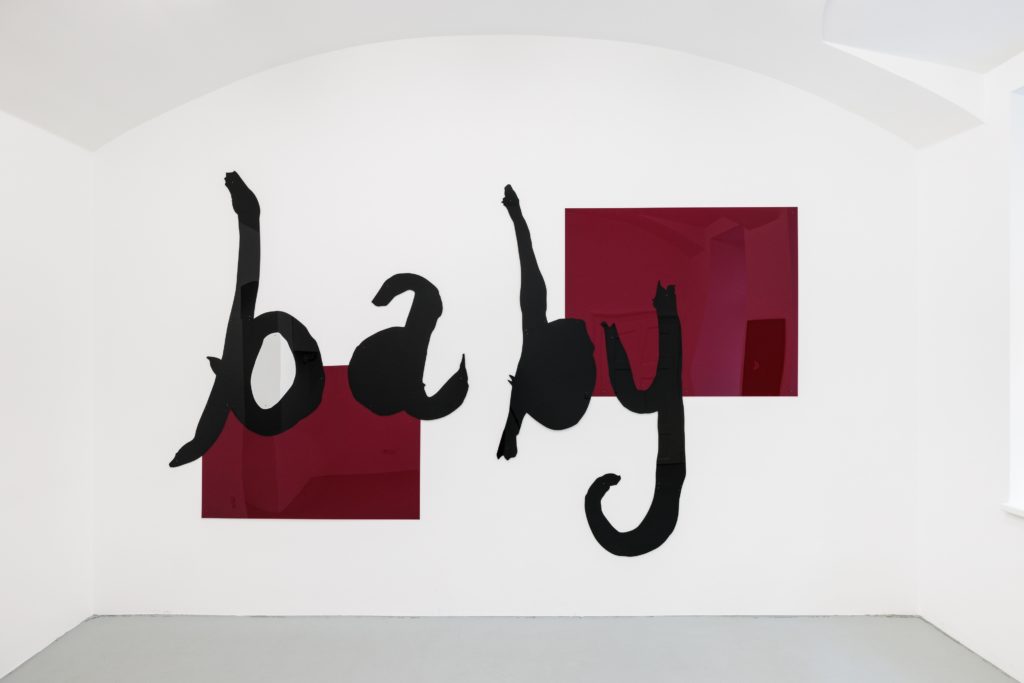
Raque Ford: Noise is such a good way to describe what’s going on in my head. I guess I’m always paying attention subconsciously to what I’m hearing. But I feel like I’ve trained myself over the years to take notice of when something catches my attention even for a second and investigate why. I mean this specifically with overheard speech. There are times when I mishear what someone says but like the incorrect version more and write that down. Repetitiveness in how I think helps me investigate myself and my desires and dislikes and how I’ve changed as a person. I think selfishly my work is just an avenue for me to understand myself in a subconscious way, but in that search, I find ways of understanding others and connecting. The show and the book Cry Baby (2025) originated from being called a crybaby as a child — and I’m still one as an adult. I wanted to investigate a term I hated as a child that is thought of as a negative thing. I liked how the space was split into two similar sized rooms so I could separate the “Cry” and “Baby.” I wanted to enlarge the scale so that it felt like the room was yelling at you to Cry when you walked in and the second room was calling you Baby maybe endearingly or maybe in a pejorative way.
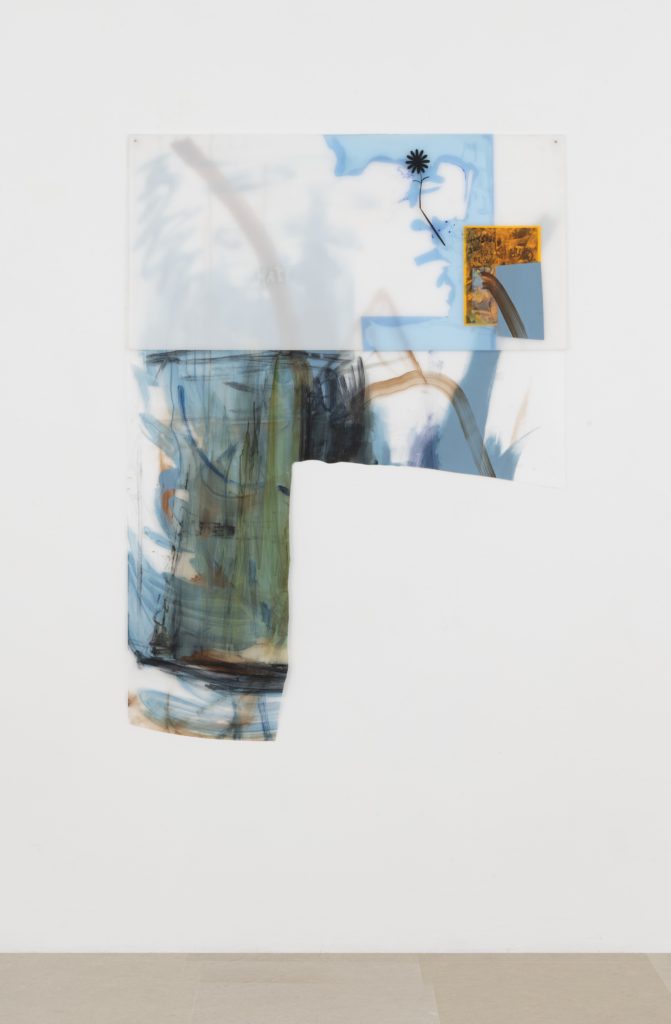
QD: Your surfaces often behave like seductions with teeth: reflective acrylic, transparent Mylar, welded chains, laser-cut text, materials that read as both industrial and intimate. What do these materials let you say about identity and social coding that a more traditional painterly language wouldn’t?
RF: I’ve been thinking a lot recently about being attracted to someone that disgusts you. Like a villain in a TV show or a true villain in real life. Someone you truly do not like at your core. But you have a flash of a thought about having sex with them and you are then disgusted with yourself. I think that’s hard to describe in traditional painting or at least with my skill set. I enjoy the bodily sense I get when looking at such materials. I think of how it would feel to touch and handle them. I like how it feels when you look at it and see your distorted image reflected back. The sound of chains dragging around the studio floor. The material and the iconography I’m interested in or attracted to are often a mix of feminine, girly, not serious. Or maybe playful is a better word. Then I like to mix that with something industrial or something that reminds me of the mundane, like the trash at the bottom of a purse. I feel like these materials perform social contradictions that I want to investigate.
QD: In Kari Rittenbach’s accompanying text for the exhibition, “cry baby” becomes this slippery relay between insult and instrument: a slur, and the psychedelic rock pedal — a technology for midrange emphasis, for making feeling audible and contagious. She reads your mirror-tile taunt and relief-print as a kind of transcription, psychic hurt translated into “overlapping ghosts” and slow, actuarial accounting of tenderness. When you’re working, do you think of your practice as engineering a signal chain for emotion — choosing where to boost, distort, loop, or archive affect — so that shame gets recast into something like collective music? Or is the point precisely to keep affect unstable, so it can’t be disciplined back into legible “emotional intelligence” on demand?
RF: When I’m making relief prints, there is a tenderness. It’s a longer process to prepare a plate. I also work with two or three people so I can have the paper go through the press multiple times. I work at a community printshop in Midtown Manhattan. This makes the process of making the prints less lonely and there is constant conversation between everyone compared to when I’m in my studio alone working or writing. When in the printshop and placing the various elements, there’s a dance of removing and placing the work that happens, which is spontaneous. But I’ve worked with the same people over the years, and we get in a groove quickly. With the process I used to make my relief prints, there’s a lot of ghost prints that come off the plexi, so texts will get layered onto each other, changing the overall language of the print. Or part of some text gets covered and obstructs a meaning. These moments of distortion and surprises really excite me. I feel like I take that back into the studio into the plexi work. I often start out thinking, this is what the prints will say, as if it’s a poster but end up with a different way of thinking about something that I already wrote. I think the work resists being turned into something clean and instructive. The distortion is where the work becomes more alive.
QD: In “The Barkeeper’s Friend” (2025) at Greene Naftali, New York, the title comes from a found ad for a cleaning solution, and you’ve talked about it as an “unwitting protagonist.” What does it mean for a product name (or any piece of commercial language) to become a character in your universe and what kinds of desire or shame travel with that language?
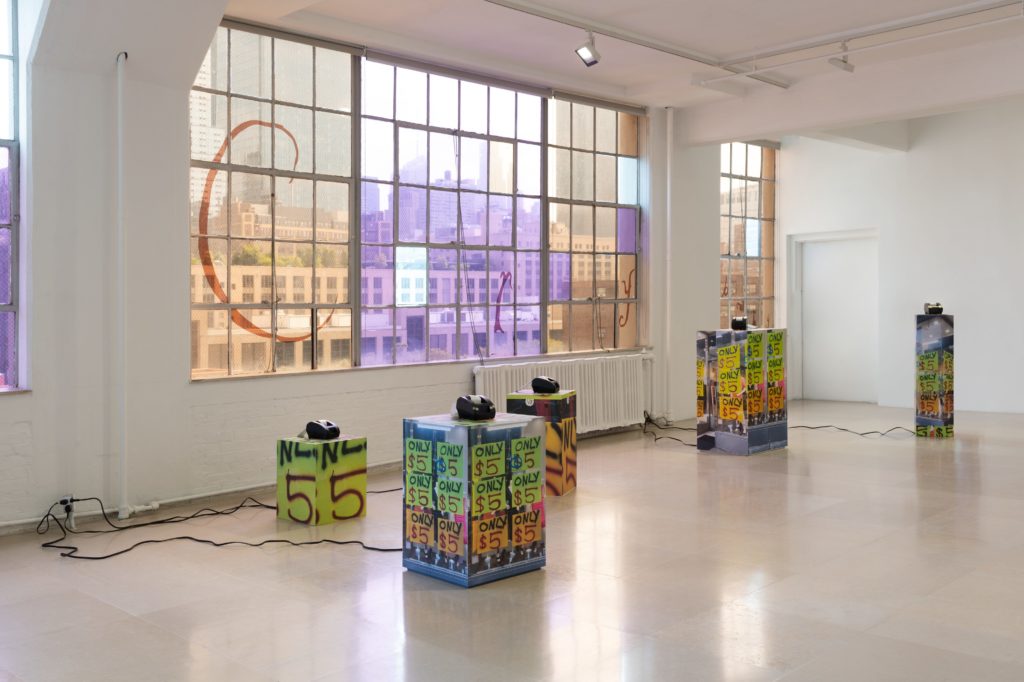
RQ: When I started using text in my work, I felt the best way to start a writing practice was to use a prewritten thing and change it to my voice and what I felt. So, I started using fan letters that I found online and editing them to be about what I was a fan of, while keeping the language of the original writer. Then from there I started writing my own fanfiction. I feel like the process of writing to someone helps me and is more generative. So, I would write to characters that are an amalgamation of ideas like, “Horny,” or “The Devil’s Daughter.” When I have a solo show, it feels directed towards a person or a character. Sometimes fictional, sometimes not. I liked imagining that this cleaning product was an actual friend. And they are just referred to as a friend of mine and had no name. That reminded me of how on The Real Housewives franchise if you are not one of the main women you are just labeled “friend of X.” It also made me think of this song “DJ Girl” by Katalina where she’s the DJ’s girlfriend and just trying to get into the club and says, “Excuse me! I’m on the guest list.” So, I showed remnants of dancefloors I made in the past, remnants of an event that you didn’t go to. A rubbing of something that could have been fun, but you don’t really know. You are kind of removed as a viewer and don’t have the full knowledge.
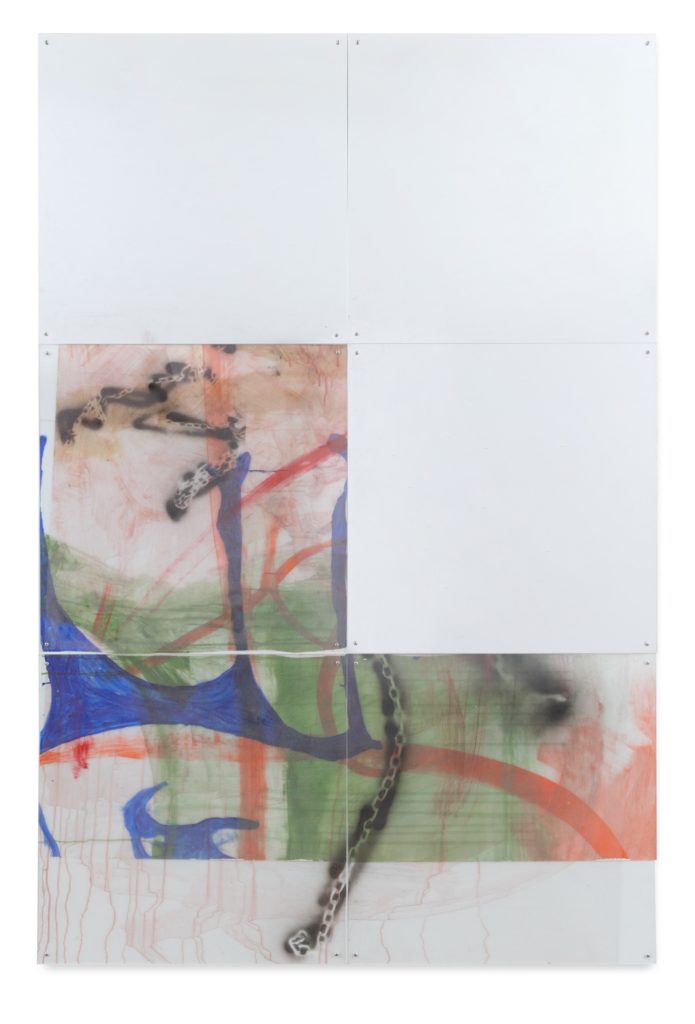
QD: That show also includes commercial receipt printers producing hand-painted scrolls and lines of poetry. Are you thinking about political economy here or about memory, or are the two arenas inseparable in the way you’re building the work?
RF: I enjoy the sound of a receipt machine printing. Maybe it’s from working in restaurants in the past. It is kind of a bell. Someone ordered a drink, so you go check the ticket to see what it is. I haven’t worked in restaurants in a while now. I do bookkeeping on the side. It’s kind of a joke for me; to be still dealing with receipts as my job to make a living so I can be an artist in New York. It feels like something you are supposed to hide from the art making. But what if you want to make art with it? This makes me think of a quote I saved recently: “Seeking respect above your status is your greatest folly.” I’m still trying to make sense of what I like about it. But this “foolishness” of desiring more and that “more” is just respect. Feels sad and beautiful and weirdly lonely. I guess for me the economy and memory are inseparable.
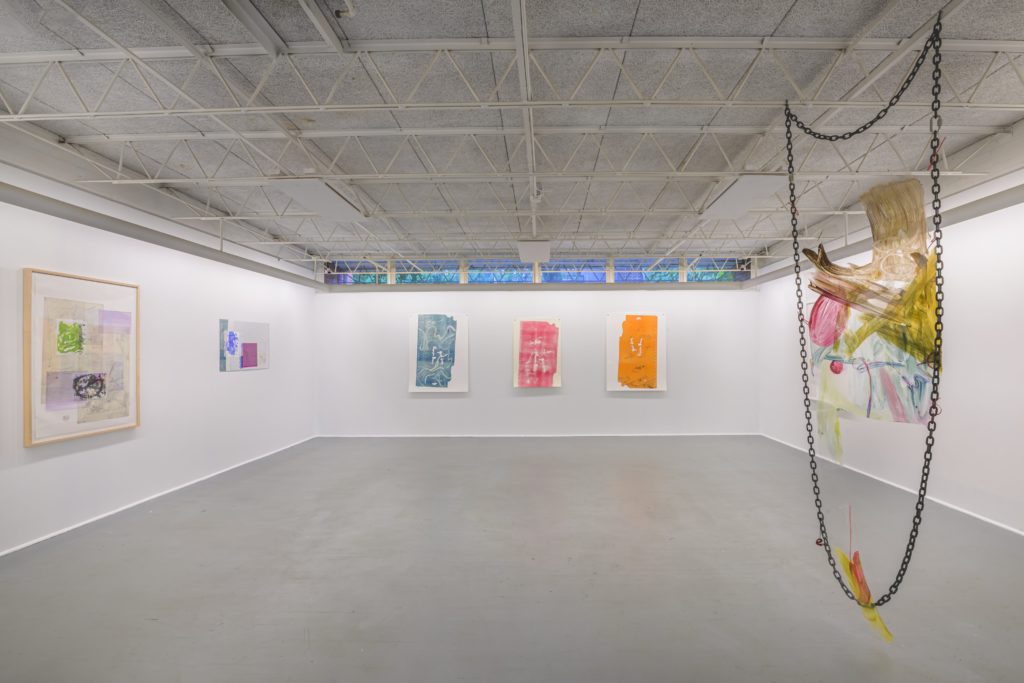
QD: “Photocopy Dream II” (2025) at Ginny on Frederick, London, presents your dancefloor as an environment, collaging printed vellum and painted Mylar beneath acrylic tiles, with poetry/diary compiled inside — plus events that activate the work. When you invite use, what are you choreographing: bodies, attention, consent, risk?
RF: With the dance floor, it’s both “please walk all over (me and) my art” and seeking control. I think when I put text in my work, I’m asking the viewer to stop and take time to read and understand my voice. And when doing the dance floor, I’m telling the viewer that: if you want to read this, you must follow the literal path I made to make this legible; and if you are a devoted viewer you are going to have to get down on your knees and read this tiny text. I think I’m choreographing the viewer to do a dance of earned intimacy.
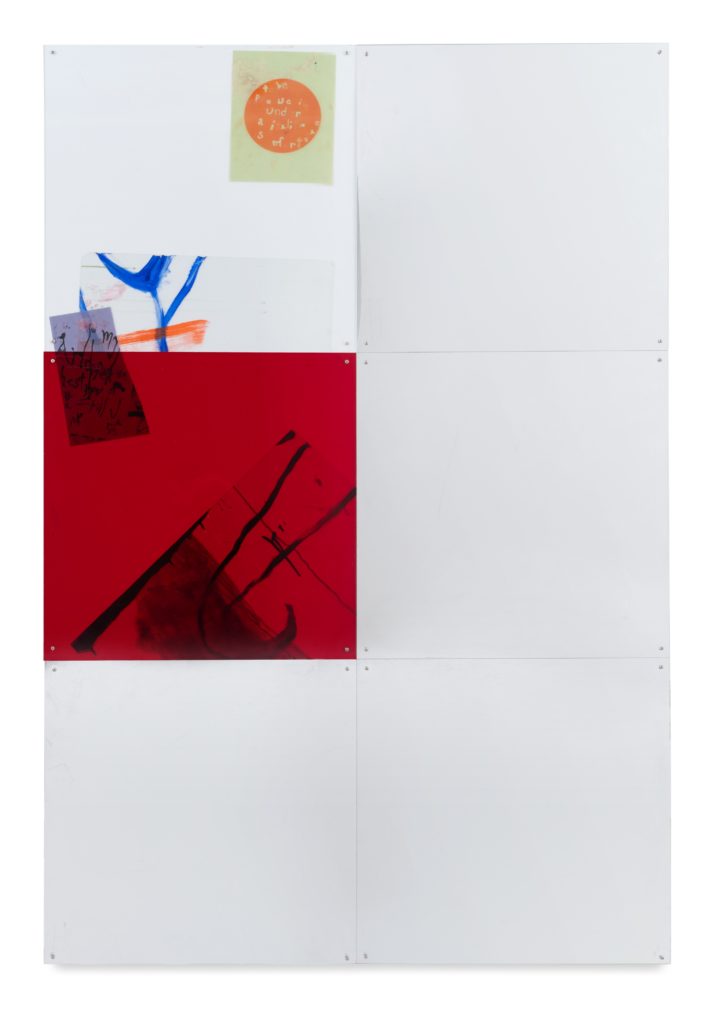
QD: Your Whitney commission A little space for you right under my shoe (2024) is a billboard near the High Line and is described as remixing pop and linguistic symbols to show how social codes shape private subjectivity. What changes when your language leaves the interior of the gallery and enters the street — does it become more protective, more aggressive, more porous?
RF: For the billboard, I really wanted to reference ads that you would see on the street or in the subway. Since I was younger, I always loved the “Poetry in Motion” program the MTA (Metropolitan Transportation Authority in New York City) Arts & Design does. I like the mixture of poetry with the mundane act of riding the subway to school or work. The scale of the billboard felt exciting and aggressive to use it to put a bit of a personal text up so high and legible. I wanted to reference ads and was thinking of the Candies shoe ad I used to see with the forced perspective of a big shoe. I wanted to think of a person walking under the billboard and seeing this big shoe print and feeling the scale shift. I feel when an artist makes a public work you really lose the controlled audience of a gallery. There’s a bit of risk with public art. It opens the work to more criticism as it has to be this populist thing that is hard to achieve, but maybe also something you don’t want to achieve.