UNIVERSALITY NOW AND HOW WE GOT PARTICULAR
Threats to the security, freedom and dignity of life today from global ecological catastrophe and the rise of nationalist authoritarian regimes require a collective global response. For the discipline of architecture, the specific challenges of our time call for a turn to universal principles of spacemaking. Universality is the basis of emancipatory politics today because what is universal is not what we possess in common, but what we don’t possess at all— the structural absence that animates every social order. This is a universality of non-belonging. Universality exists in this position of absence through what has no place in the political structure of dominance. My hope here is to argue for the salience of this concept of architectural universality and an understanding of emancipation founded in it.
Architectural Modernism, with its post-Enlightenment aspirations for rationalist epistemology, sought to address the changing social needs of a highly urbanized society. The development of the scientific method, the democratic promise of the nation-state, growing colonial empires, and technological developments ushered in the aspiration to create design principles and forms that transcend specific cultural, historical or geographical contexts. This was the position that architecture should be universally functional and aesthetically rational, characterized by standardization, abstract forms, transparency, and openness. Modernism saw capitalism’s development as a totalizing global phenomenon in the positive. This was universality as an affirmative concept of the human aspiration for liberty and prosperity, promised by the socio-economic freedom of industrial wealth.
Post-structuralist and neo-Marxist thinkers of the postwar era rejected universality, linking it to Nazism, failed utopian revolutions, and the horrors of Stalinism, the Gulag, and the Soviet Union’s collapse. This was the sense that universality, or utopia, led to authoritarian regimes. Architectural postmodernism’s rejection of modernist universality was most clearly articulated in the historicist turn away from modernism’s master narrative to embrace the other and pluralism. This challenged the idea that universal architectural forms could meet the particular needs of diverse contexts.
A return and reformulation of universality is necessary in a contemporary context defined by a breaking down of moral, political, or aesthetic standards. This is our age of anomie. Uncertainty and instability caused by ecological collapse have emboldened right-wing nationalist leaders capitalizing on the anxieties of an unstable world and our lack of ability to uphold universal principles of truth and justice. Israel, Russia, and the United States have demonstrated that international law—universal laws binding the conduct of all nations and the dignity of all human life—are ultimately irrelevant to the aspirations of nationalism and surplus production. The liberal political position has proven to be entirely unequipped to respond to this global rise in right-wing politics and to address the climate crisis adequately. This is because liberalism has entrenched itself in neoliberal economic policies, identity politics, and moral positions that have not clearly articulated a political program that disturbs the status quo of global capitalism and the environmental crisis. These are particularist politics defined by exception and hierarchy. The framework of this political dialectic demonstrates that liberal and conservative ideologies are essentially two sides of the same coin; liberalism as concerned with identification of the other, while conservatism is concerned with articulating a fear of the other. They both contain strong antagonism towards collective cooperation and a strong emphasis on individuality under the logic of self-commodification. This political direction indicates that a defense of universality must equally be dialectic in its critique of particularity.
Within architecture, we must critique an approach that favors image, investment, and iconicity in service of neoliberal policies for increasing speculative real estate investment and national expenditures. This means a critique of the desire for the Bilbao effect.[1] With this, heavily authored architecture must also be criticized for its particularist approach to cultural production. We must subvert this long tendency by rejecting iconicity in favor of process-driven adaptation, where enjoyment comes from what is missing, not what is a complete image. In our post-critical landscape, art and architecture are a product of a lack of any guiding and agreed-upon aesthetic standards.[2] Advancing the architectural discipline becomes meaningless and strenuous. Without any agreed-upon guiding principles of design and spatial production, architecture cannot attach itself to larger social and political projects; it is consumed by a disciplinary inward turn concerned with individual authorship and aesthetic particularity.[3]
[1] A term coined to explain the increase in urban economic growth due to the introduction of iconic architecture produced by internationally recognized architects. See Julian Rose, Building Culture: Sixteen Architects on How Museums Are Shaping the Future of Art, Architecture, and Public Space (New York: Princeton Architectural Press, 2024).
[2] Hal Foster was the most prolific figure to first to identify a resistance to critique after the culture wars of the 1980s, and to identify the need to articulate shared terms and value metrics that pull together distinct projects and form a progressive debate. See Hal Foster, “Post-Critical,” October 139 (Winter 2012), and “Post-Critical?,” in Bad New Days: Art, Criticism, Emergency (London: Verso, 2015): 123–144.
[3] When speaking about how the aesthetic and political program of the Constructivist and Suprematist movements proposed a universal visual language, El Lissitzky argued for a form of art and design that makes “a contribution to life’s organization.” See Veshch/Gegenstand/Objet: Mezhdunarodnoe obozrenie sovremennogo iskusstva, nos. 1–2 (Berlin, 1922). El Lissitzky and Ilya Ehrenburg, eds.
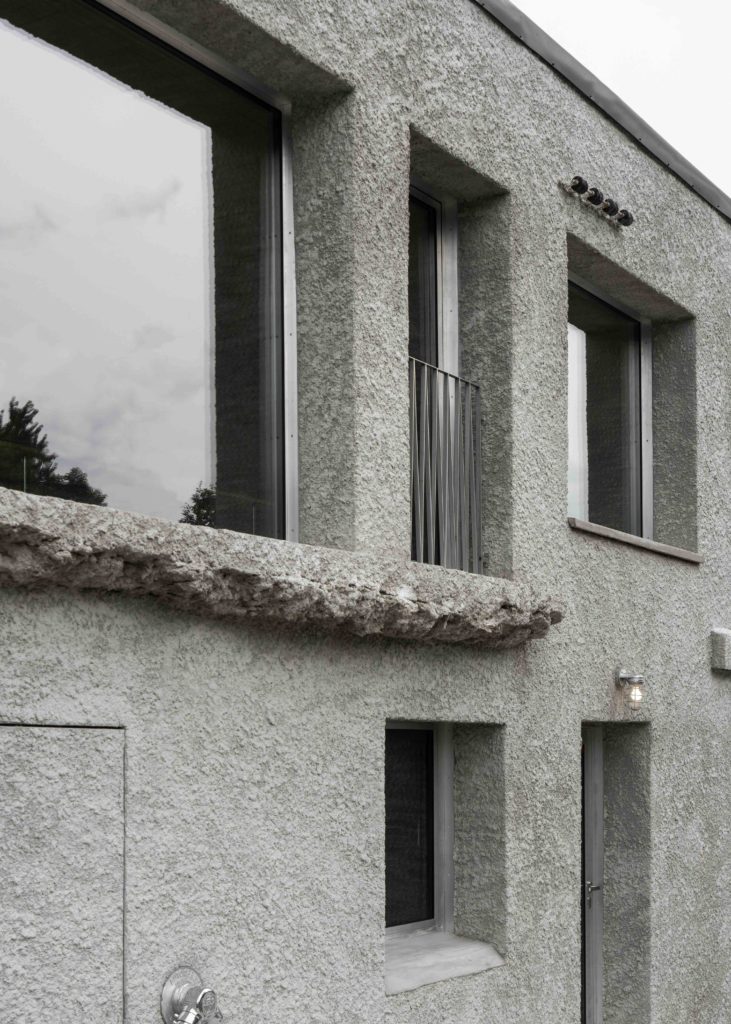
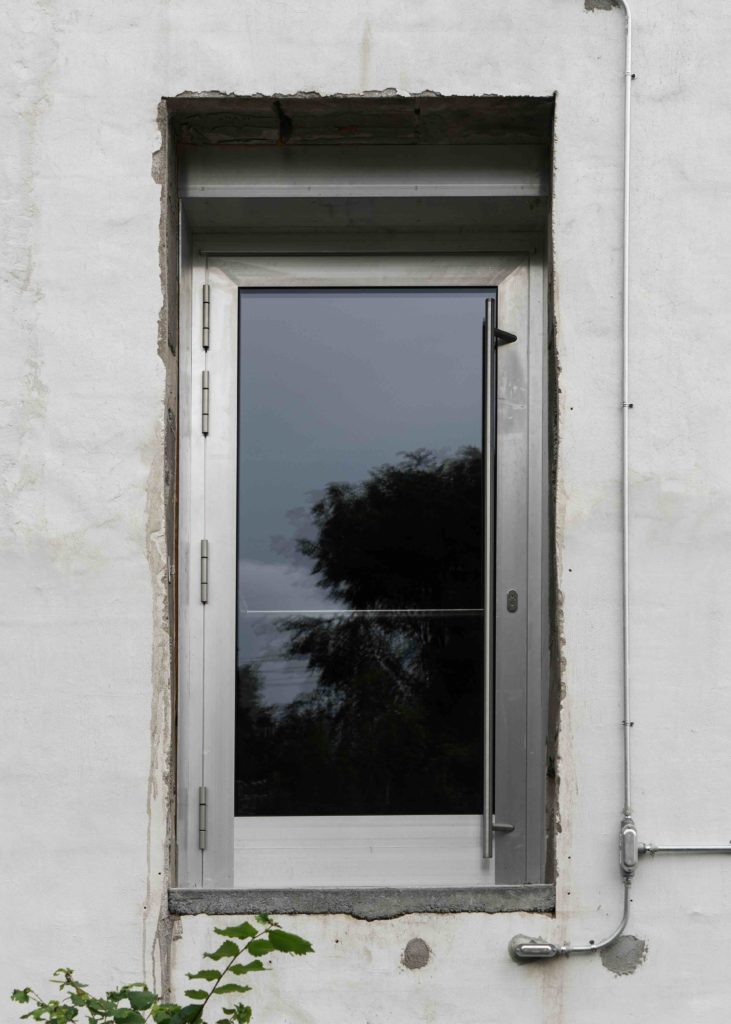
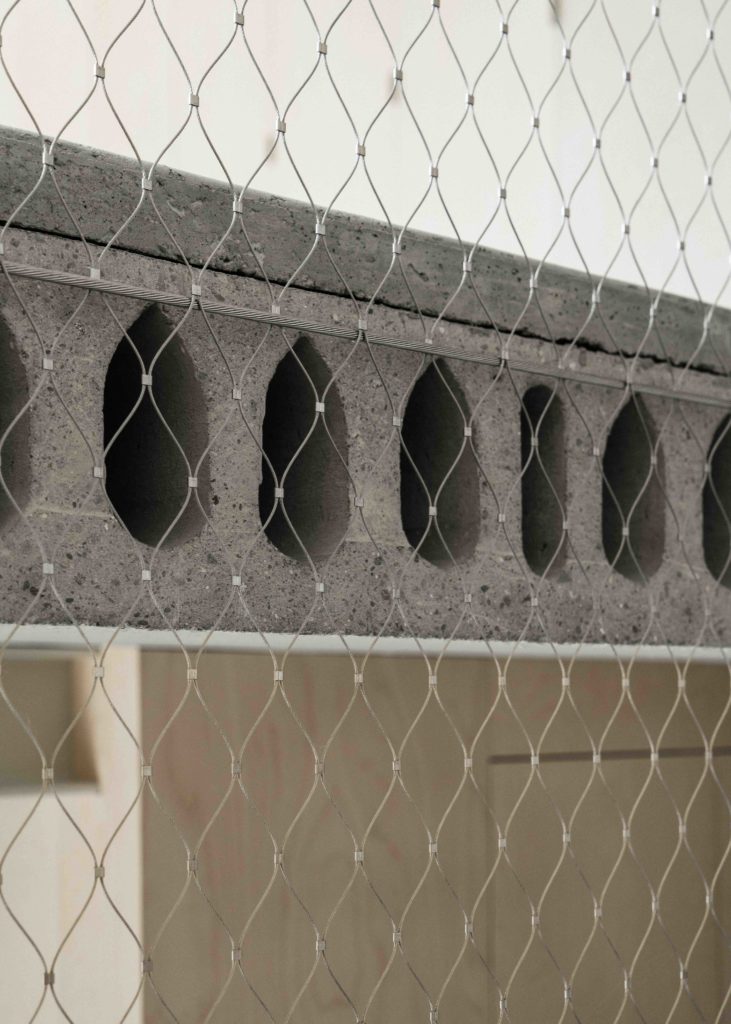
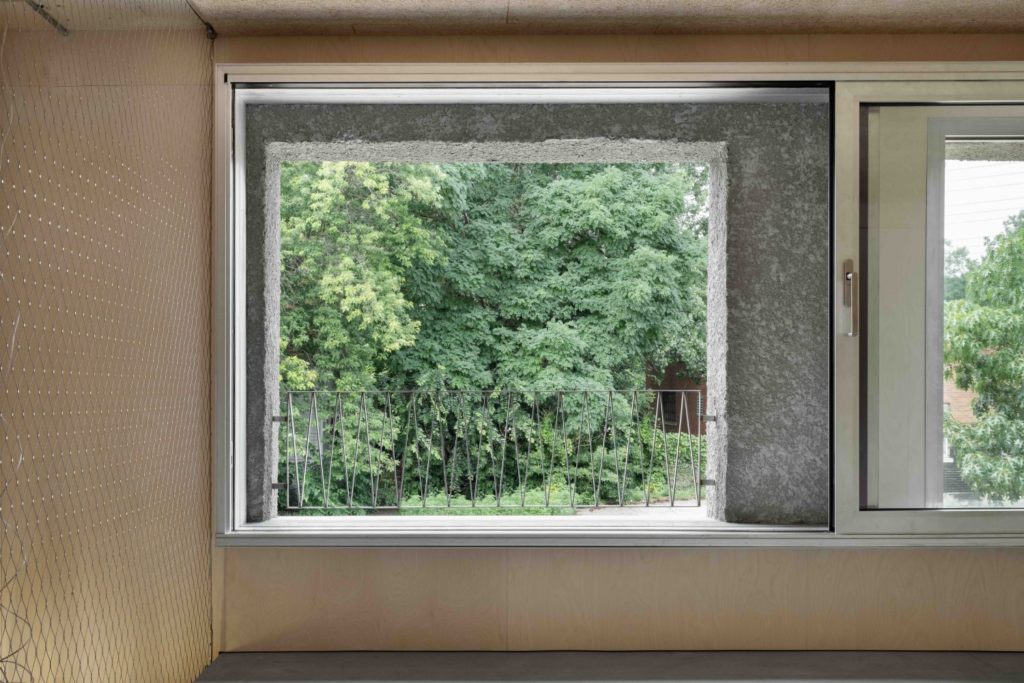
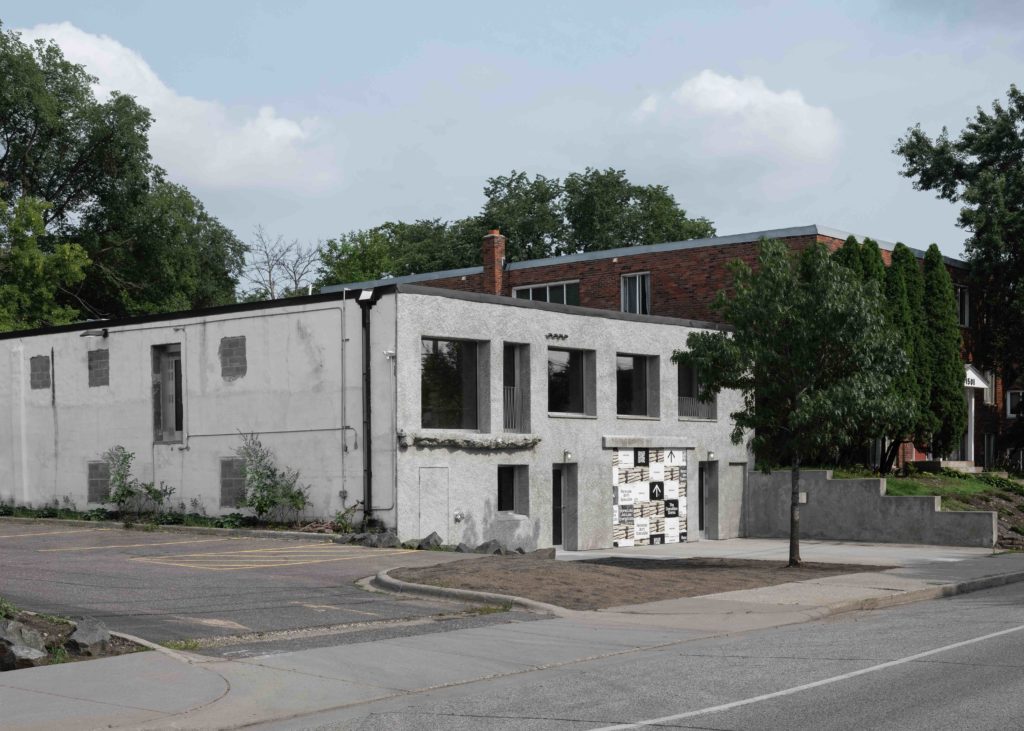
We can see a universalist framework that is responding to global ecological collapse induced by capitalist production in the work of Berlin-based architecture firm b+. This is most evident in their emphasis on adaptive reuse and the associated call for EU policies that encourage this form of space-making. Their work is a demonstration of concrete universals, meaning by re-occupying particular abandoned and previously undevelopable buildings, they make visible what is cast aside and absent from exchange value. b+ enables us to see the universal in the form of what is missing from the social structure by committing their practice to the renovation and appropriation of existing buildings. They have also formed a political program that calls for policies that would position adaptive reuse as the primary building method in the European Union. While Modernist architects produced manifestos for universal design principles within architectural and cultural media, such as CIAM and Merz, b+ demonstrates that the challenges of today require architectural manifestos to exist within the binding framework of the legal and political arena. Furthermore, given their insistence on building with what exists, we can identify that a universalist turn in architecture today should emphasize the crude and immutable truth of matter’s finitude.
Adaptive reuse argues that material embodies time, carbon, overexploitation and the finitude of global resources. Therefore, it must not be destroyed or wasted. The universal quality of material is that it comes from finite energy and matter, meaning that it is inherently lacking because it can be used up. Form and space can no longer be ornamental or linguistically expressive in its deconstruction.
The art historical triangulation between matter, form, and content becomes flattened here. This achieves what Rudolf Wittkower’s Architectural Principles in the Age of Humanism (1949) identifies in Leon Battista Alberti and other Renaissance architects as emphasizing the harmonious integration of matter, form, and content. These architects did so by organizing material (matter) through mathematical and proportional rules (form) to speak to the universal truth and existence of God in nature (content).[4] This was the idea that matter could be transformed into something higher through form. With adaptive re-use, matter is preserved, and form is organized around this existing matter, producing content that reflects and speaks to the collective aspiration of guaranteeing a healthy global ecosystem, which is necessary to guarantee the future protection of human rights. Given the battles we face today, matter is required to be real abstraction, or in other words, form with meaning.
“THE LOSS ASSOCIATED ARCHITECTURE WITH THE
ENVIRONMENTAL CRISIS IS FORMULATED AS THE
LOSS OF FREEDOM OF FUTURE GENERATIONS.
TODAY WE HAVE TO CHANGE OUR LAWS AND
ACTIONS TO ENSURE THAT FUTURE GENERATIONS
ALSO HAVE THESE UNIVERSAL RIGHTS THAT
PAST DECADES OR CENTURIES HAD, AND ARE
THE FOUNDATION OF HOW WE LIVE TOGETHER.
IN THIS, HOW WE LIVE TOGETHER IS A
QUESTION FOR ARCHITECTURE. THE QUESTION
OF WHAT DO WE BUILD? DO WE BUILD MORE? DO
WE HAVE ENOUGH?”
THE CRISIS OF UNIVERSALITY IN MODERNIST ARCHITECTURE
In the interwar period of the 20th century, movements like the Bauhaus and Constructivism sought to develop universal design principles that could address the social and economic upheavals of the time. Julian Rose put it best when he argued that “Modern architecture promised to draw out the best from the revolutionary forces of modernity…claiming the power to engender social progress through spatial means.”[5]
Architects like Walter Gropius championed standardization, functionalism, and geometric purity as universal solutions to the challenges of urbanization and industrialization. These principles reflected a belief in the universality of human needs and the capacity of rational design to meet them.[6]
However, this vision of universality was deeply embedded in the political and economic structures of its time. Modernism’s universalism often masked the inequities of colonialism, imperialism, and capitalist exploitation. Marx’s critique of real abstraction is useful in identifying that capitalist forms impose an abstract universality that erases material and social particularities.[7] In this light, Modernist architecture’s claims to universality must be understood not as neutral design imperatives, but as deeply entwined with the broader logic of capital and its attendant mechanisms of exclusion and dispossession. The International Style claimed to transcend cultural and geographic boundaries, yet it frequently imposed a totality of homogenizing aesthetics that erased the specificity of local contexts.
The critiques of universality in Modernist architecture thus emerged not only from aesthetic or cultural perspectives, but also from political and ethical concerns, with figures on the left, such as Theodor Adorno and Hannah Arendt, TK. Their idea is that the universal is conceived as a master signifier that imposes itself on all particulars, so we must critique it. However, the problem with this idea is that it misunderstands where universality lies. This critique thinks of particulars existing outside of universality, which is a position held by liberal ideology. It maintains that there are possibilities for particularity outside the universal and before the universal. This is profoundly non-dialectic thinking with a non-dialectic relationship to particularity. In other words, it is identifying the other without identifying the collective, the binding force of all particularities and all others.[8] To know the other is to know yourself.
POSTMODERNISM AND THE FRAGMENTATION OF UNIVERSALITY
The post-1968 generation of intellectuals presented a profound skepticism toward universality, influenced by the failures of modernist utopias and the traumas of authoritarian regimes of the twentieth century. This was a general tendency to view structures of mastery, or the illusory wholeness of totalitarian regimes, as the likely outcome of universality. Post-structuralism rejected grand narratives and universal truths, embracing plurality, relativism, and context specificity instead. In architecture, this shift was evident in the historicist turn, the formally expressive hyperspace of architects like John Portman and Frank Gehry, and the rise of critical regionalism. Frampton’s critical regionalism emphasized the need for architectural forms to respond to the specificities of place, climate, and culture, challenging the modernist ideal of universal applicability.[9]
By emphasizing fragmentation and relativism, postmodern thought risked obscuring the systemic forces that shape cultural and social phenomena. As Jurgen Habermas framed it, Modernism was about a call to a project, and postmodernism’s main focus was a call to recognize the other.[10] Fredric Jameson addresses this limitation when he argues that postmodernism’s rejection of totality reflects and reinforces the logic of late capitalism. For Jameson, totality is essential for understanding how diverse cultural forms are interconnected within the global capitalist system. Without a concept of totality, it becomes difficult to articulate a coherent critique of the dominant structure or imagine alternatives to it.
Jameson’s analysis highlights the dangers of postmodern relativism, which can devolve into a form of cultural nihilism, ultimately reinforcing the alienation and fragmentation inherent in capitalism. His critique underscores the necessity of a universalist framework that can resist the disorienting effects of late capitalist culture while providing a coherent shared framework for collective action and critique.[11]
“MANY CLIENTS WANT INDIVIDUALITY,
WHETHER IT’S A SINGLE FAMILY WANTING
SOMETHING SPECIAL, OR MUNICIPALITIES
LOOKING FOR SOMETHING LIKE A
BILBAO EFFECT. THEY WILL NOT FIND
INDIVIDUALITY THROUGH A NEW BUILDING,
BUT RATHER THROUGH THE ADAPTIVE REUSE
OF AN EXISTING BUILDING. IT LEADS TO
UNEXPECTED RESULTS BECAUSE YOU DON’T
KNOW WHAT WILL HAPPEN. YOU START THE
PROCESS AND SOMETHING WILL CHANGE, AND
THE ARCHITECT HAS TO REACT, AND IN THE
END, YOU WILL HAVE A BUILDING THAT YOU
WOULD HAVE NEVER PLANNED.”
“SMALL BUSINESSES AND PEOPLE AT A LOCAL LEVEL ARE IN HUGE SUPPORT OF HOUSE EUROPE!.
BUT ON A NATIONAL ECONOMIC
LEVEL, WHEN EXPENDITURES ON RENOVATIONS
ARE MEASURED, THEY DON’T LEAD TO THE
SAME NUMBERS AND VISIBILITY AS BUILDING
NEW. DEBT POLITICS ARE SAYING THE
ECONOMY IS SHRINKING, BUT THIS ONLY HAS
NEGATIVE CONSEQUENCES FOR COMPANIES WHO
BASE THEIR BUSINESS MODEL ON LARGE – SCALE
REPETITIVE AUTOMATION AND THE GLOBAL
SUPPLY CHAINS WHERE YOU IMPORT CHEAP
RESOURCES, ENERGY, AND MATERIAL FROM THE
SAME COUNTRIES WHOSE CITIZENS SUFFER
MOST UNDER CLIMATE CHANGE. THIS CYCLE
WILL CONTINUE AS LONG AS THE CURRENT
SYSTEM REMAINS IN PLACE.”
THE EMANCIPATORY POLITICS OF UNIVERSALITY
Political universality materializes from a collective subject that shares in the experiences of oppression and resistance. Universality, in this sense, does not mean erasing differences, but recognizing that every identity is internally fractured and incomplete. This idea is influenced by Hegel’s notion of the concrete universal, which suggests that true universality emerges through the recognition of internal contradiction, not external inclusion.[12] This can be extended to Lacan’s concept of castration, which explains the fundamental lack that defines subjectivity: no one fully embodies an identity, and all identities are marked by incompleteness. True universality, then, is not about achieving a perfect, all-encompassing political structure, but recognizing that every subject and group is defined by a constitutive failure or lack to be included fully in this structure.
Concrete universality’s greatest strength in formulating a contemporary framework for an emancipatory political project is revealing that it exists in the position of absence, through what has no place in the structure. In other words, we need a vision of universality of non-belonging, as an absence. This is the idea that the universal is not what subjects have in common, but what they don’t have in common, the cut that blocks the social structure’s completion for the subject. Those who appear as unequal and cast aside are the figures of universal equality. If the universal derives from what is absent and not from what is present, it becomes impossible to possess, meaning it is impossible to impose on someone else –– therefore, there is no problem of violent top down assertion on someone who doesn’t want it (or, on a particular that doesn’t belong to the universal). In the nature of the universal as an absence, we can never fully realize it; it is the struggle for universality that is the universal.[13]
ADAPTIVE REUSE AS UNIVERSAL PRINCIPLES FOR ARCHITECTURE
Universality, as it has been defined here, is not about an imposed sameness, but about recognizing the contradictions and internal failures that define the dominant structure. With adaptive reuse—where the disuse of existing buildings reveal these failures—buildings lacking use have their material spatiality preserved and detourned to new functions. Modernist and late Modernist architecture often produced abstract universals through standardization. They imposed a homogenous logic that ignored the historical specificity and material contradictions of a particular site. Instead of designing from tabula rasa, the work of b+ acknowledges the contradictions and failures of existing buildings, and designs from legal and financial constraints. The concrete universal emerges when universality is not imposed from above but develops from within the particular—a dialectical process of engaging with what exists rather than replacing it. The result is not an idealized universal space but an adaptive and incomplete framework, allowing the building’s function to emerge over time.
The principles of adaptive reuse exemplify a contemporary approach to universality in architecture. Adaptive reuse recognizes the embodied energy and carbon in materials and the historical and cultural signification of form. b+’s grassroots lobbying for new laws around renovation in the EU with HouseEurope! is an effort to create a policy with “incentives that make the renovation and transformation of existing buildings the new norm and a common path.”[14]This highlights a universalist approach in architecture by framing architectural production within a set of concrete guiding principles. In addition, the negativity and lack of contemporary concrete universality I am calling for is highlighted in HouseEurope!’s statement:
By 2050, we will have demolished 2 billion square meters of existing space in Europe. This is the equivalent of half of Germany’s building stock and more than Paris or Berlin in their entirety. Instead, we will have built billions of square meters of new space as a replacement for what was already there. This practice creates social, economic, environmental, and cultural problems as demolition comes with a loss of homes, jobs, energy, and history. The current system is designed to demolish and build anew. This approach is driven by a lack of regulations and incentives that favor new construction.[15]
b+’s notable defense of adaptive reuse is that when it comes to the housing crisis in Europe, the problem is not that Europe lacks a sufficient building stock. Rather, there is insufficient square footage of existing buildings dedicated to housing. This is exemplary of the logic of surplus production, excess and the current needs of speculative real estate, revealing that a project of political resistance in architecture is that of one which works with what already exists. We have exhausted global resources beyond the planet’s ecological capacity in the promise of newness, growth, and innovation. But practices like b+ indicate that an anti-capitalist and ecological position is one that understands that energy and resource extraction inherent to new construction goes beyond the globe’s total ecological capacity.
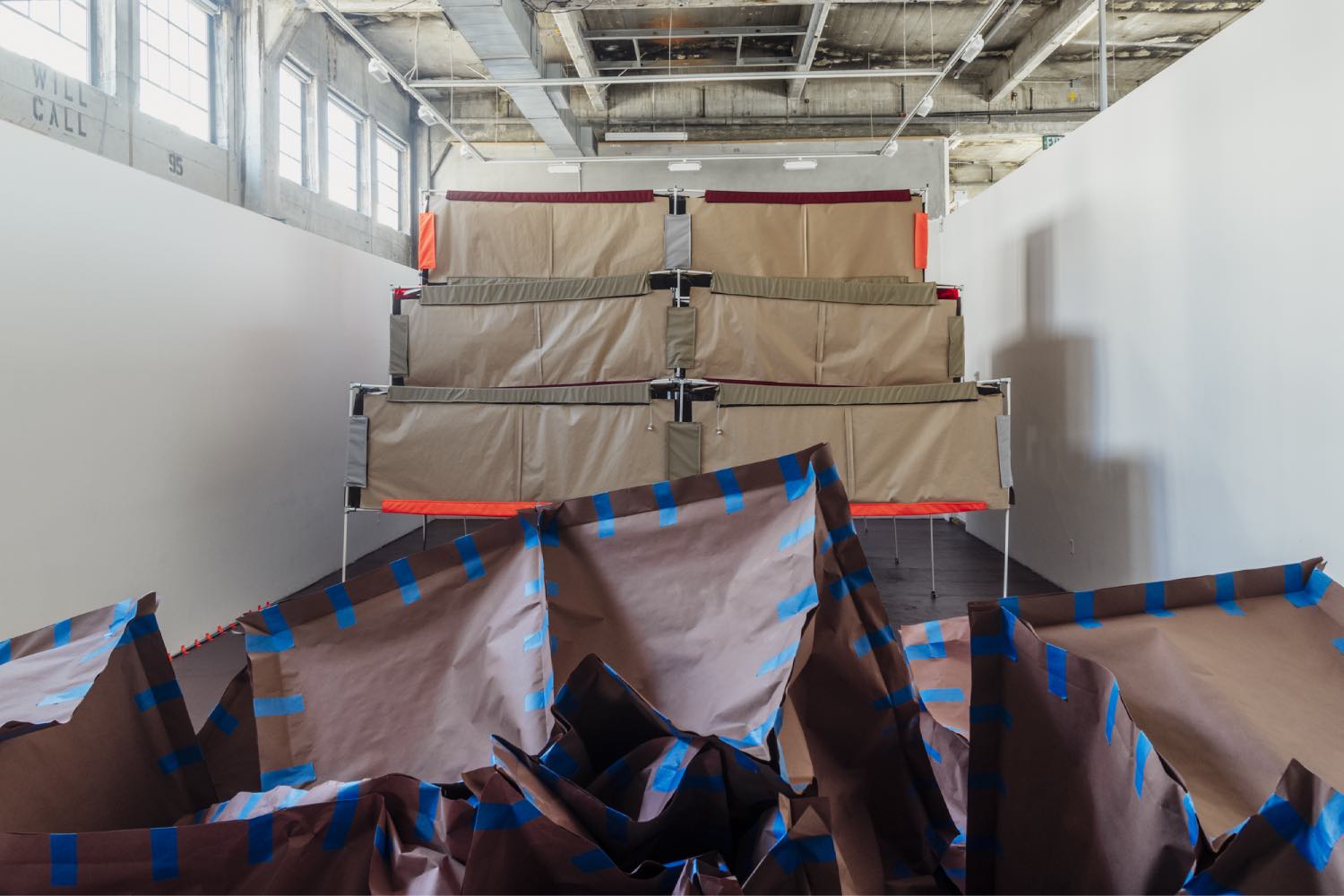
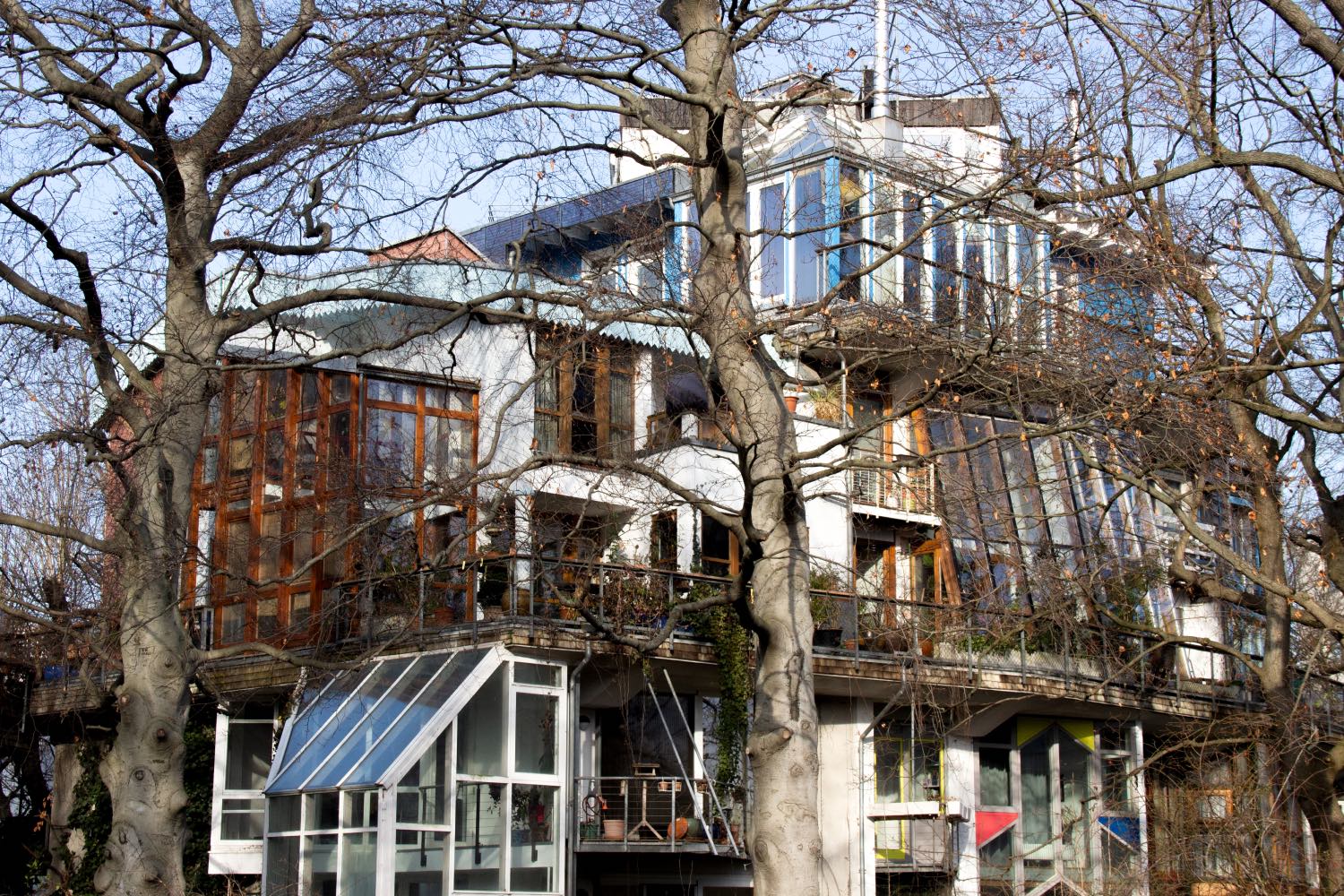
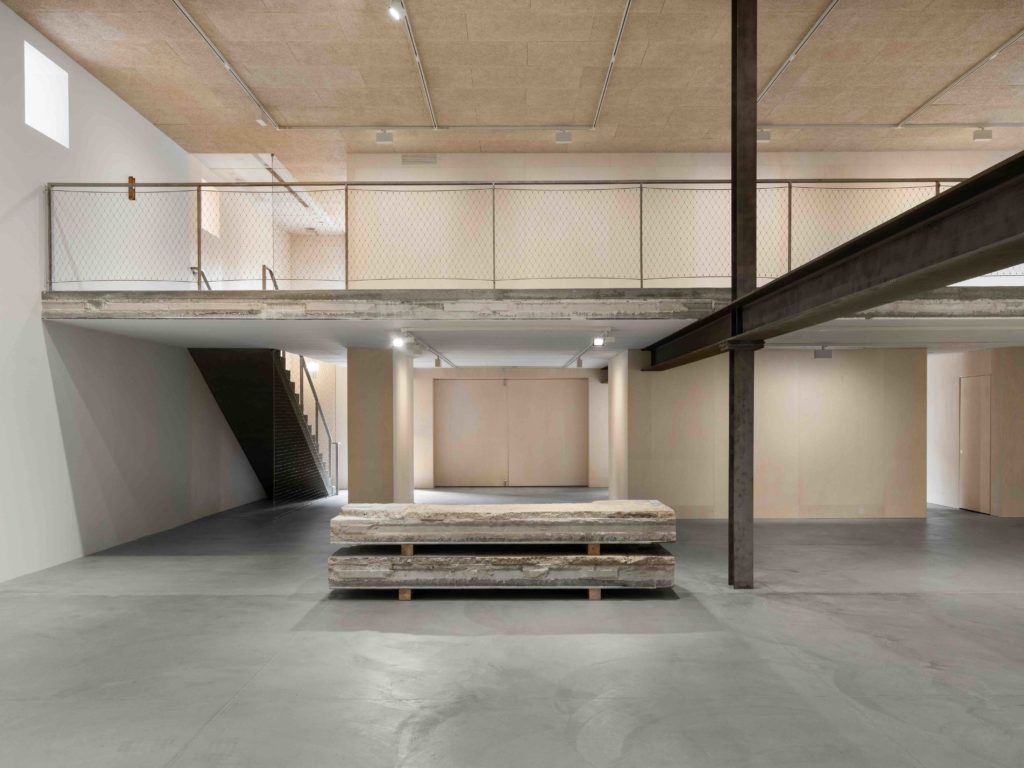
b+ makes use of existing demolition sites and abandoned buildings that are defined as waste and valueless according to capitalist metrics, where real estate speculation leads to constant cycles of demolition and new construction. Instead of pursuing newness as an ideal, b+ approach to adaptive reuse embraces incompleteness and transformation—a universal process that applies across different social and economic contexts. It is in their treatment of the meaning of matter, in saying that buildings hold abstract significations like social relations, history, and culture, as well as real physical qualities like embodied carbon, finds the concrete truth of what a building is. Under the current dominant structure, however, buildings are defined primarily through the abstract terms of financial speculation. We see in their projects, such as San Gimignano Lichtenberg, Midway Arts, Mäusebunker, and Antivilla, that the existing buildings were defined as waste, and, therefore, left unused and unable to be redeveloped or demolished. While these buildings’ continued habitation were proven to be completely viable through architectural intervention, we see the failure of the dominant structure’s ability to formulate the spatial needs of its citizens. b+’s work makes visible what would otherwise be invisible in the current structure. It also reveals a clear need for new value metrics, and new guiding principles for defining waste, use, form, and meaning. This is to avoid what Manfredo Tafuri already identified in the late twentieth century that architecture is being reduced “to form without utopia; in the best case, to sublime uselessness.”[16]
Adaptive reuse also challenges the aesthetic conventions of both modernism and postmodernism by resisting the logic of capitalist commodification and embracing material dialectics that use the incompleteness of existing structures to create an open-ended architecture. By working with waste and revealing the leftovers, adaptive reuse subverts the cycles of production and consumption that underpin national economies. Brutal matter that embodies time and energy becomes the new aesthetic standard for critique and spatial production.
“NOT EVERYONE HAS YET UNDERSTOOD THAT
EVERY MATERIAL IS LIMITED. SO WE WILL, AND ALREADY HAVE, JUST RUN OUT OFTHEM EVENTUALLY. SO DEALING WITH THE
EXISTING IS THE ONLY WAY TO GO.”
TOWARD A UNIVERSALIST TURN IN ARCHITECTURE
True universality emerges not through the affirmation of difference but through shared exclusion — the recognition that all subjects and social groups are barred from full self-realization within the symbolic order. Adaptive reuse offers a model for this universalist turn. By prioritizing the preservation and transformation of existing materials, adaptive reuse reveals the finite limit of matter on the planet and by leaving visible what was previously wasted space, this form of architectural production demonstrates that what is universal is what exists in the remainder. Universality is including what doesn’t belong in the dominant structure and inhabiting the existing left over. In recognizing the interconnectedness of global challenges, architecture can articulate a universalist vision that reflects and responds to the battles of the moment.
[4] Rudolf Wittkower, Architectural Principles in the Age of Humanism (London: Alec Tiranti, 1949).
[5] Julian Rose, Building Culture: Sixteen Architects on How Museums Are Shaping the Future of Art, Architecture, and Public Space (New York: Princeton Architectural Press, 2024), 20.
[6] Reyner Banham traces in the writings, voyages and images of American industrial buildings from Walter Gropius would lay the foundation of the modernist international style’s emphasis on standardization. See Reyner Banham, A Concrete Atlantis: U.S. Industrial Building and European Modern Architecture (Cambridge, MA: MIT Press, 1986).
[7] Karl Marx, Capital, Volume 1: The Process of Production of Capital, trans. Ben Fowkes (London: Penguin Books, 1990), 138–140.
[8] Todd McGowan, Universality and Identity Politics (New York: Columbia University Press, 2020), 33.
[9] Kenneth Frampton, “Towards a Critical Regionalism: Six Points for an Architecture of Resistance,” in The Anti-Aesthetic: Essays on Postmodern Culture, ed. Hal Foster (Port Townsend, WA: Bay Press, 1983), 16–30.
[10] Jürgen Habermas argues that modernity is an ongoing process and that has not been fully realized. He critiques postmodern thinkers like Lyotard, Foucault, and Derrida for their skepticism about the ideals of modernity. Habermas argues that, while postmodern critiques are valuable, they often throw out the positive aspects of modernity, such as the commitment to human autonomy and universalistic principles of justice. See The Philosophical Discourse of Modernity: Twelve Lectures, trans. Frederick Lawrence (Cambridge, MA: MIT Press, 1987), 3–5.
[11] Fredric Jameson, Postmodernism, or, The Cultural Logic of Late Capitalism (Durham, NC: Duke University Press, 1991).
[12] For Hegel, the concrete universal is a universal that is not abstract, but rather fully realized in specific instances. It is the synthesis of the universal and the particular, which are both mediated and reconciled in a concrete unity. The concrete universal is the idea that the universal is actualized in and through the particular and individual. Concrete universals not mere generalizations, but living and dynamic concepts that are embodied in specific historical and social forms. Georg Wilhelm Friedrich Hegel, The Science of Logic, trans. Donald F. S. Holden (Cambridge: Cambridge University Press, 2015).
[13] McGowan, Universality and Identity Politics (New York: Columbia University Press, 2020), 59-88.
[14] European Citizens’ Initiative. “Initiative Details: 2025/000001: HouseEurope! Power to Renovation,” accessed March 3, 2025.
[15] HouseEurope!, “Yes to Renovation! No to Demolition!”, HouseEurope!, accessed March 3, 2025.
[16] Manfredo Tafuri, Architecture and Utopia: Design and Capitalist Development, trans. David M. Hays (Cambridge, MA: The MIT Press, 1976), ix.