Why so much grief for me? No man will hurl me down to Death, against my fate. And fate? No one alive has ever escaped it, neither brave man nor coward, I tell you — it’s born with us the day that we are born.
— Homer, The Iliad [1]
[1] All quotes in the essay: Homer, The Iliad, trans. Robert Fagles (New York: Penguin Classics, 2006).
Let’s start with the apocalypse, then move to divorce.
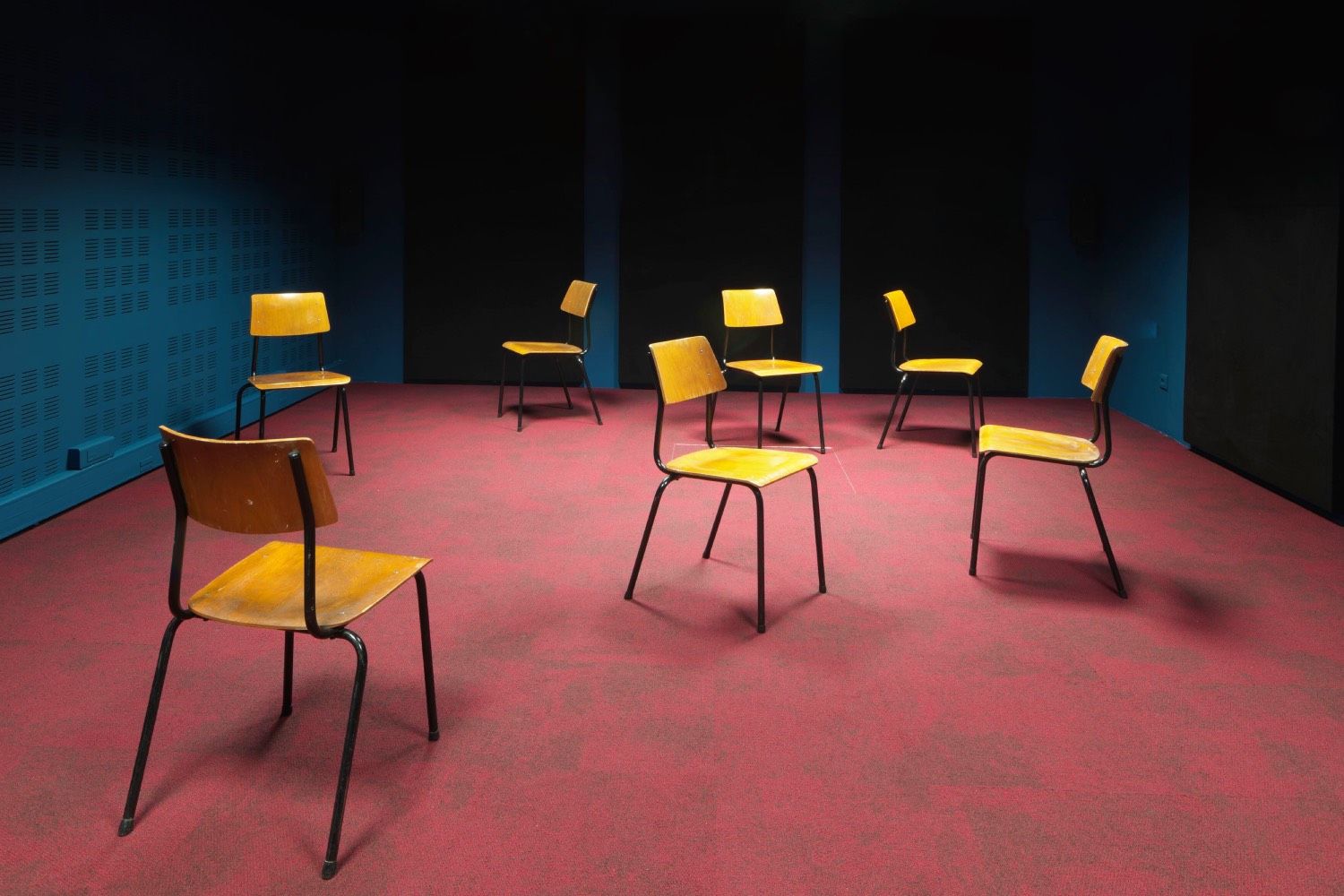
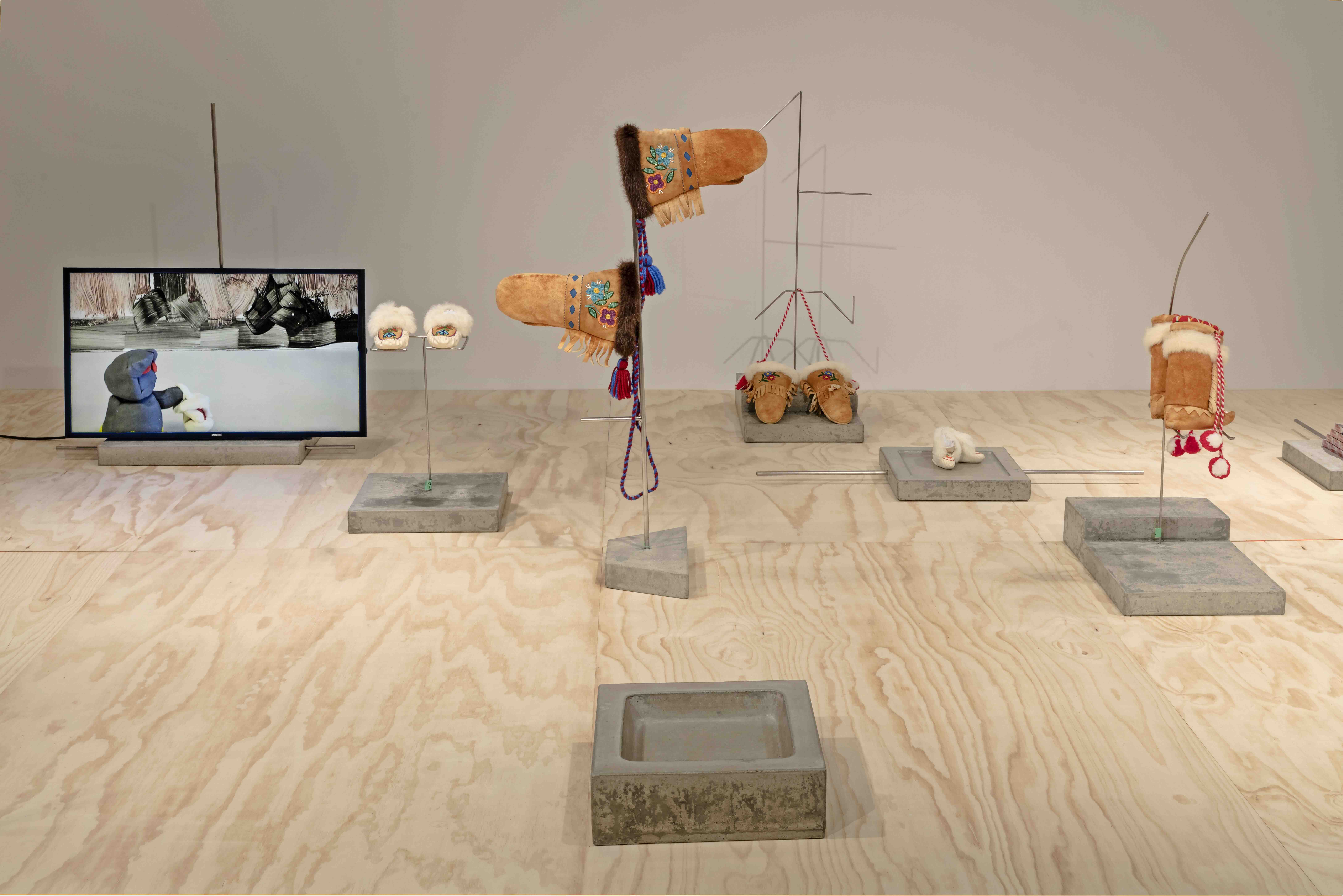
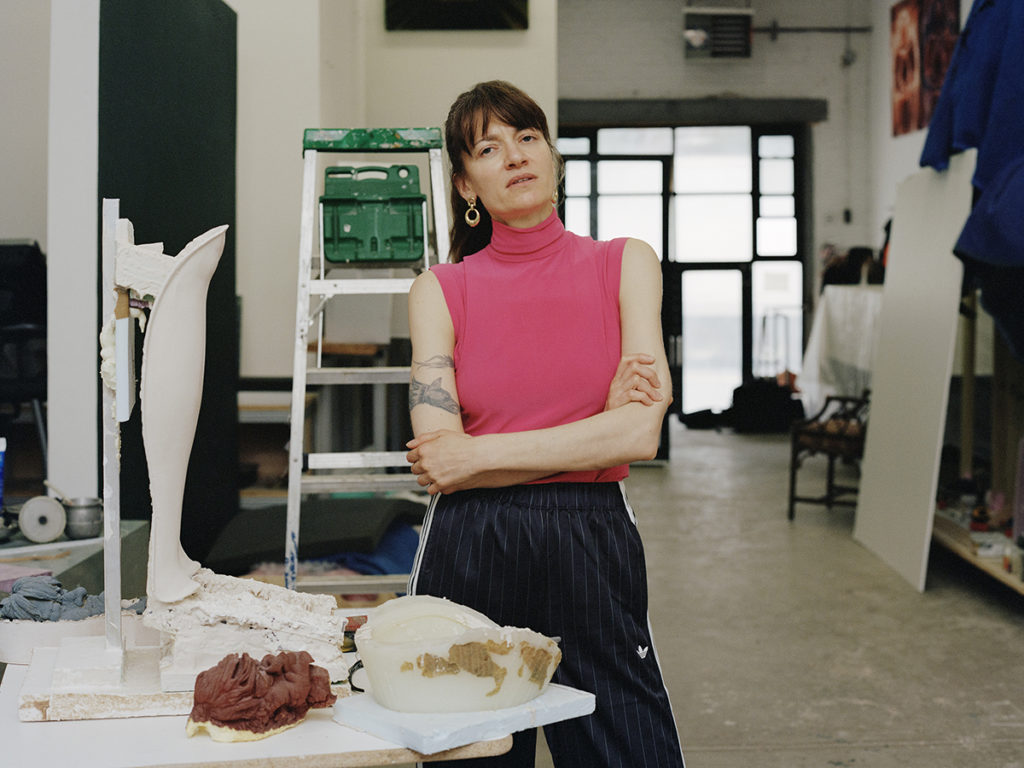
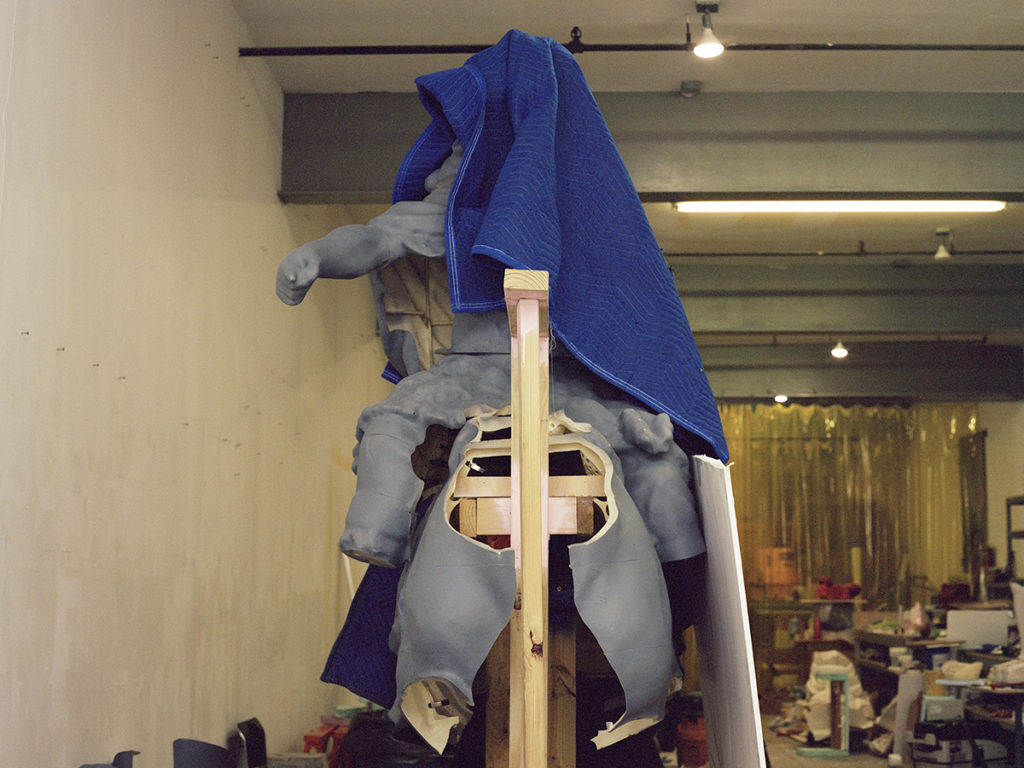
It took me sixty business months to un-suppress a memory from 1997 when I visited my first abattoir, draped in all the stench of death and decay, and the metallic smell of blood. You smell that?! There were high squeals and low squeals, a momentary lull and a fresh squeal, louder than before, surging up to a deafening climax. I haven’t eaten livestock since. Abattoirs say a lot about things that no longer exist: upside-down histories bleeding out, the archeology of ruin, casual attrition, power games, hunger games, and dead stories, where the tide doesn’t come in for another six hours. At the DESTE Foundation for Contemporary Art’s Slaughterhouse project space on the Greek island of Hydra, Andra Ursuța works with the tides of death in her solo exhibition “Apocalypse Now and Then” (2025). Bucking at ancient stories of armageddon at the former abattoir, she lays the site with new and existing works, a seasoned archeologist debuting several cast bronzes, sculptures in colored glass, and other favored mediums: drawings, installations, detritus from her studio, mythological artifacts, like a goddess of civilizations that no longer exist.
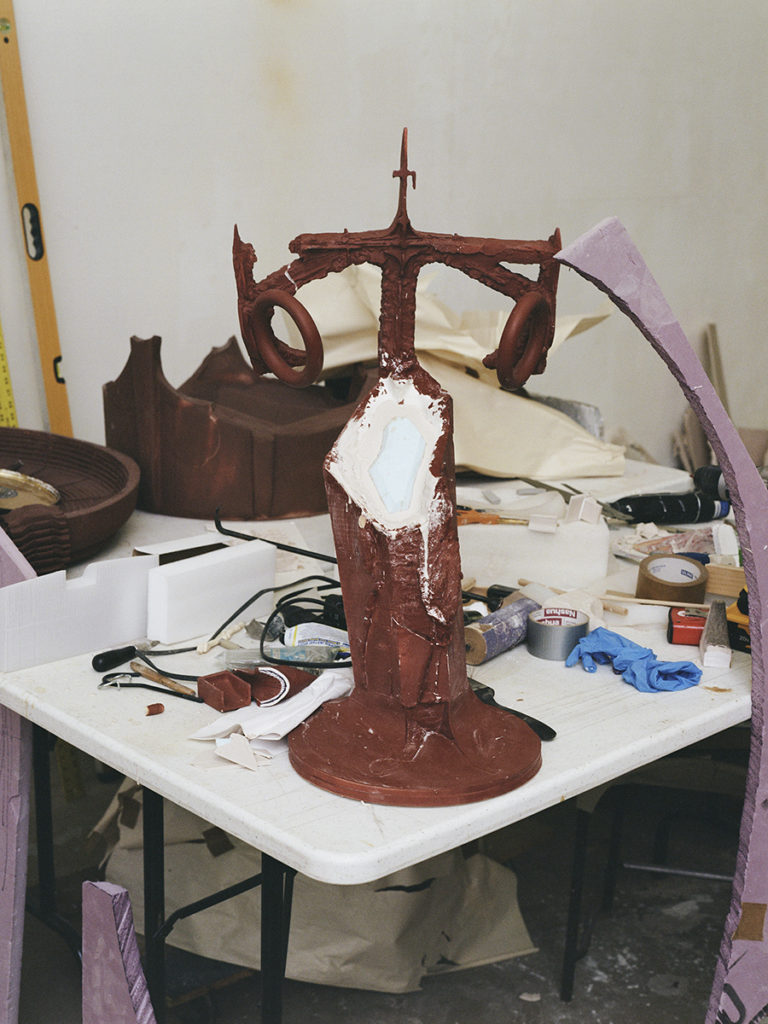
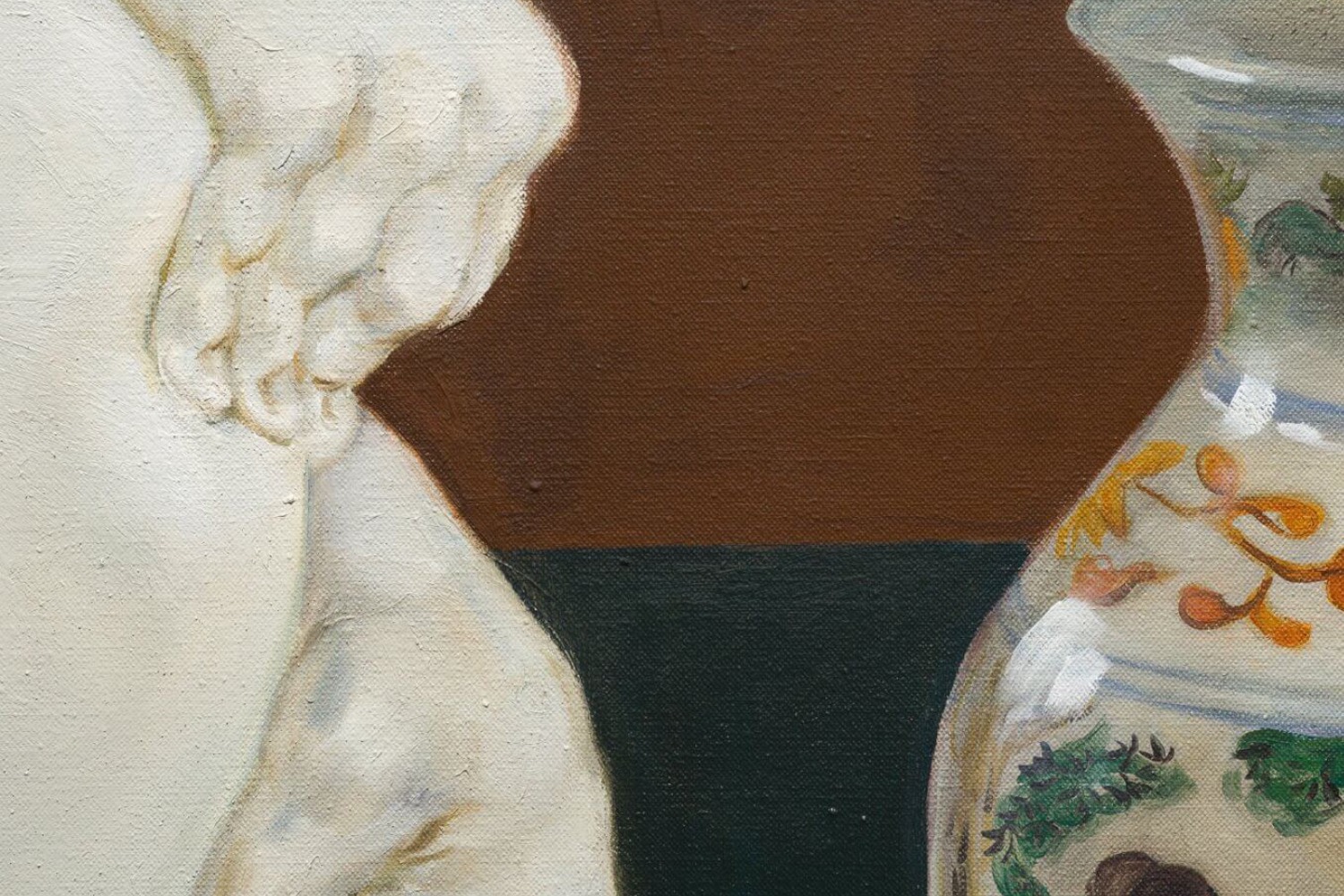
Homer’s epic poem The Iliad includes the mythological figure of Achilles, whose heel exposed his vulnerabilities despite his overall strength. As a child, his mother, Thetis, a water nymph, dipped him in the River Styx by his heel, which consequently remained untouched by the waters of protection, leaving him susceptible to attack in this one area of the body. The modern “Achilles’ heel” has come to mean a point of weakness that may lead to apocalyptic downfall, especially in someone or something with an otherwise strong constitution, which is perfectly emblematic of “Apocalypse Now and Then.” Ursuța uses absurd sculptural remnants inside and out of the art space to create her revelatory mythology aside the Mediterranean; a folklore of personal archaeology, in which we see, really see, our human weaknesses, hurling us into the sea of fate. Site-specific turns sight-specific now and then, and one cannot escape it. Presented at the repurposed abattoir is Half-Drunk Mummy (2024), a multicolored lead crystal sculpture replicated from an earlier iteration in 2019 when she exhibited in the Arsenale at the 58th Venice Biennale, “May You Live In Interesting Times.” The glass creatures appear as hybrid alien beings, with thick stitches constricting the neck like a Frankenstein boxing glove. And she would know: her contribution to the biennial was titled “Divorce Dump” (2019), gleaning fossilized inspiration from her own punch-drunk love gloves of marital un-bliss. She’s clearly tipsy, and who can blame her? What is marriage separation, if not the pains of attrition, flinging spears, bows, and arrows, the tragic chokehold of fate, and the archaeology of a family exsanguinating?
the mother who gave me life —
A deathless goddess. But even for me, I tell you,
Death and the strong force of fate are waiting.
There will come a dawn or sunset or high noon
When a (wo)man* will take my life in battle too —
flinging a spear perhaps
*[I added (wo) since “man” is mostly useless.]
Ursuța takes cut-throat personal history, and the myth of marriage itself, and simmers them into 3D printed forms, relatable to all those affected by crude divorce rates, which is to say, everybody? In a separate building at the 2019 Venice Biennale, the artist casts “Divorce Dump,” with aluminum and steel, arranged to form the commas of ribs and thoracic spine; a sunset-orange trash bag constitutes a heart, exploding from the chest cavity in one spectacularly visceral time machine. Getting divorced is an iteration of apocalypse, the end decrees of marital misery, the kiddie pool of contempt, urine, and sadness. Or elation. Either way, humans are ever invested in personal de-growth. Rasping and gasping in relational photosynthesis, the sculpture plunges into shakier personal territory with the inclusion of nuptial trash from the artist’s marriage (in all four works of the “Divorce Dump” series), crammed into trashed-heart bags, eyes-rolling: a phone cord, a yellow plastic kids’ camera, carabiner, and a… taxidermied alligator? (Some things should remain between a man and his wife.) The primary function of ribs is to protect vital organs, particularly the heart and lungs, within the chest cavity, and to facilitate the automation of breathing. The rib cage, formed by the ribs and sternum, supports the upper body and helps maintain its insulating structure; however, in this sculpture, the protective barriers of the ribs are breached, the chest cavity all but collapses, and a plastic bag asphyxiates life-giving breath. Choking the audience in makeshift demolition, zigzagging down,
down,
down, into an aesthetically exaggerated splintering of human relationships. Couples split, apartment splits, custody splits, financial splits, Christmas, Hanukkah, and Easter splits, until the heart implodes, dud fireworks, zigzagging
down
down
down, in every petty direction. Yoga ain’t helping.
Perhaps our heart is the ever-exposed human Achilles’ heel, void of the waters of protection?
Be strong, saith my heart; I am a soldier;
I have seen worse sights than this.
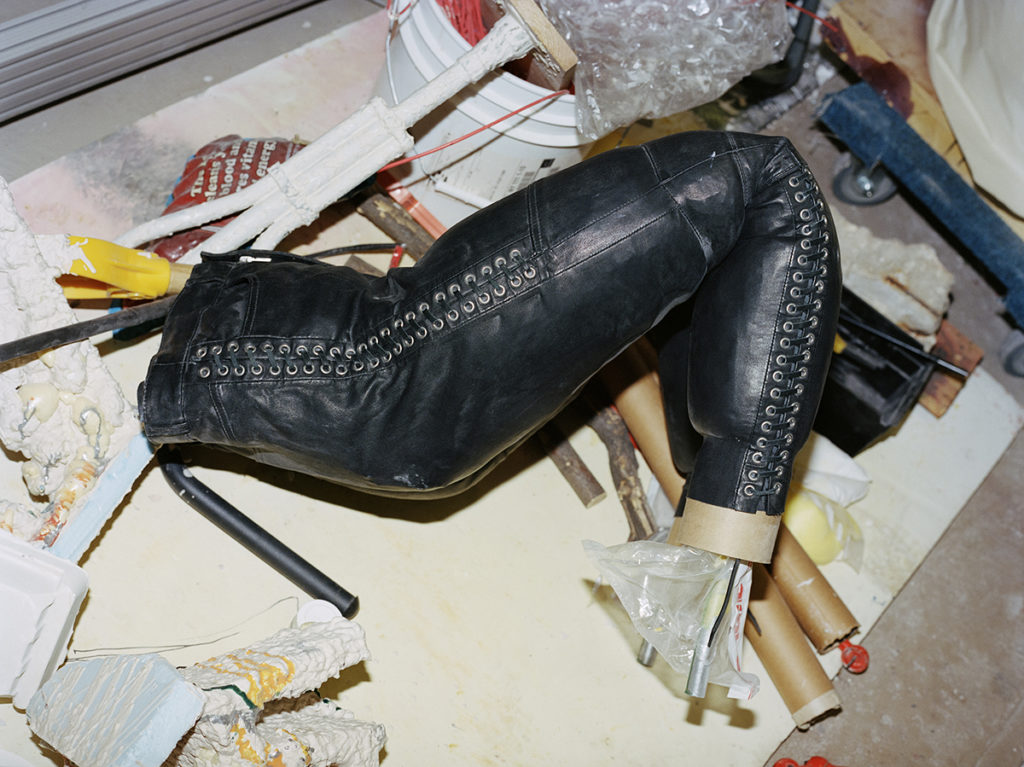
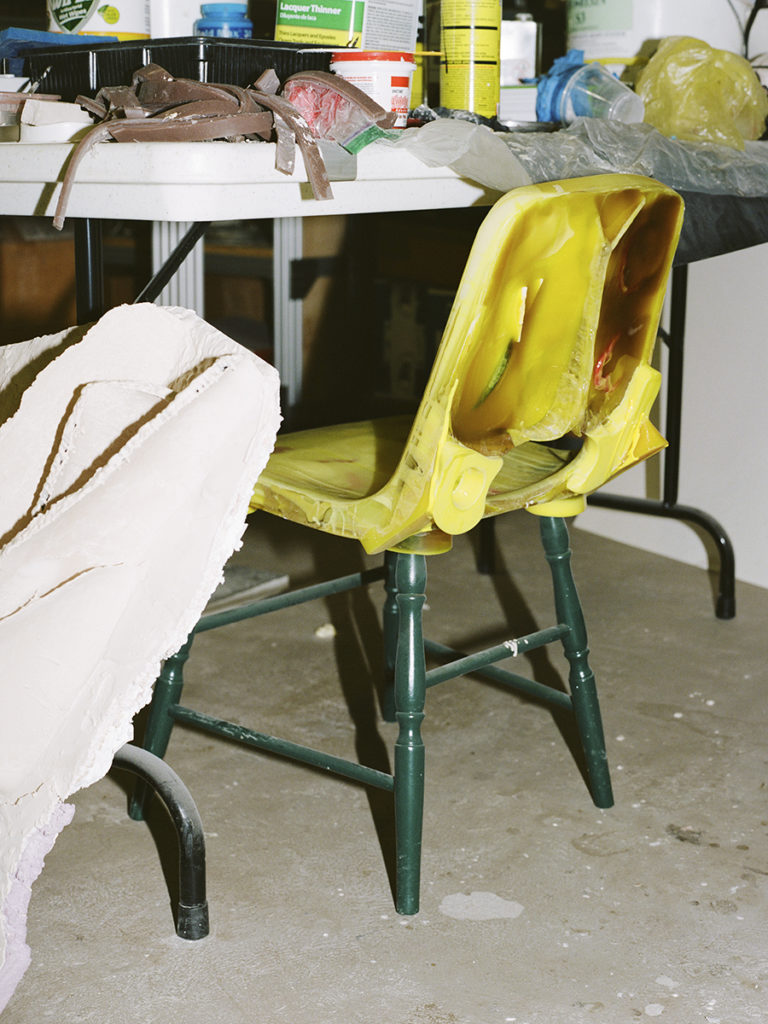
Ursuța’s heart saith she’s strong, and she’s definitely seen worse than this: Soviet claims on Romanian territory. Born in Romania, Ursuța is known for her nihilistic portrayal of the human condition, her scrutinizing of ethnic expulsions, the aberrant extermination of Jews and Roma, and territorial occupation by Nazis. For the 55th edition of the Venice Biennale, “The Encyclopedic Palace” (2013), she exhibited dollhouse-sized models based on the interior of her childhood home in Romania, ten kilometers shy of the Hungarian border. Dark and stark, the mini-replicas convey a bleak and humble existence: a three-legged chair in dusty Soviet green, a simple mattress and stove, a stepladder, a teeny fridge, glasses, pitchers, and an itty-bitty rug on the floor to garner warmth. One can see in their mind’s eye the greater Transylvanian town where she grew, lush fields of ryegrass and feathergrass, irredentism and rocky entente, a local salami factory, and the ever-present slaughterhouse — both kinds. Nazi operators heavily bombed her homeland during the Battle of Romania, and Soviet arms occupied the region. Popular support for Romania’s participation in the war eventually faltered, and the German-Romanian fronts collapsed under a Soviet onslaught. The 1944 Romanian coup d’état deposed the Antonescu regime and put Romania on the side of the Allies for the remainder of the war. Despite this late association with the victors, Greater Romania was not restored, except for Northern Transylvania, which was returned from Hungary. The artist’s encyclopedic knowledge of occupation gives (up)rise(ing) to formaldehyde-dioramas, conserving her childhood despite dark social complexities, freezing the rage of time, protecting familial memories and home life after those who constitute home life have gone. Most of the works in this series are titled after the house address: T. Vladimirescu Nr.5 (2012–13), though the address is no longer in their possession — her father sold the family home to an Austrian supermarket chain some years back, forever lost to the grip of Western capitalism that has us in its noose.
Still, we will let all this be a thing of the past, though it hurts us, and beat down by constraint the anger that rises inside us.
Now I am making an end of my anger. It does not become me, unrelentingly to rage on
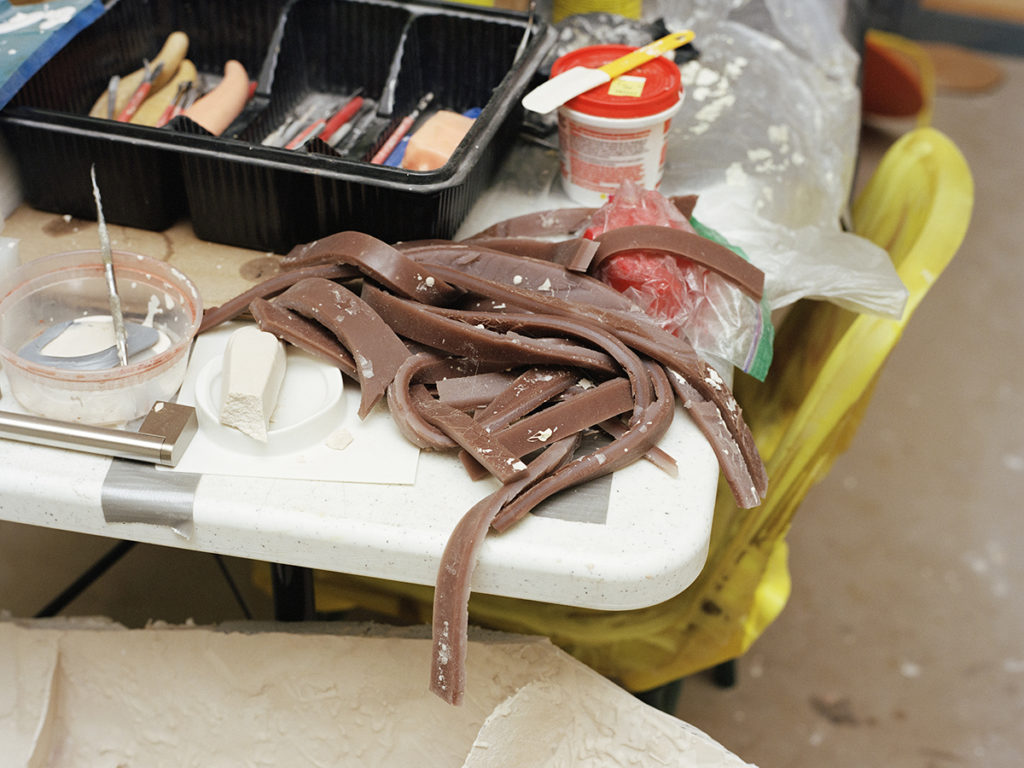
Ursuța is besotted by iterations of nooses, sailor’s knots, and strangulations, restating it throughout her oeuvre, including her sculptural suicidal ideation, Breath Hold (Discipline and Vanish), executed in 2010, if you’ll pardon the pun. In a stormy, blue-bruised, cast urethane balloon floating above a green, black, and yellow rope, the artist ruminates on the action of suicide, but with utmost consideration. One of the acerbic realities of hanging yourself is that some unfortunate soul has to discover your body, and this is an unimaginably devastating plot twist for their lives. Breath Hold (Discipline and Vanish) functions as a hella considerate, aesthetic deus ex machina, whereby an unlikely occurrence abruptly resolves a seemingly unsolvable problem, leading the tale to a — mostly — happy ending. Ursuța thinks about suicide more often than the average person and is judicious in her deliberations, looking to clean up her own mess. Once we tie a noose around our neck and attach it to a starry night balloon inflamed with helium, we fly, up, up, up, zigzagging upwards, rising in masterful sleep, leaving others untouched, venturing back to the vanishing land one loves. An embodied vector breaking open the calculations of flesh, becoming generative, gestural, polite, and improvised. Suicide hasn’t always been a morbid, blasphemous subject; in fact, suicide played prominent transmuting roles in ancient legends and history, like Ajax the Great, who killed himself in the Trojan War that Homer’s poem addressed. One of the ancient beliefs was that death by suicide was a transformation, not an abomination, and in some cases even revered. Attitudes began to shift during the Middle Ages when Christianity purported that suicide was a loathsome, sinful event. If one attempted to hang themselves or drown, they were excommunicated from the Church. Conceding to the colonization of suicide, Ursuța hides necropolitics inside a Trojan horse harnessed with a noose, bridled by innovation, and it’s awfully glistening, exuberant, empowered, disciplined, considerate, far, far from violent, and anything but depressing.
the immortal goddess Thetis with her glistening feet,
that two fates bear me on to the day of death.
If I hold out here and I lay siege to Troy,
my journey home is gone, but my glory never dies…
true, but the life that’s left me will be long,
the stroke of death will not come on me quickly.
The eviscerations of death and violence have always built a lairage aside Ursuța’s art, but also her life. (It’s no coincidence the word “rage” haunts lairage, the adjacent waiting room prior to slaughter.) Growing up, her family would butcher a pig every year, making meat products or soap from the bones, using every part of the creature: femur, pettitoes, ears, snouts, liver, and heart. The fate of the animal. And perhaps it is simply this — the fate of the animal — that offers a loose-threaded ligature through her work, bleak and humorous, playful, cartoonish, melancholic as hell. In essence: muscle memory. Frankness and seriousness are monumental in the artist’s shows, but she’s also hysterical. Hoisting sardonic wit in “Alps” at the New Museum, New York, in 2016, she installed a vertical free-climbing wall, yet rather than neutrally shaped anchors, there are colorful resin dicks of all sizes,
ziggzagging up,
ziggzagging across,
ziggzagging down. Put simply: dicks everywhere (business as usual). Sport and men have a great deal in common: imposing restrictions, rules, foul odor, exhaustion, hierarchies, and torture, and here the artist marks the mountainous territory of painstaking triumph. It takes all our slippery athleticism to crawl over the patriarchy, to latch on and stay latched in upwards mobility, to conquer the phallic handles that exist to oppress. All of this, mind you, without a safety net. In a way, Ursuța, insolent and brazen, floats jocularity as a safety net, happy to castrate dominant society, slitting patriarchy ear to ear while grinning ear to ear. Then again, why give more space to penises than absolutely necessary; would it not be more “feminist” to model vulvas as a signifier of triumph? Is she writhing against patriarchy? Not really. And that’s precisely how Ursuța wants it. She is, in fact, occupying new territory, which is to demonstrate the environmental influences affecting subjective projections of misogyny, patriotism, capital, and melancholy, and thus colonizing discourse in her own subversive way.
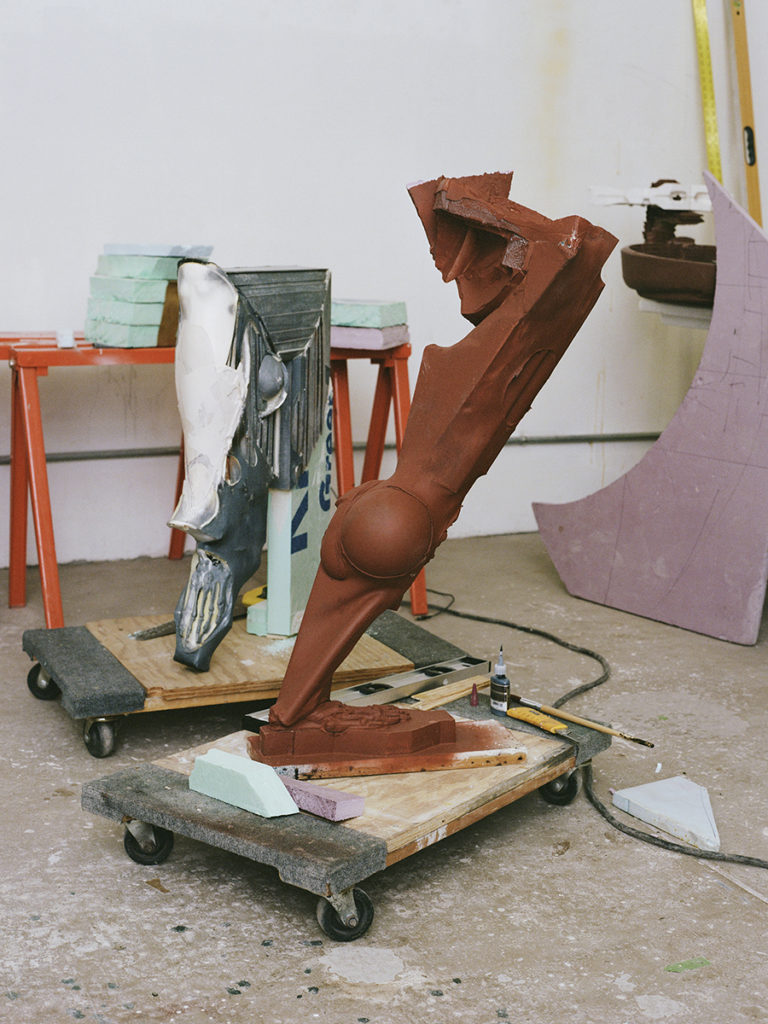
So, what is our human fate? Is it nihilistic, colonizing death and slaughter, born with us the day we were born? Well, yes. Ursuța, as she lays dying, appears to agree: carbon dioxide colonizes lungs, patriarchy colonizes society, geographic territories are annexed with nationalist propaganda, the City of Troy, Romania, and Hungary. Why is so much grief for me? And fate? No one alive has ever escaped it! The artist’s aesthetic uproar is appalling, sure, but also hilarious and perilously loud to the eardrums; one feared there was too much visual excavation for the Slaughterhouse project to contain — that the gallery walls must give way to the outside cliffs. She squeals, hypoxic and unafraid of her fate, slicing throats with aesthetic precision, happy to take a scalpel to expansionist projects like a goddess of fate.
The
future
is
not
what it
used to be.