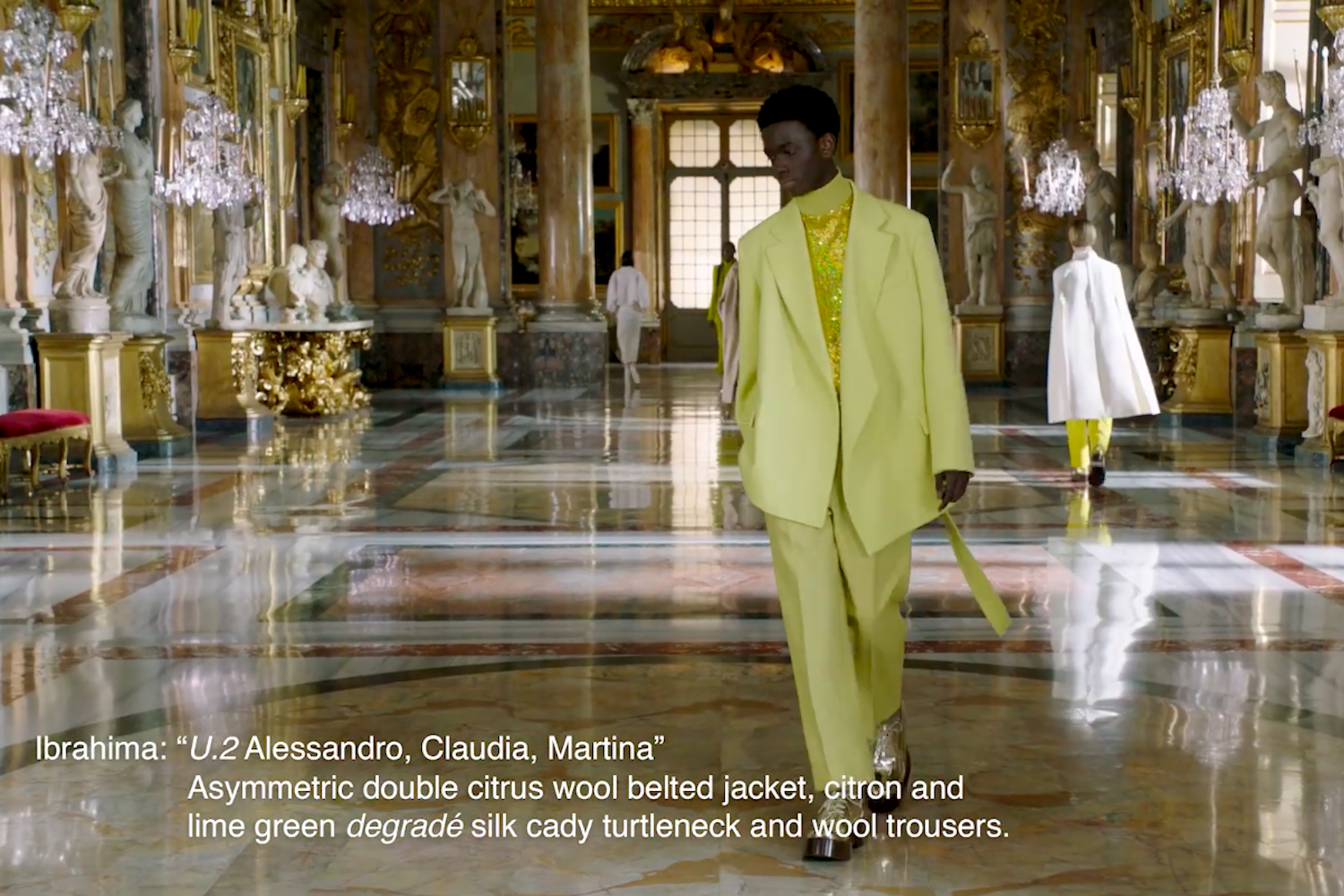
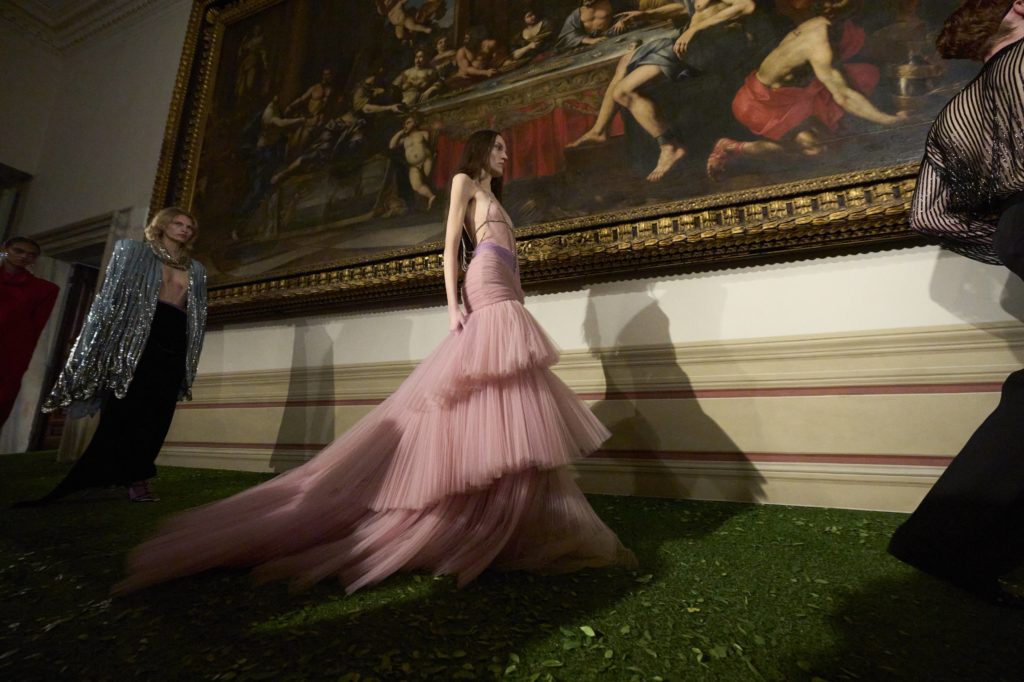
Valentino returned to Rome—not symbolically but materially. The house staged its Fall/Winter 2026–27 show inside Palazzo Barberini, the seventeenth-century baroque palace where architecture, political allegory, and spectacle historically converge. The gesture carried particular resonance. It was the first major runway presentation since the passing of Valentino Garavani, and it temporarily displaced the brand from the Parisian system that has long structured its international visibility.
Under Alessandro Michele, however, the return to Rome was less a nostalgic homage than a spatial proposition. The collection—titled Interferenze—proposed fashion as a disturbance inserted into historical continuity. The show therefore functioned less as a conventional runway than as a form of site-specific staging, where garments entered into direct dialogue with the architecture and symbolic apparatus of the palace.
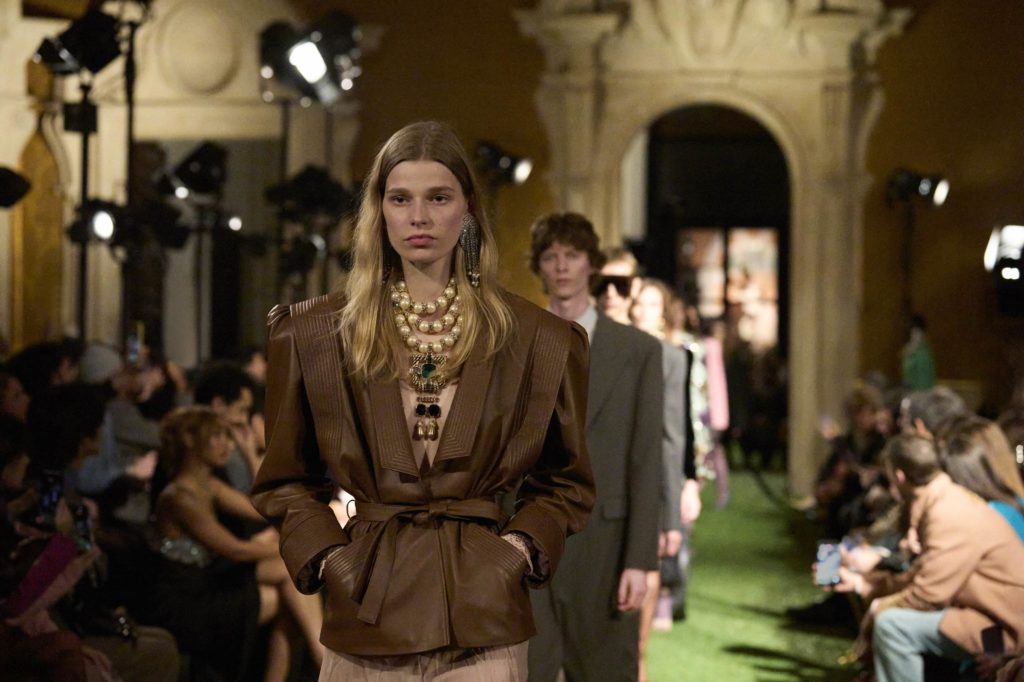
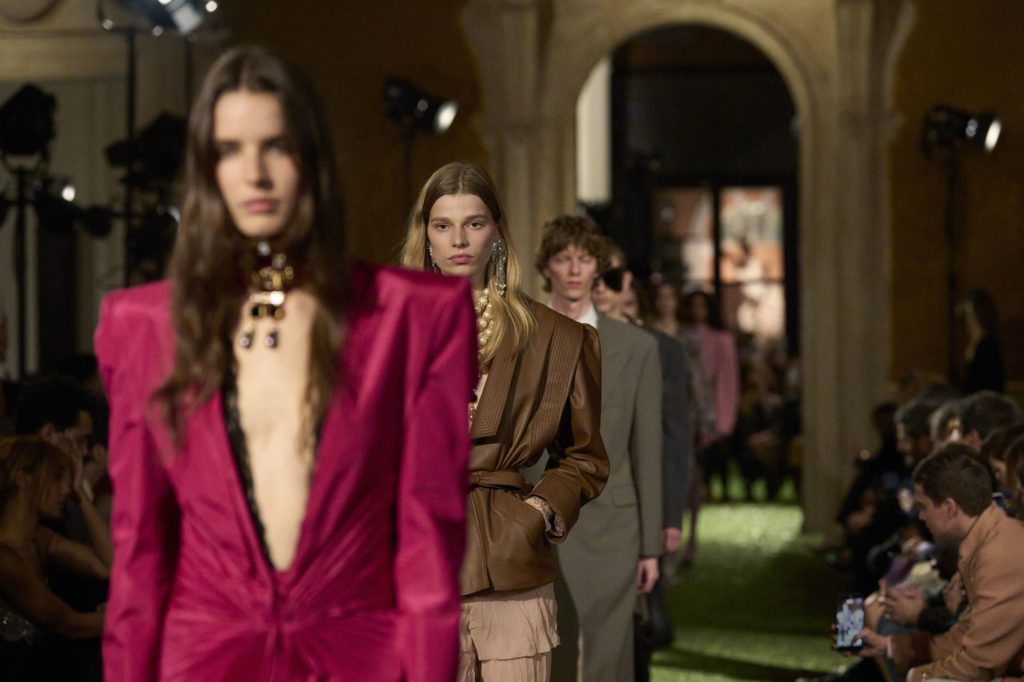
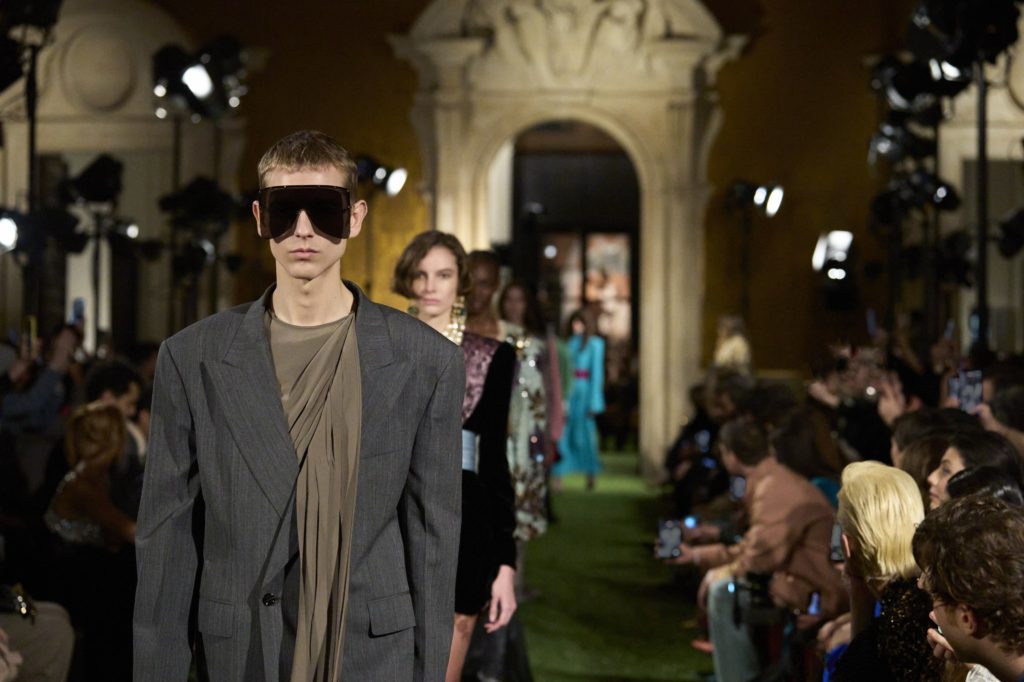
Palazzo Barberini is not a neutral backdrop. In the show’s accompanying statement, Michele describes the building as an architecture structured by tension rather than harmony. The palace, he suggests, can be read almost in Nietzschean terms as the unresolved friction between an Apollonian principle—measure, clarity, hierarchy—and a Dionysian impulse of movement, excess, and the dissolution of boundaries. Rather than synthesizing these forces, the architecture exposes their interference.
At first glance the palace appears governed by baroque order. Its façade, courtyard, and spatial sequence articulate a legible hierarchy of proportions. Yet this compositional stability is disrupted from within. In the great hall, Pietro da Cortona’s ceiling fresco The Triumph of Divine Providence fractures the architectural logic beneath it. Clouds, allegorical bodies, and emblems dissolve the geometry of the room, transforming the ceiling into a vortex of theatrical movement.
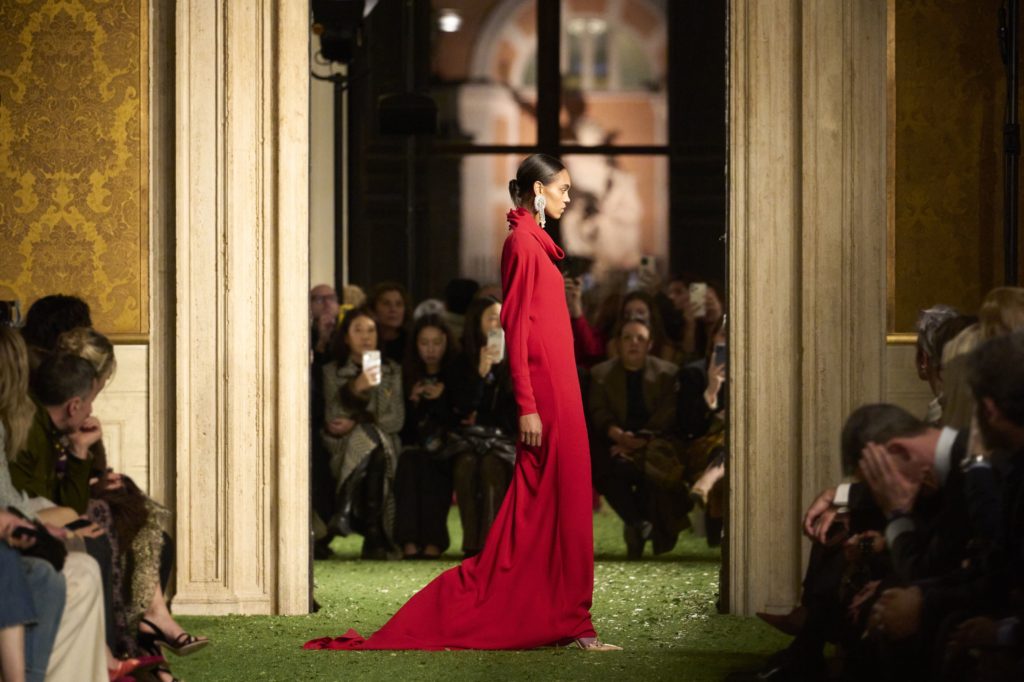
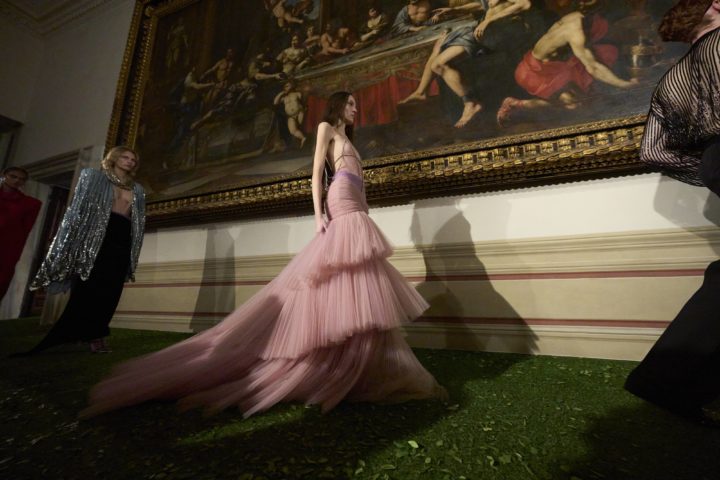
Michele’s staging unfolded precisely within this architectural contradiction. Beneath Cortona’s swirling allegory, silhouettes moved through the space like fragments of displaced historical memory: velvet tailoring, lace surfaces, ecclesiastical capes, and ornamental embroidery suspended between aristocratic portraiture and the flamboyance of late twentieth-century glamour. The garments did not stabilize the setting. Instead, they amplified its instability.
This dialectic becomes even more legible through the palace’s internal architectural dialogue between Gian Lorenzo Bernini and Francesco Borromini. Their respective staircases articulate two incompatible conceptions of spatial experience. Bernini’s staircase affirms hierarchy: broad, rectilinear, ceremonial. The body ascends along a clear axis where order appears natural and authority visible. Borromini’s elliptical staircase produces the opposite effect. Geometry curves, orientation slips, and vertical movement becomes experiential rather than directive. Where Bernini stabilizes space, Borromini renders it unstable.
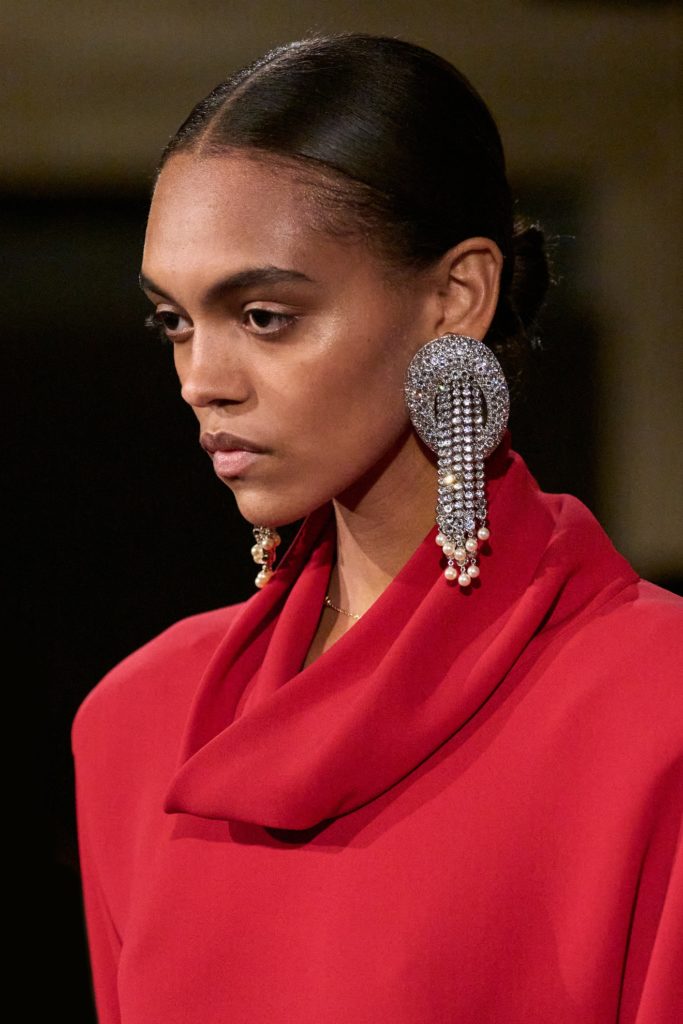
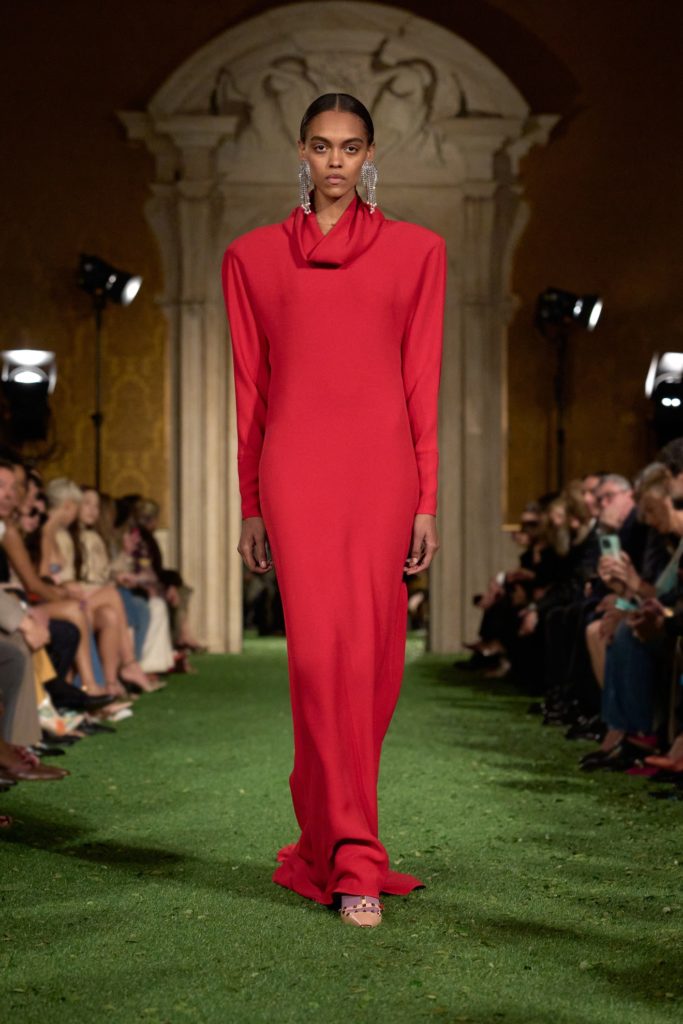
Michele’s collection operated somewhere between these two spatial logics. Moments of Valentino’s canonical elegance—long fluid gowns or the unmistakable flare of Valentino red—appeared with Berninian clarity, only to be complicated by Michele’s ornamental density. Lace collided with structured tailoring; devotional silhouettes drifted toward eccentric embellishment; classical restraint repeatedly yielded to theatrical excess.
The most telling gesture of the evening, however, occurred before the show began. Guests opening their invitations discovered a small marble-effect button accompanied by the Latin phrase quod est perenne gaudium, requirere—to seek what is eternally joyful. The object referred to a minor detail hidden in the palace itself: the missing button on the mozzetta of Cardinal Pietro Valier in a bust attributed to Bernini.
What might appear as a playful anecdote in fact reveals the conceptual mechanism underlying the show. The absent button introduces a minute fracture into the baroque monument—a small interruption capable of destabilizing the illusion of completeness. In this sense the invitation operates as a miniature model of Michele’s method. Fashion becomes an ornamental intervention that subtly displaces the authority of historical form.
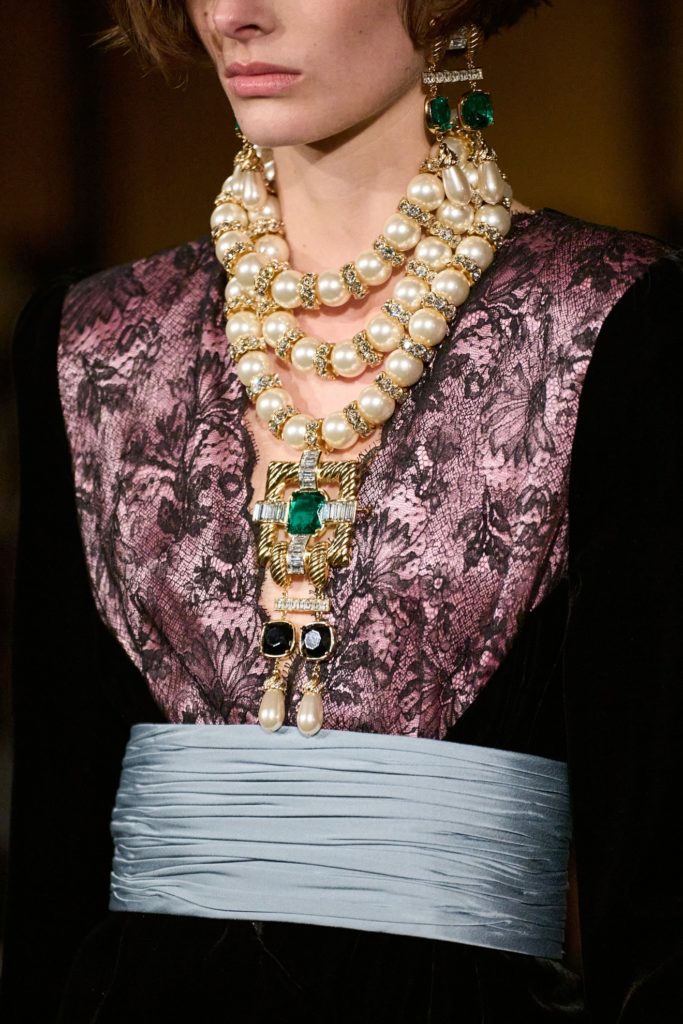
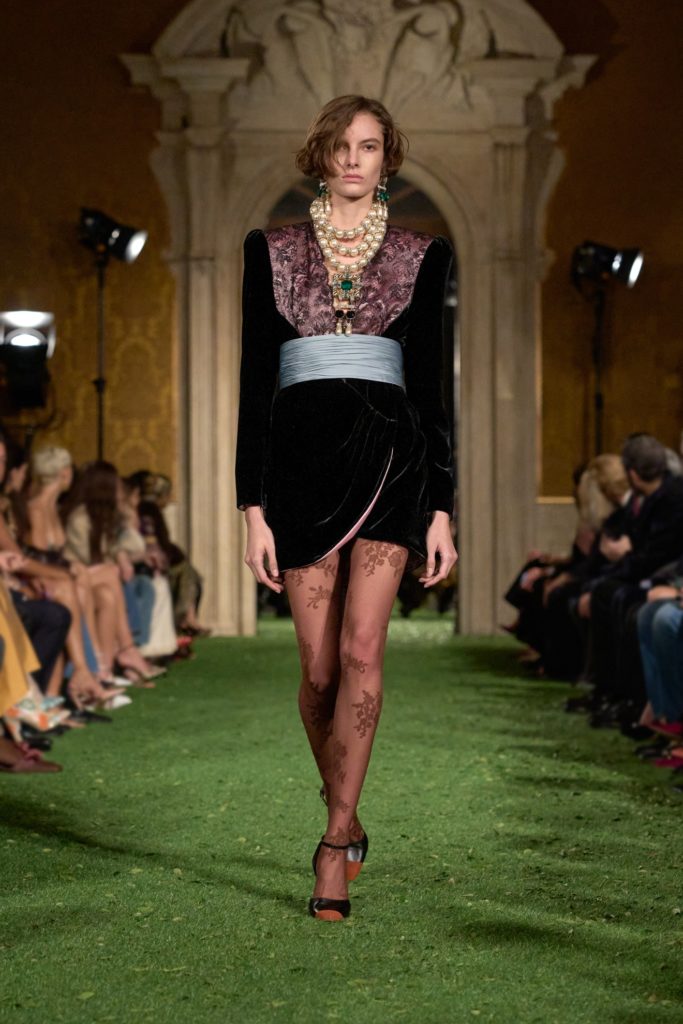
Seen through this lens, the return to Rome assumes a different significance. Baroque culture rarely pursues purity or resolution; it thrives on accumulation, contradiction, and spectacle. Palazzo Barberini embodies precisely this condition. By inserting fashion into that environment, Michele situates the Valentino collection somewhere between garment and artifact, runway and exhibition.
The narrative therefore begins with a small absence. A missing button in a Bernini sculpture becomes the emblem of a new chapter: a reminder that even the most monumental traditions remain structurally incomplete. In Michele’s Rome, fashion occupies precisely that unstable space—minor, ornamental, yet capable of interfering with the architecture of history.