Nora Aurrekoetxea’s exhibition “Larrosa” – meaning “rose” in Basque – at Gallery Madé van Krimpen opens with a question: Can a fixation or fetish on a domestic activity become a viable means of sculptural articulation?
For her first solo show at the gallery, the recent Rijksakademie graduate engages a universal image: her mom folding towels at home. This gesture becomes an obsession for her. As the exhibition’s text notes, “I became interested in it to the point that I would record her hands creating these ephemeral shapes, like a soft sculpture.” The repeated act of shaping and forming underlines the intimate gestures implicit in Aurrekoetxea’s sculptures, and the poetics embedded in her materials opens a relational space for the viewer: a freedom of interpretation and the ability to mirror their own desires.
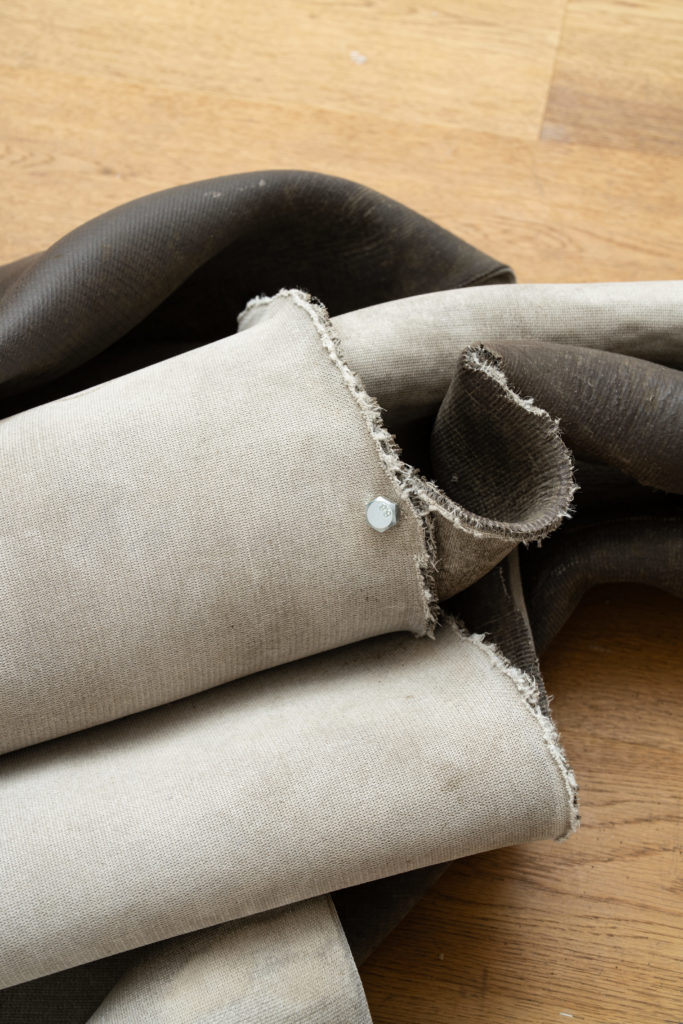
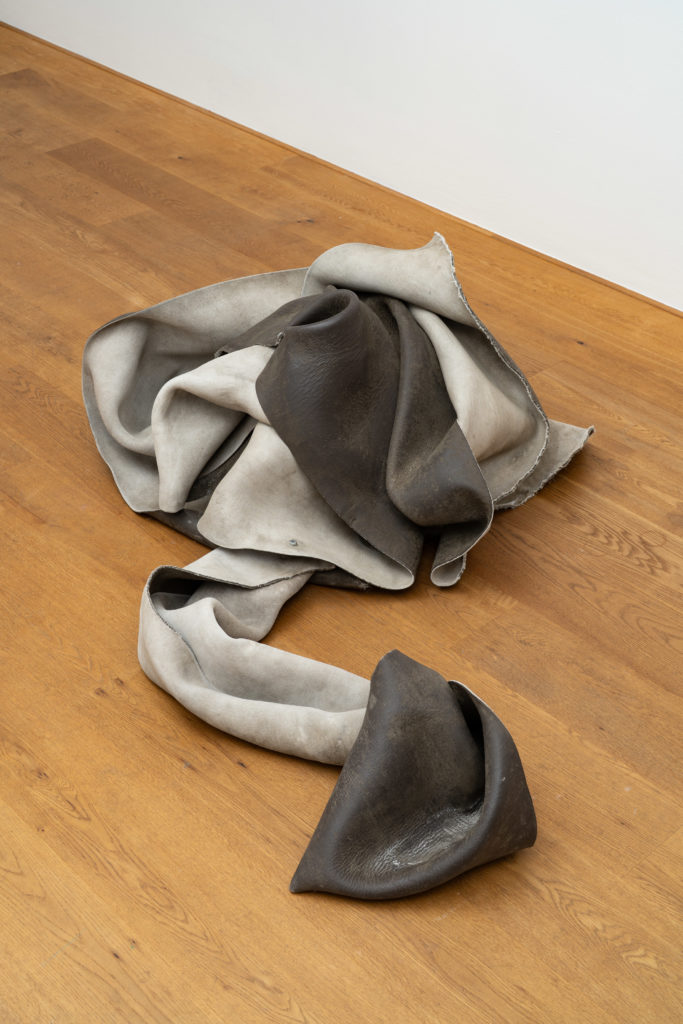
Concrete canvas and bolts. 140 x 80 x 48 cm. Courtesy of the artist and Madé van Krimpen, Amsterdam.
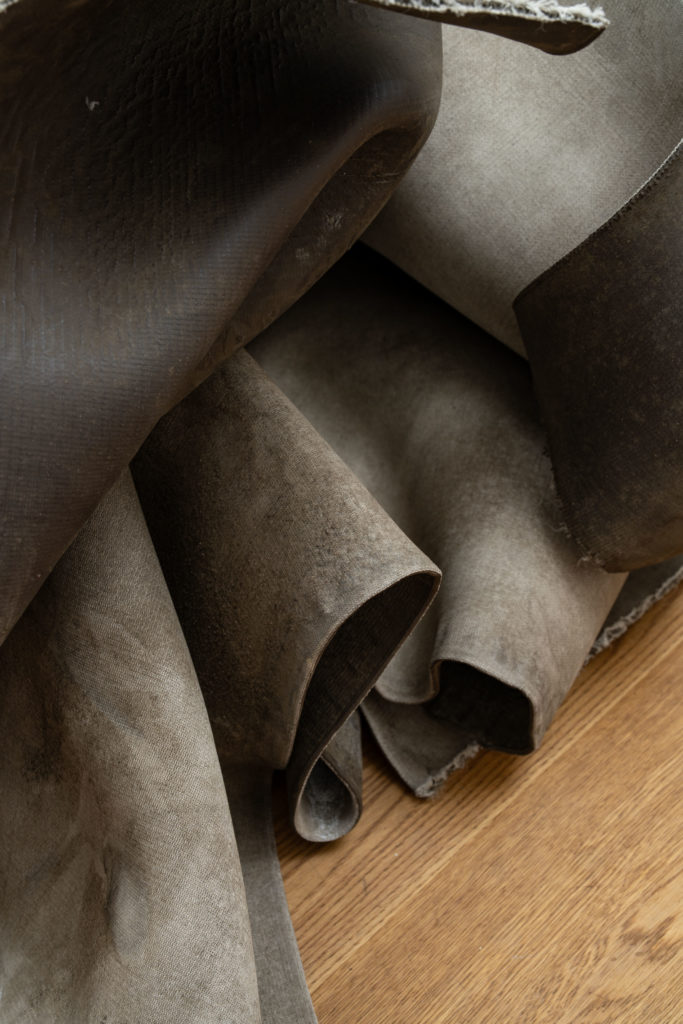
Concrete canvas and bolts. 140 x 80 x 48 cm. Courtesy of the artist and Madé van Krimpen, Amsterdam.
The first room features two large works, Rosatxu and Rosita (both 2025). These concrete canvases are watered until they become flexible, allowing the artist to manipulate them into floral forms. Abstract rose-like objects draw us into a space where Aurrekoetxea assumes the role of subject – the giver of flowers –while we become objects, the recipients. The playfulness of working through the shapes and forms of the domestic (folded towels) and the public (Aurrekoetxea’s sculptures) sparks a kind of humor in Aurrekoetxea’s work, and accompanying this humor is a sense of familiarity thanks to the floral mimesis. We feel a moment of remembrance: a rose we carried to a loved one, or one that we expected but never received. By awakening one’s own memories, these acts of poeticism — the shaping of the canvases and their manipulation — interrogate the interdependency between ornament and function. There is a sense of erotics within these raw materials, and their sculpted mannerisms carry a similar charge. The work intends to extend the question of fixation or fetish to the viewer rather than provide an answer. Through the labor of sculpting these raw materials, Aurrekoetxea gives new meaning to a domestic vocabulary.
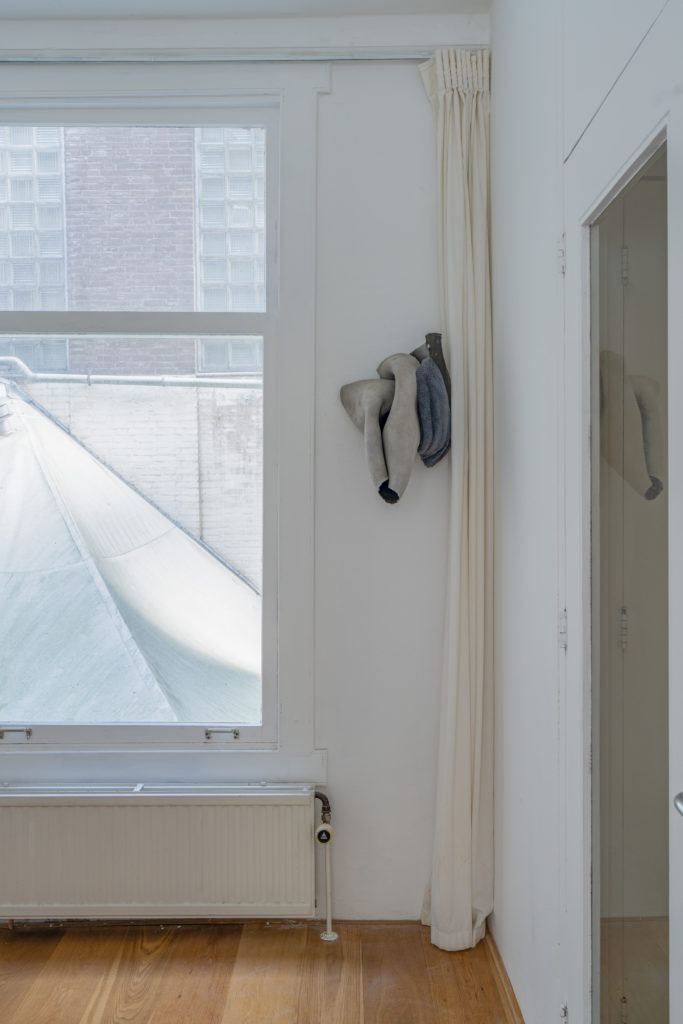
Concrete canvas, towels and bolts
45 x 40 x 44 cm. Courtesy of the artist and Madé van Krimpen, Amsterdam.
The second room continues this investigation through other images. Tulipo (2025), mounted on the wall, is shaped to resemble a tulip or a phallic form, depending on the viewer’s gaze. Made with concrete, canvas, and toweling, the work hinges of the ambiguity of its contours. Another installation, Elephant Swans (2025), features two towels shaped into swans. Two flashlights illuminate their forms, casting shadows reminiscent of the intimate atmosphere of hotel rooms prepared for couples.
“A fetish is an erotically endowed object that someone can possess and control; yet, paradoxically, the fetish seems to control or possess the person who thinks she possesses it.[1]” This misrecognition lies at the heart of the exhibition’s central question. Céline Mathieu writes in the accompanying text that the verb “to construct” makes her think of co-poesis, “of things becoming in through and in relation to each other. A wet solidifying. As most of us are bodies, relations, histories. Yet these sculptures look like they are forever foldable, their potential movement inherent, and the moment they reach full absorbing potential, they become obsolete, sealing water out.”[2] This inversion echoes the dynamics of desire and fetish at the core of Aurrekoetxea’s practice. It becomes a starting point for developing a new inter-relationality between the artist and the viewer, prompting continual re-engagement with one’s assumptions and shifting interpretations with each work encountered.
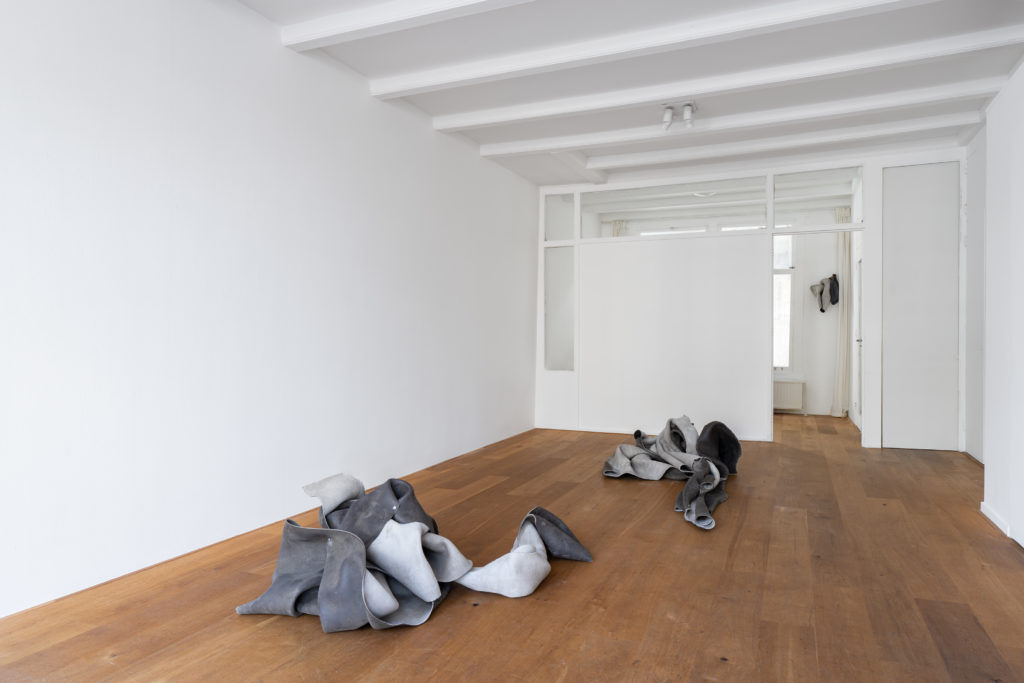
These acts of unfolding – gesture, desire, memory, symbol – compose the poetics of the show. They set interpretation into constant motion, generating new images and emotional resonances and ultimately offering more questions than answers.
[1] Lauren Berlant, Desire/Love (Brooklyn: Punctum Books, 2012), 34.
[2] Céline Mathieu, “For Nora,” in Larrosa, exh. cat., Madé van Krimpen, 2025.