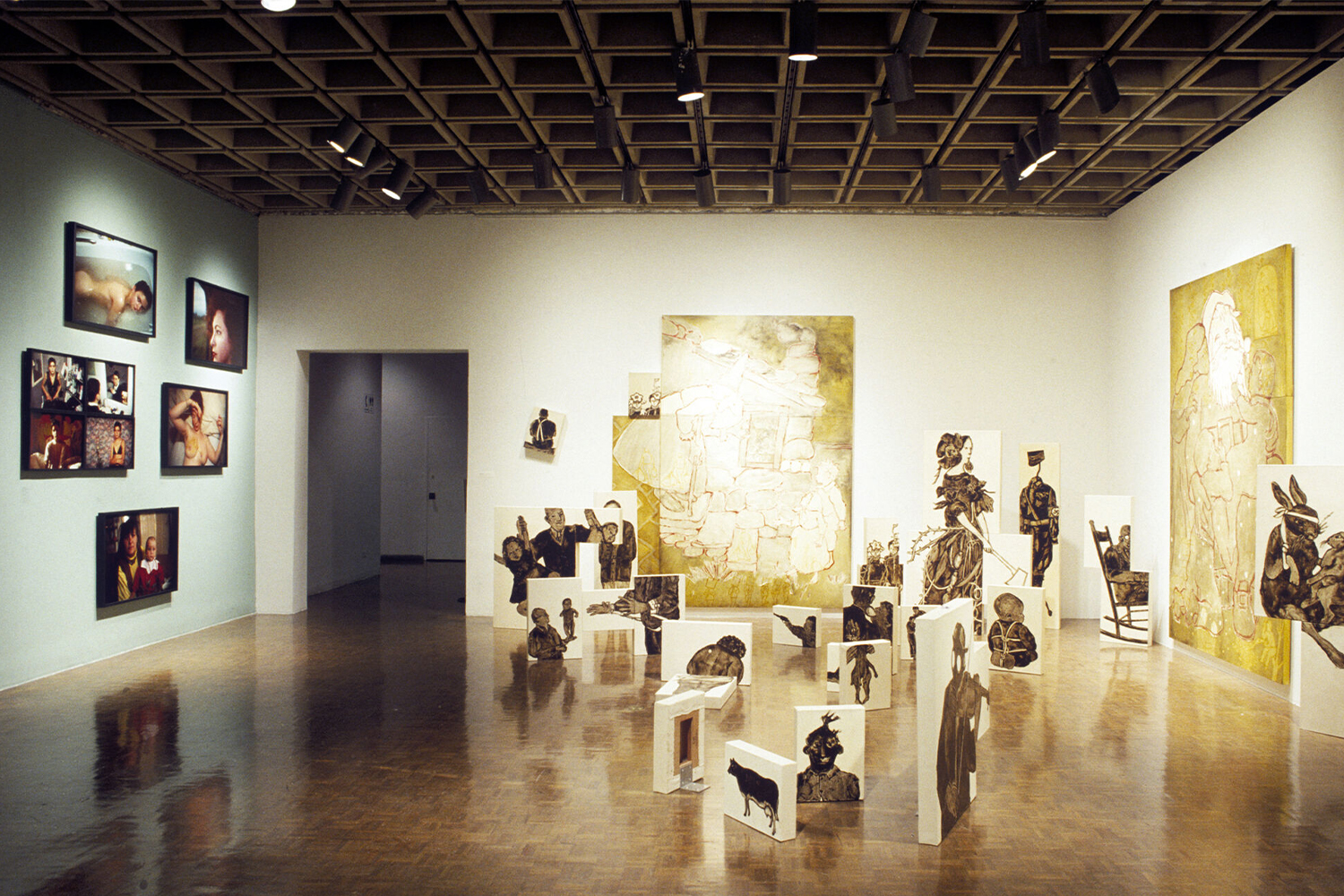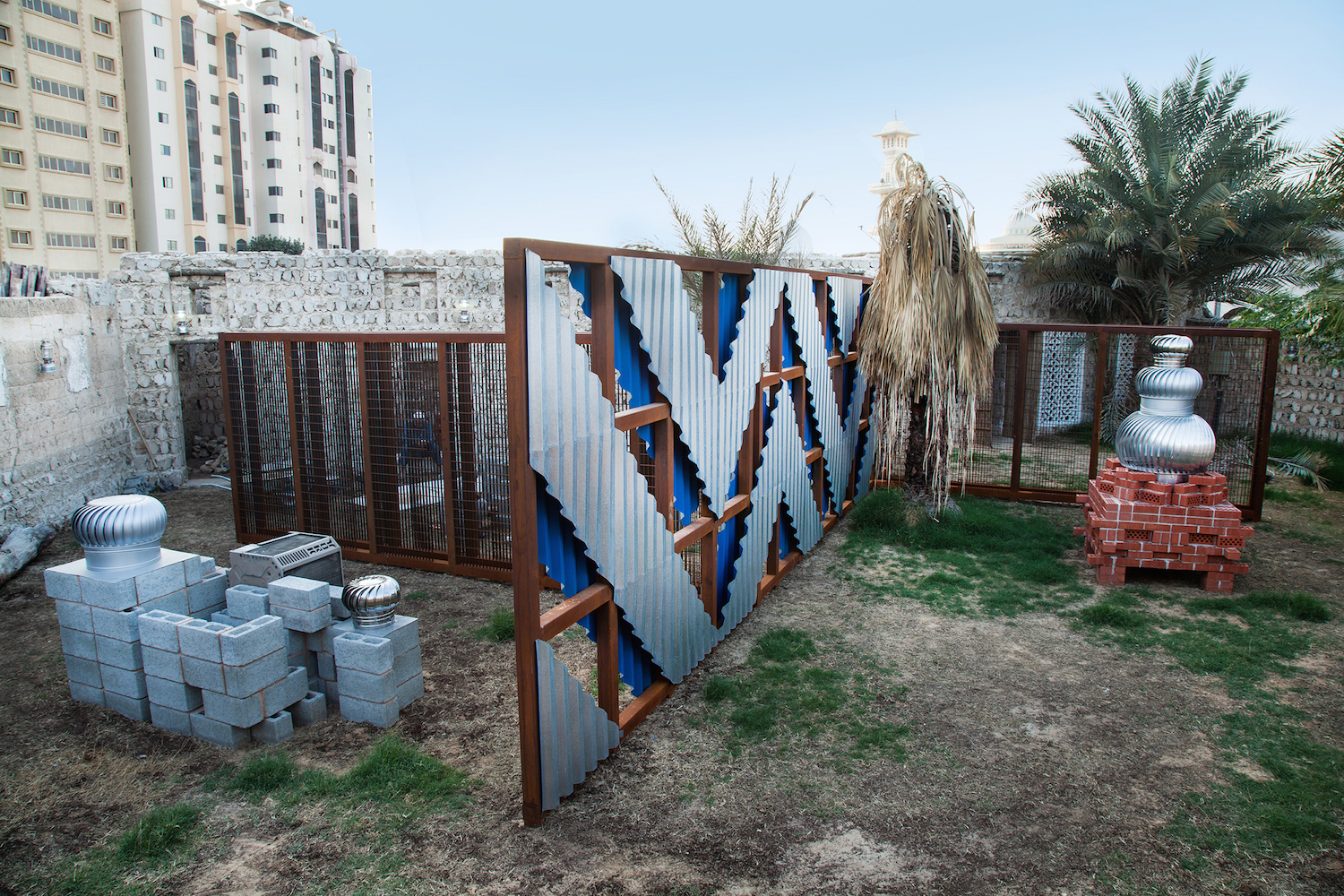
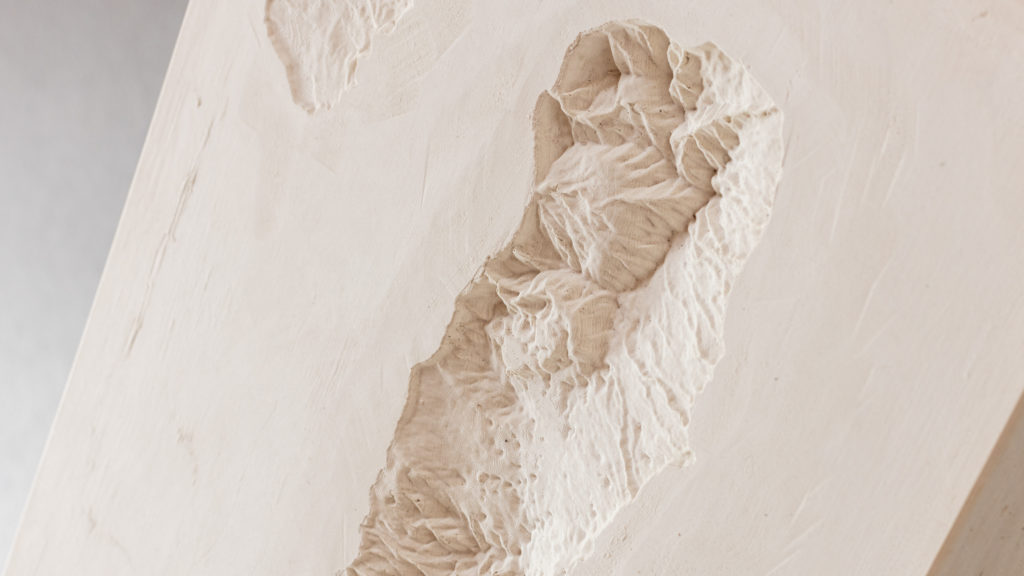
For over a decade, Walk&Talk animated the island of São Miguel with its hybrid festival of art, music, and performance — a fixture of the Azorean summer. This year marks a significant transformation: the festival evolves into a biennial. Expanding both its temporal and conceptual horizons, the inaugural Walk&Talk Biennial, titled “Gestures of Abundance,”reimagines the festival’s convivial spirit within a more sustained curatorial inquiry.
At the helm, the Artistic and Executive Director Jesse James assembled an international curatorial team, composed of Claire Shea, Fatima Bintou Rassoul Sy, and Liliana Coutinho. Their collaboration articulates an experimental proposal around a guiding question: How might we shift our perception of scarcity toward one of cooperative abundance? This proposition serves as both a theme and a method, seeking to reframe abundance away from capitalist notions of (over)productivity, accumulation, and excess, and towards a relational condition grounded in reciprocity and interdependence. Inflected by Indigenous cosmologies and decolonial thought, “Gestures of Abundance” refuses the extractive and spectacular logic endemic to global art circuits in favor of slower, more deliberate forms of gathering and exchange.
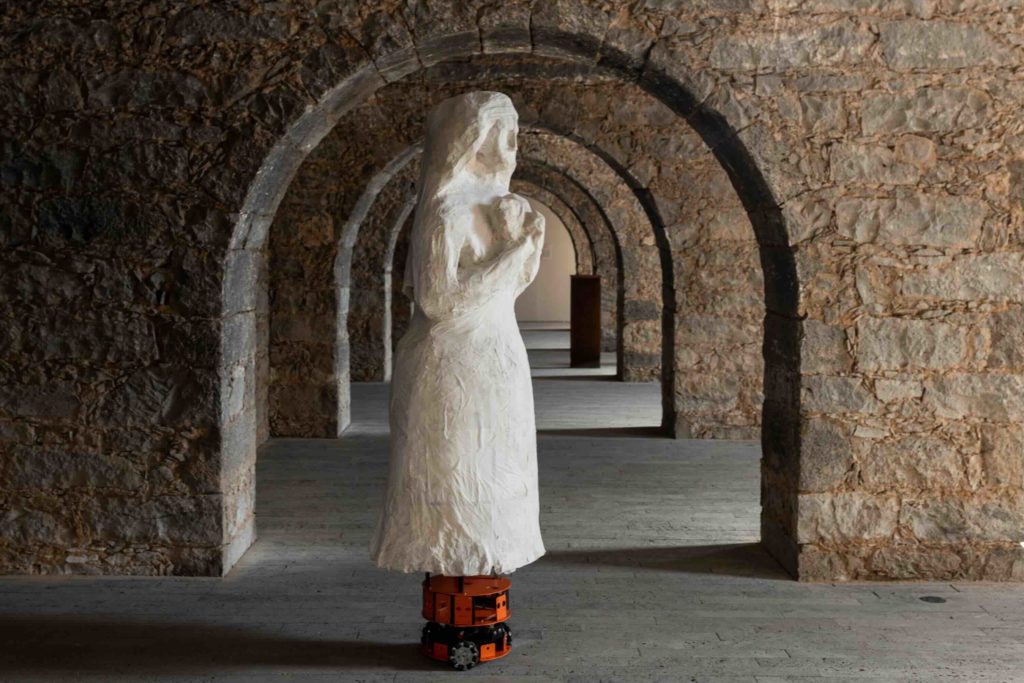
Anchored in Ponta Delgada yet stretching across São Miguel to Lagoa, Caloura, and Ribeira Grande, the biennial honors Walk&Talk’s roots as an itinerant platform. Its structure is porous and relational: exhibitions spill into public spaces, performances trace volcanic ridges and coastal paths, and community gatherings weave art into the rhythms of daily life. The program’s density — residencies, excursions, installations, and a symposium — reflects an understanding of artistic production as a living system, sustained through exchange and care. Many of the thirty new commissioned projects stem from residencies held earlier in the year, tracing a network of relationships between island sites, local histories and communities that produced work that feels embedded rather than imposed.
Among these, Inês Coelho da Silva and Kita Racaño Ward’s video installation Gossip and the Commons (2025), reframes gossip — a practice often dismissed as idle talk — as a mode of ecological communication. The work explores how murmur, breath, and proximity transmit care and knowledge across species. The installation’s setting — flanked by a wall of straw and hay — evokes both a rural barrier and a porous boundary that allow glimpses of shared intimacy. The rhythmic chewing and low murmurs of the Holstein-Fresian cows become a sonic counterpoint to whispered exchanges, collapsing human and non-human registers into a shared language of sustenance within the island’s agrarian metabolism.
Mae-Ling J. Lokko’s Smooth Cayenne Notes (2025) similarly approaches the vegetal world as a site of kinship and colonial entanglement. Installed within São Miguel’s 19th-century pineapple plantation, the work consists of one hundred textile panels woven from piña, a translucent Philippine fiber derived from pineapple leaves. Each square is dyed with pigments sourced from species with which the pineapple shares a migratory history — plants that, like it, have crossed oceans through circuits of trade and extraction. Suspended within the humid air, these fragile, glistening surfaces seem to breathe with the greenhouse’s own atmosphere, their delicate luminosity echoing the plant’s metabolism of light and moisture. Smooth Cayenne Notes transforms the plantation from a site of control and monoculture into one of correspondence and reciprocity. Lokko’s work extends the biennial’s ethos of “cooperative abundance” beyond the social and into the botanical, inviting a meditation on the forms of intelligence and kinship that thrive in the vegetal world—those subtle, photosynthetic negotiations through which life persists, adapts, and continually remakes itself.
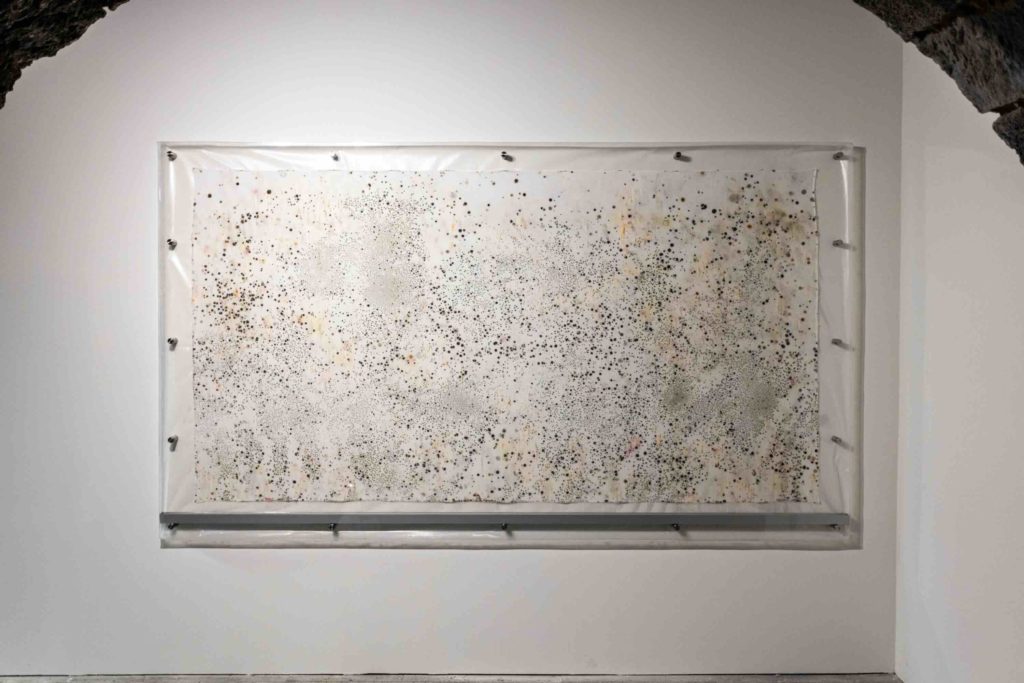
Performance — long central to Walk&Talk’s identity — reclaims a commanding presence in this new chapter. Ebun Sodipo’s The Way Her Teeth Settled (2025) pays tribute to Vitoria, a trans woman kidnapped from Benin and enslaved on São Miguel in 1556. In a quiet corner at Arquipélago – Centro de Artes Contemporâneas, Sodipo constructed a devotional altar. During the opening days of the biennial, the artist performed as Vitoria, enacting gestures of self-care and repose, reconfiguring them as modes of resistance, while summoning an ancestral presence within the slow pulse of the island.
In Caloura, Helle Siljeholm’s project delves into the geological unconscious of the island. Drawing on research into hydrothermal vents — “black smokers” that emit mineral-rich currents sustaining deep-sea life — she developed a self-guided performance that leads participants along São Miguel’s coastal thresholds. Through a choreography of sound, text, and embodied movement, Siljeholm reattunes the visitor’s perception to the mineral and thermal forces that pulse beneath the island’s surface. The work’s speculative sensibility bridges deep time and corporeal awareness, turning geology into a site of intimacy.
At the Centro Municipal de Cultura de Ponta Delgada, Nadia Belerique’s video installation LOTA (2025) transforms the island’s sustainable fish auction into a theatre of matter. Under the glare of cold fluorescent light, amid freshly hosed floors and the lingering scent of salt, ice, and flesh, the fishmonger’s gestures sync with the mechanical rhythm of the conveyor belt, and the slick, muscular bodies of tuna become unwilling performers in a ritual of productivity. The artist’s camera traces this mechanized choreography — the shimmer of scales, the hiss of water against concrete, punctuated by the rhythmic beeps of the pricing machine and the anxious chime of the auction, a haunting metronome of efficiency. Nearby, Belerique’s sculptures amplify these sensory cues. Her precarious assemblages of domestic objects — doors, lamps, wine glasses — rest upon stacks of canned fish, compressing the infrastructure of the sea into a language of domestic survival. This inversion of utility blurs distinctions between the organic and the fabricated, the intimate and the industrial while exposing the circulatory entanglement of sea and home, of sustenance and exhaustion.
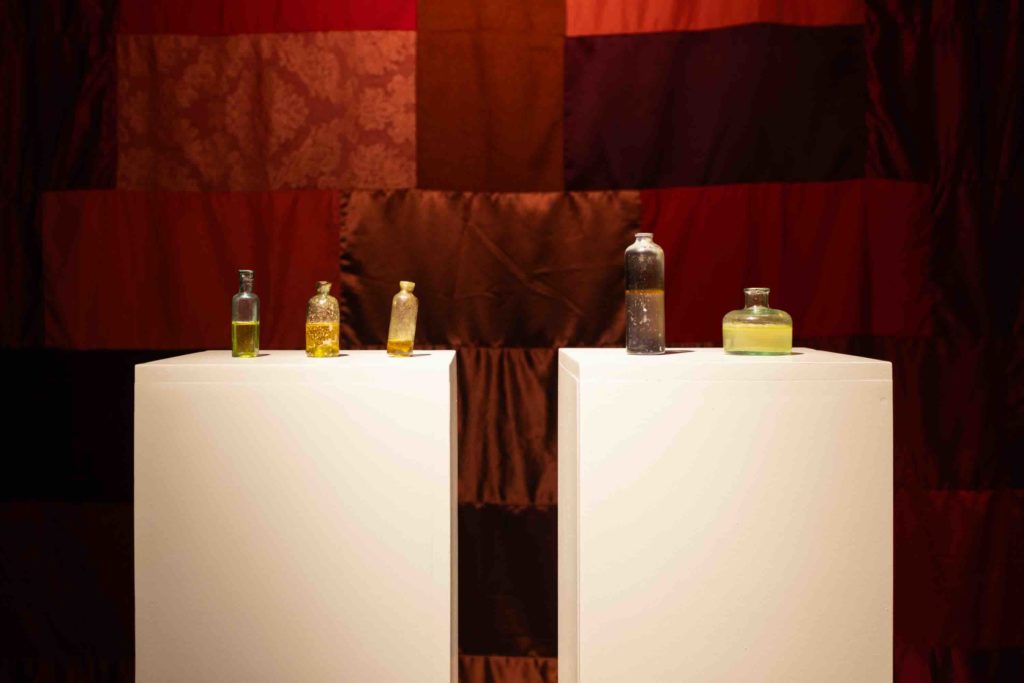
Arquipélago — a former alcohol distillery transformed into a contemporary art center — is the site where the highest number of works are presented. Here, “Gestures of Abundance” becomes less a theme than an atmosphere: an accumulation of energies, each modest yet insistent, vibrating in relation to one another. The volcanic stone walls, cool and porous, seem to absorb the sound of each installation, returning it with a low hum. Within this context, the curatorial proposal by Colectivo Cara Lavada, “Geoteluric Orisons of Saltborn Reveries,” convenes artists of Azorean descent —Alex Furtado, Catarina Rego Martins, and the Franco-Portuguese collective Çalo do Mar e da Terra — to reflect on diasporic belonging and oceanic memory. Their contributions root the biennial’s decolonial premise in lived trajectories of migration and return.
As a biennial, Walk&Talk resists the extractive rhythms of global art tourism. Rooted in connections and sustained by long-term local partnerships, it privileges collaboration over transaction, continuity over intensity. Its tempo unfolds through shared meals, conversations, and collaborative gestures that blur the boundary between artistic production and island life. Even the arrival of Hurricane Gabrielle—just days after the opening—barely disrupted its course. The program’s quiet resilience revealed its deep embeddedness within the community: artists, organizers, and residents adapting in concert, enacting the very ethos the exhibition proposes. In this sense, Walk&Talk requires a success metric adapted to its goals and ambitions. In a global calendar saturated with biennials, its presence might at first seem redundant. Yet its debut offers a compelling counter-model: an exhibition grounded not in spectacle or expansion, but in the patient rigor of its attunement to a specific ecology — geological, cultural, and spiritual — and its capacity to generate new imaginaries of coexistence.