I had been five years since I last returned to Shanghai. The city now unfolds more quietly, with a composed aura that contrasts with the pre‑COVID bustle. My Shanghai nights once stretched longer than my days; this time, the rhythm felt reversed. The city resembles a quieter raver — the energy remains, but it is more subdued.
I arrived on the eve of Shanghai Art Week to see “The Great Camouflage” at the Rockbund Museum of Art (RAM). Curated by X Zhu-Nowell and Kandis Williams, the show unfolds inside a building newly accented with David Chipperfield’s additions that respect rather than disrupt the museum’s original layout.
In conversation with the curators, we discussed the exhibition’s conception, curation, and context within Shanghai. The show emerged as a response to the global exhaustion of recent years – the sense of political and social depletion visibile from Hong Kong’s Umbrella Movement to the White Paper protests. Against this backdrop, the curators sought to revisit revolutionary attitudes and build new networks of solidarity, particularly across Asia, Africa, and Latin America, deliberately decentering Euro-American narratives. They deliberately anchored the exhibition in a Black feminist perspective, taking Suzanne Césaire’s text The Great Camouflage: Writings of Dissent (1941–45) as a starting point. Our conversation also covered the practical challenges of staging a dense, multilevel exhibition, the intentional pairing of artists to generate dialogue, and the complications of presenting anti‑Blackness and revolutionary histories within China’s specific sociopolitical landscape.
A central emphasis is the positioning of Black feminist thought as the scaffolding for the show. Figures such as Amy Ashwood Garvey, Eslanda Robeson, Shirley Graham Du Bois, and Grace Lee Boggs form a parallel, transnational genealogy of revolutionary praxis — one that often ran alongside, and sometimes against, the ambitions of better-known male counterparts. Williams spoke openly about the ways white academia has historically elevated Black male intellectuals — Frantz Fanon, for instance — while overlooking the misogyny or harmful dimensions embedded in their work. This deliberate blindness continues to shape how histories of revolution and internationalism are narrated. Within this context, the labor and exploitation of Black women — their bodies celebrated in imagery yet dismissed in reality — becomes an essential thread, one that Williams explores through Cassandra Press, her editorial and artistic platform included in the show. As she reminded me, echoing Zora Neale Hurston: remain silent, and others will write over you — “they’ll kill you and say you enjoyed it.”
The curators also pointed to the mid-twentieth-century history of transnational anti-imperial alliances — W. E. B. Du Bois, Mao Zedong, Kwame Nkrumah — whose attempts at global solidarity negotiated both ambition and contradiction. Bringing these histories into a contemporary Chinese art institution required confronting anxieties around anti-Blackness and navigating censorship. Yet both curators remained hopeful that the exhibition could “create its own public,” generating a space where these conversations may resonate independently.
“The Great Camouflage” gathers sixteen contemporary artists and collectives working across film, video, theater, textiles, and archival/research practices to examine the material and aesthetic circulations of transnational Black radical thought and the limits of revolutionary politics. Drawing on Césaire’s call to sustain an “army of negations,” the exhibition places contemporary practices in the afterlives of revolutionary movements.
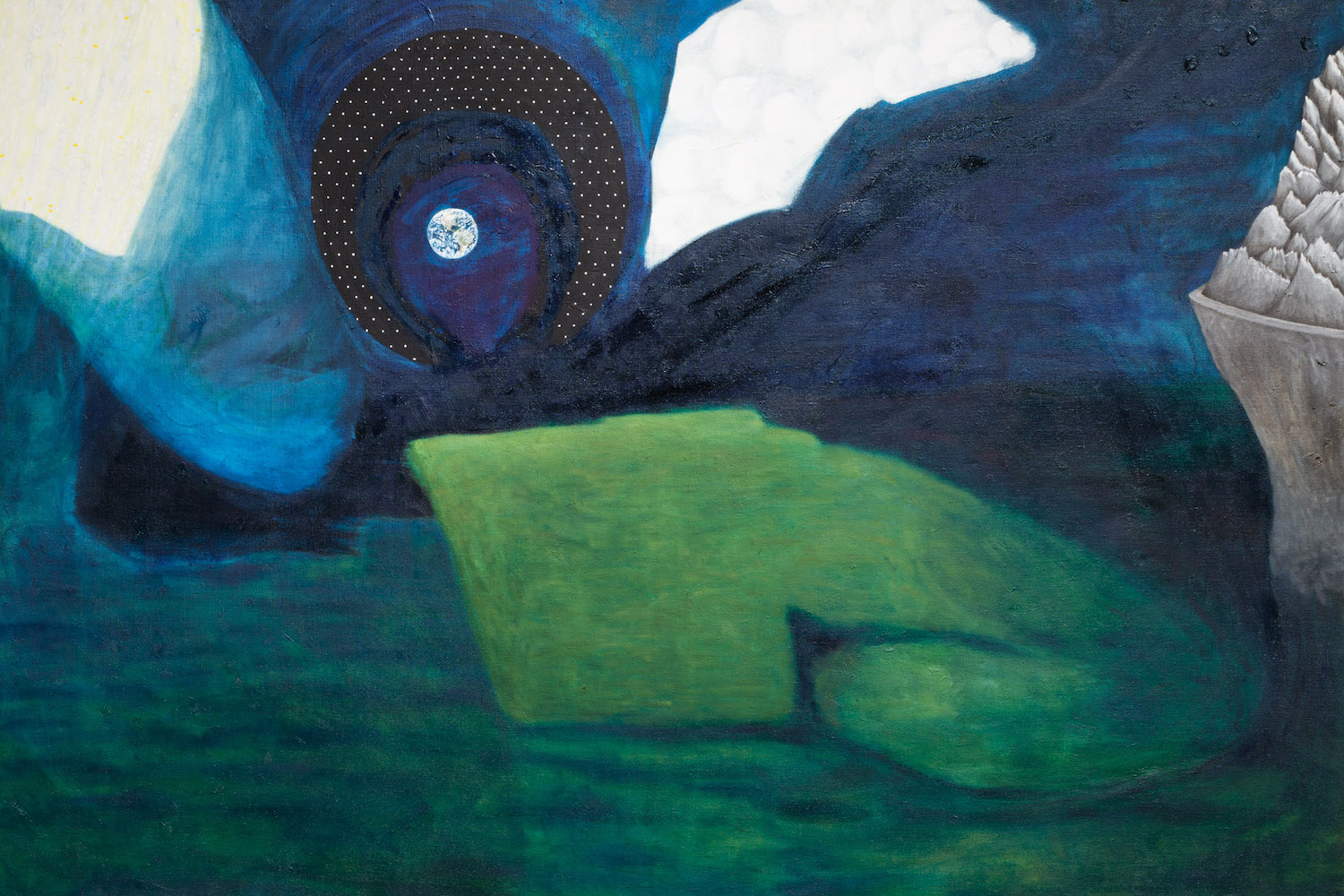
At the entrance, visitors encounter Hao Liang and Boz Deseo Garden. Hao Liang’s painting The Epitaph of Phaéthōn revisits the myth of Phaeton, the son of Helios who scorches the earth while attempting to drive the sun chariot. The sky is inscribed with -isms — Rationalism, Liberalism, Internationalism, Humanitarianism — on a sun that seems to be splitting. Under the artist’s brush, Phaethon’s daring but doomed journey mirrors the Chinese intellectual and revolutionary spirit entangled with Western ideals, evoking both ambition and constraint. Conceived as a conceptual cemetery, this work is a living meditation on the decline of modern ideals and a homage to the revolutionary dreams they once inspired.
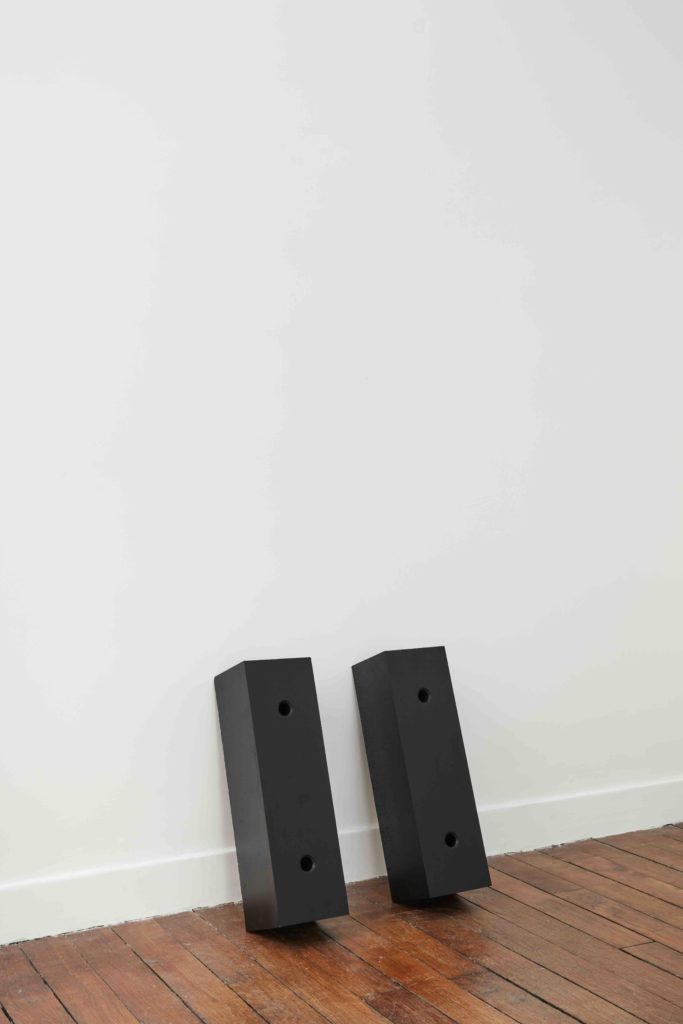
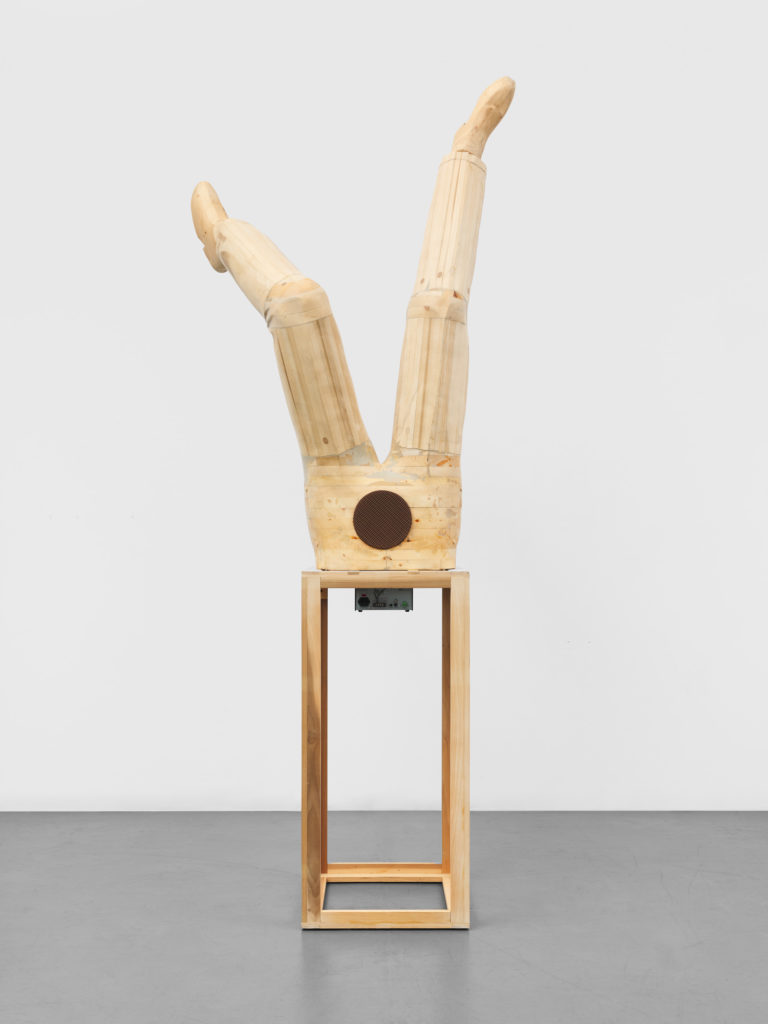
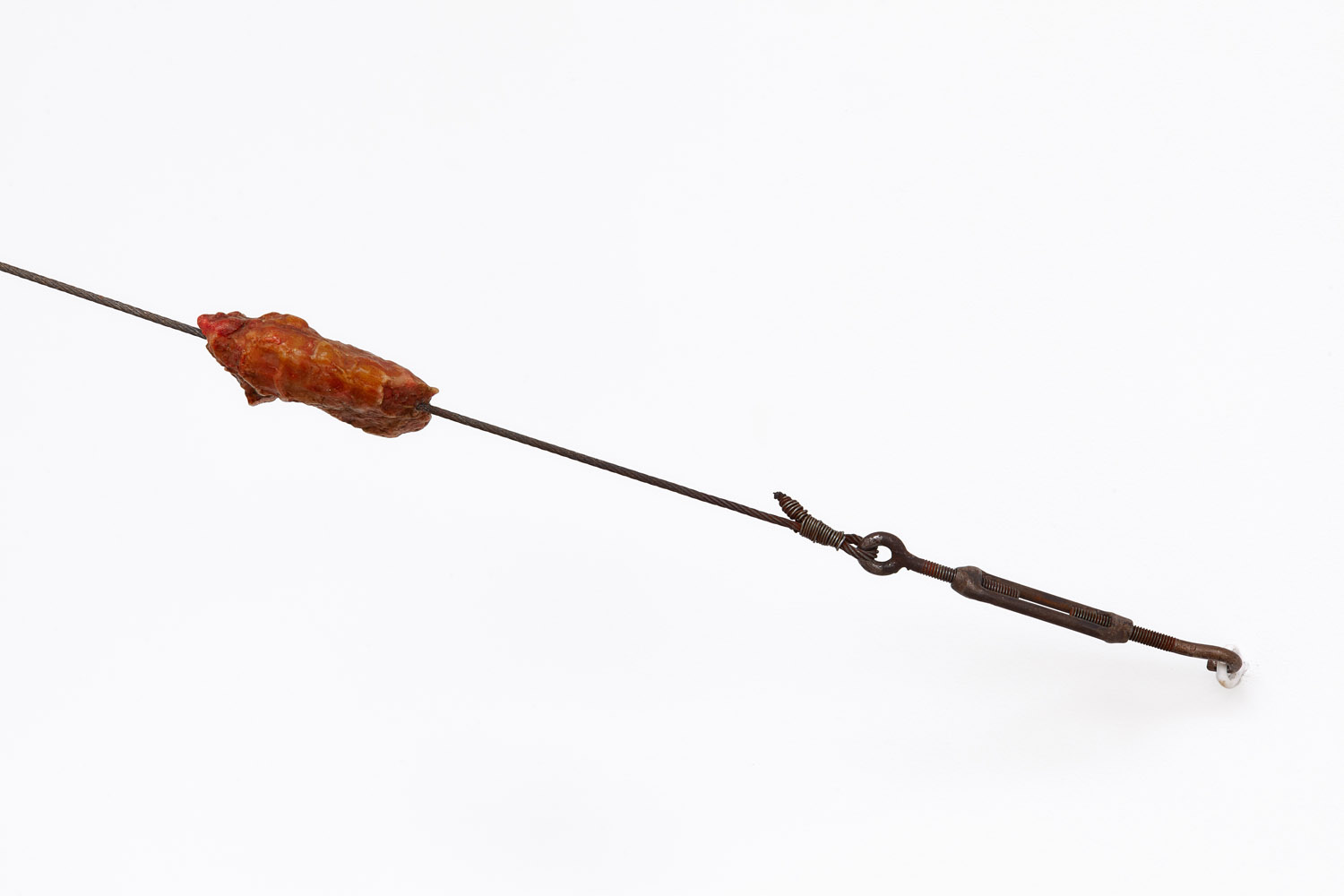
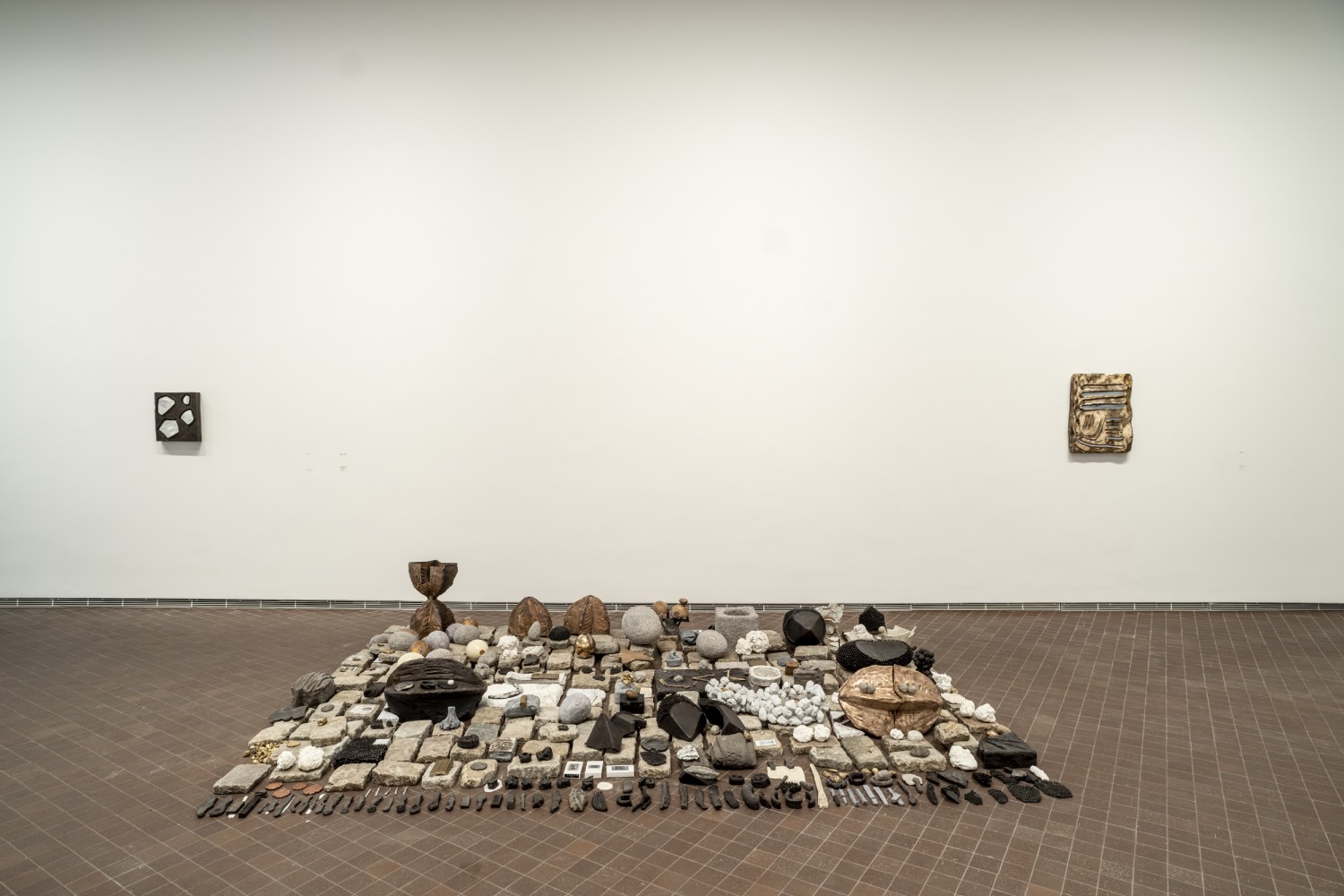
Boz Deseo Garden’s piece après-coup 2 of 1,400 references historical residues — specifically iron bars from the Portuguese slave ship São José Paquete D’Africa, recovered off South Africa in 2015 — symbolizing racialized materiality and the long suppression of anti-Black histories. The French term après-coup, meaning “deferred action,” borrows from psychoanalytic theory to suggest that traumatic or significant experiences acquire meaning over time through re-interpretation. The piece urges viewers to question linear notions of history and time, showing how repressed histories resurface in ways that are often misunderstood or distorted. It reflects on collective memory, historical repression, and the complexity of historical narratives.
Seven works from Cauleen Smith’s “Ikebana” video series are presented as ritual-like installations. In each, the artist performs a flower arrangement herself, filmed mostly with a fixed camera. Each ikebana responds to the death of an acquaintance. The beauty unfolding on screen seems to soothe the historical and political weight embedded in the work— the connotations of the chosen plants, the archival images woven into the footage, and the circumstances of their making. Yet beneath the calm, contemplative process remains a persistent sorrow.
Centered within Smith’s installation is Pope.L’s sculpture Du Bois Machine and 097, 04-05, r, w/n’,b (2013), part of his “Skin Set” series (begun 1997), which critiques racial categorization through provocative, humor-tinged statements about skin color. Using acrylic and ballpoint pen on black-coated paper, Pope.L offers lines like “Red People Have No Reservations” and “White People Are The Future,” satirizing societal stereotypes and racial labels. The work forces viewers to confront the absurdity and constructed nature of racial categorization, blending humor with sharp critique. While many pieces from this series remain offstage, this work exemplifies its radical, provocative approach — both a visual manifesto and a darkly comic commentary.
Charlotte Zhang’s Nosebleed Section (2025) is a multilayered collage series commissioned by the Rockbund Art Museum. It examines the manipulation and appropriation of popular culture within global racial histories and politics, contrasting the U.S. celebration of jazz with China’s revolutionary rejection of “yellow music,” and considering how music and culture are circulated and commodified beyond their origins. The installation spans four floors; the first focuses on theatrical representations of female stars and their roles in statecraft, using layered fabrics and imagery to evoke historical and cultural tensions.
Onyeka Igwe’s A Radical Duet (2023) is a two-channel piece imagining a speculative 1947 London encounter in which women across generations collaborate on revolutionary plays tied to anti-colonial movements and figures such as Funmilayo Ransome-Kuti, Sylvia Wynter, and C. L. R. James. Wang Tuo’s Distorting Words (2019) blends history through the concept of “pan-shamanization,” following a protagonist who channels stories of sacrifice from 1919 to 2019, depicting a society caught in a collective trance.
Tuấn Andrew Nguyễn’s Mother, Métis, Memory (2023) examines post–Dien Bien Phu migration and the mixed-heritage descendants of African soldiers and Vietnamese women, emphasizing the fluidity of racial and national categories. Beginning with the 1954 Battle of Dien Bien Phu, the project traces how Senegalese soldiers fighting for France interacted with Vietnamese communities during the First Indochina War, producing mixed-race children often separated from their cultural roots. Through interviews and archival materials, Nguyễn highlights these individuals’ stories, underscoring the blurred boundaries of race and nationality and the enduring impact of colonial and wartime legacies.
Renée Green’s What Time Is It? engages with Grace Lee Boggs’s question, transforming reading into a spatial and temporal experience.
Together, these works reflect on how memory, history, and narrative are staged, distorted, and transmitted through ritual— emphasizing the ongoing tension between past and present, rehearsal and historiography.
As the exhibition continues, it thoughtfully explores themes of political injustice, endurance, memory, and community through various artistic media. It begins with Euridice Zaituna Kala’s work, which uses performance footage to reflect on persistent struggles for justice through repetitive acts, emphasizing patience and vigilance. Building on this, the floor features works that blend textiles, video, and screen-based art to examine longevity and materiality. Eric N. Mack’s hammocks symbolize rest and labor, while Renée Green’s piece investigates memory and historical layers. Cauleen Smith’s Homegirls celebrates Black feminist thought and community, and Cassandra Press underscores the connection between artistic labor and political activism. Collectively, the works encourage attentive witnessing and demonstrate how art can inspire social and political awareness.
Eric N. Mack’s site-specific series of textile collages is suspended in the museum atrium between the fourth and sixth floors. Treating textile work as a form of painting, Mack sources fabrics tied to the commission’s site and history. For “The Great Camouflage,” he gathered dyed vintage Kente cloth from 1940s Ghana, found textiles from Shanghai flea markets, and traditional homespun from Chongming Island near Shanghai. The six commissioned pieces conceptually link water — its fluid, connective qualities — to the woven mesh of a jungle hammock, imagined as an intermediate surface between air and water. Mack’s use of liquid pigment in painting and dyeing underscores this aquatic reference. Presented as hammock-like forms that “dwell” in the atrium, the assemblages operate as three-dimensional abstractions while emphasizing bodily intimacy, informal social ties, and gravity. Their recurring webbed textile structure also draws attention to the work’s dialogue with the surrounding architecture.

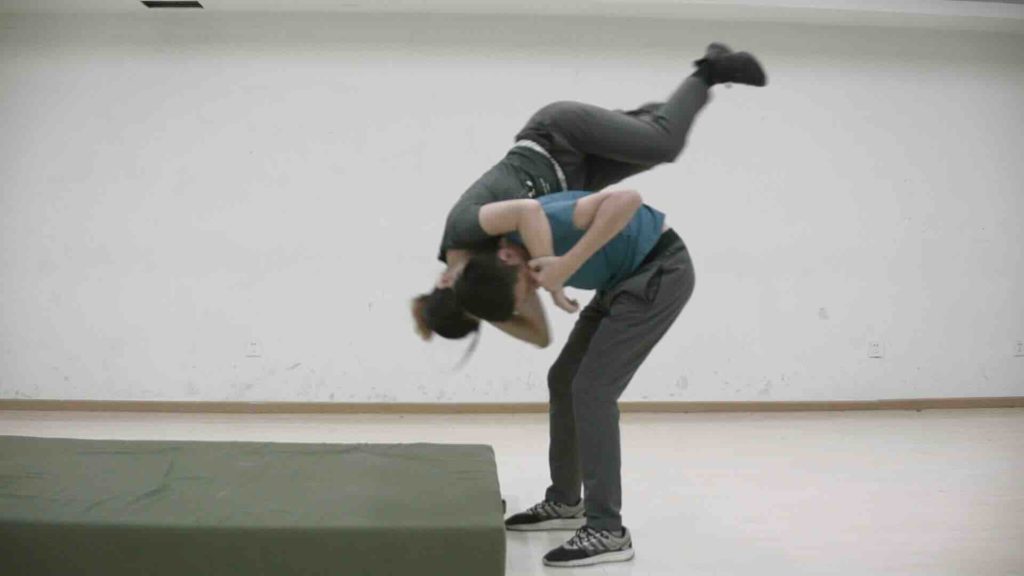
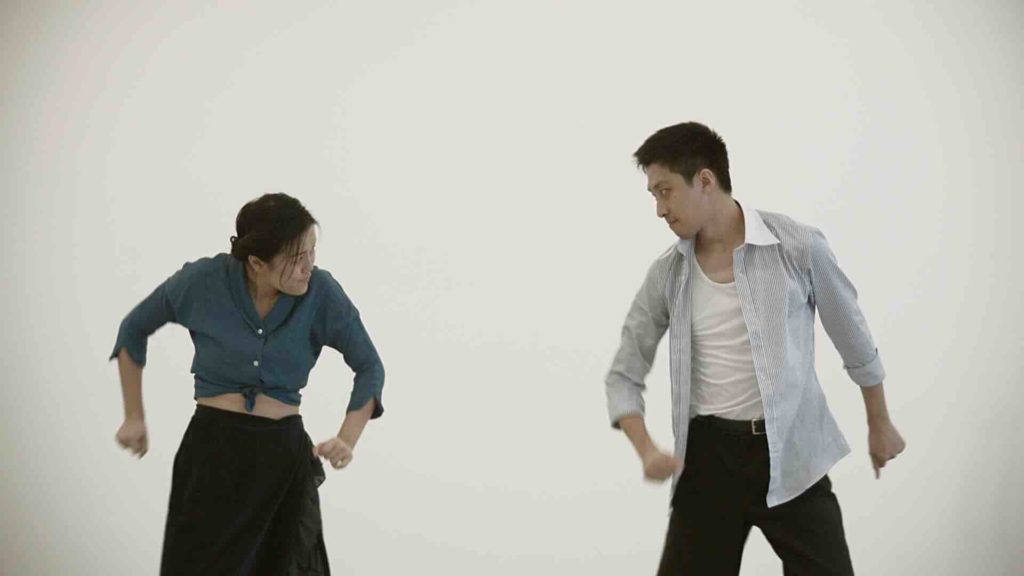
Hao Jingban’s Opus One (2020) explores how bodies negotiate the gap between learning gestures from another culture and making them their own. The two-channel video follows Suzy and KC, a young couple in Beijing, as they study and perform swing dances that originated in 1930s Harlem — moves like the Lindy Hop and the Charleston. Carefully attending to rhythm and detail, they pore over archival footage of iconic figures such as Frankie Manning, Norma Miller, Al Minns, and Leon James, and immerse themselves in images of famed dance halls like the Savoy where the style flourished.
Across the paired screens, Hao interweaves the couple’s practice — rehearsals of a challenging flip and sequences of choreography — with historical and contemporary clips of swing, including short dance videos that circulate on Chinese social platforms. A particularly important element is the cellphone footage the couple shot at Norma Miller’s 2019 funeral in New York. In a quasi-pilgrimage, they stand among the dancer’s family, friends, and admirers as mourners suddenly begin to swing up and down the church aisles. The couple’s recordings convey a sense of distance and uncertainty: positioned with a small, relatively restrained group of Chinese attendees near the center, they watch others move more freely. That moment captures a complex emotional tension — an intense physical closeness to the tradition that nonetheless feels marked by dislocation.
Opus One also probes cultural distance. Swing — born as a vernacular, working-class expression of Black social life in Harlem, driven by collective energy, improvisation, and defiance — takes on a different cast when moved into another cultural and socioeconomic setting. By layering archival clips, observational footage, and the couple’s responses, the film reveals an enduring gap between past and present, between imagined connection and lived experience, and engages questions around cultural appropriation and cross-cultural identification.
Across these works, the exhibition draws on the surrealist legacy that Suzanne Césaire articulated — in which poetry, dream, and image act as forms of resistance. Aesthetics become camouflage: a way to conceal, reveal, and circulate what dominant powers attempt to suppress. Memory, history, and narrative constantly slip between rehearsal and historiography, past and present.
The cumulative effect is an exhibition that is both dense and lucid, demanding patient viewing. Its intellectual ambition is matched by its spatial coherence; the curators’ pairing strategy sustains a narrative flow that might otherwise fragment under the weight of so many histories.
Still, tensions remain — especially concerning how these Afro-diasporic histories and critiques are received within a Chinese institutional context, and how far solidarity can extend when mediated by geopolitical constraints. Yet the exhibition acknowledges these frictions rather than smoothing them away.
“The Great Camouflage” ultimately positions Césaire’s method as an ongoing imperative. Her words recur like an incantation: surrealism did not distract from revolutionary feeling — “it nourished in us an impatient strength, endlessly sustaining this massive army of negations. And then I think also to tomorrow.”