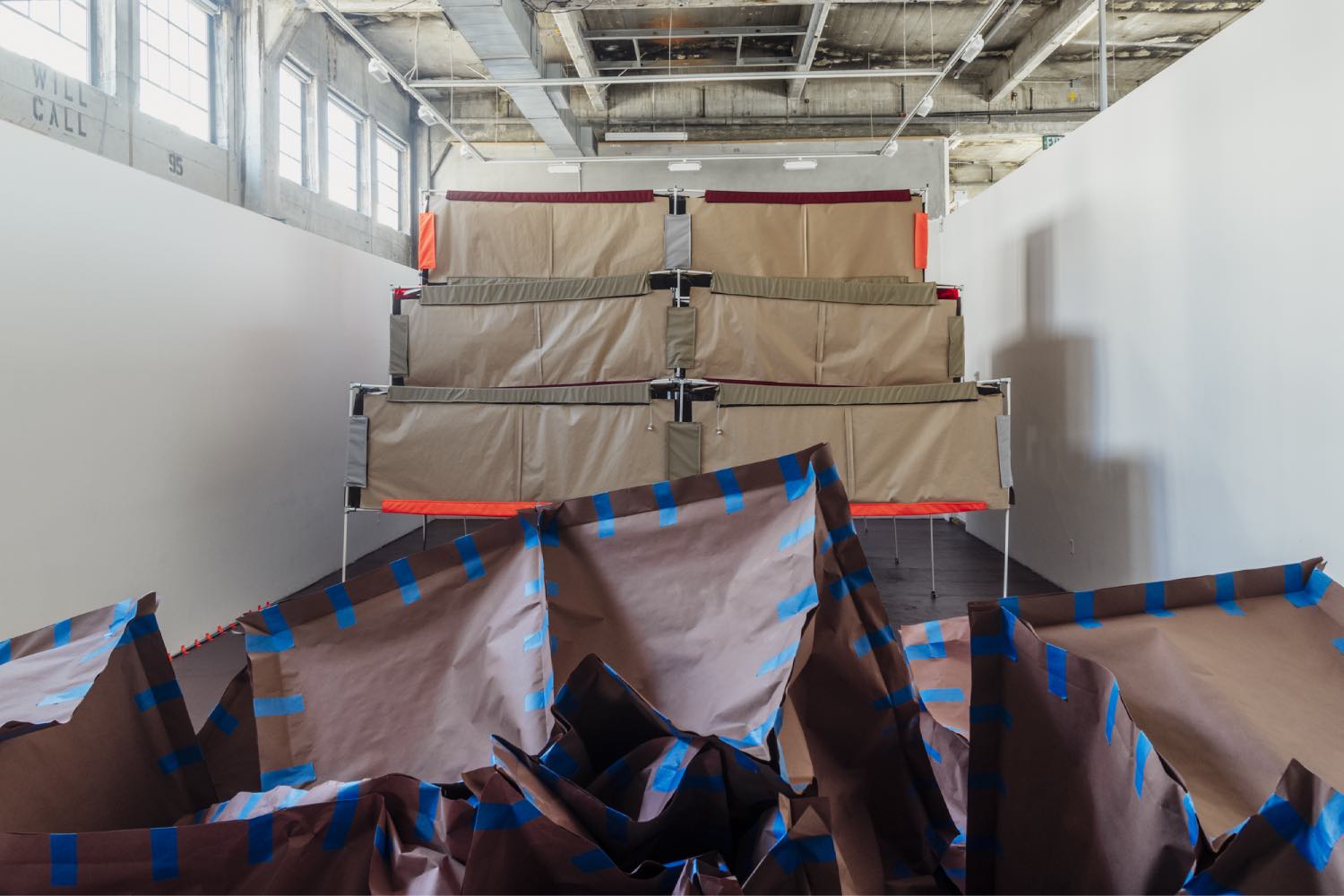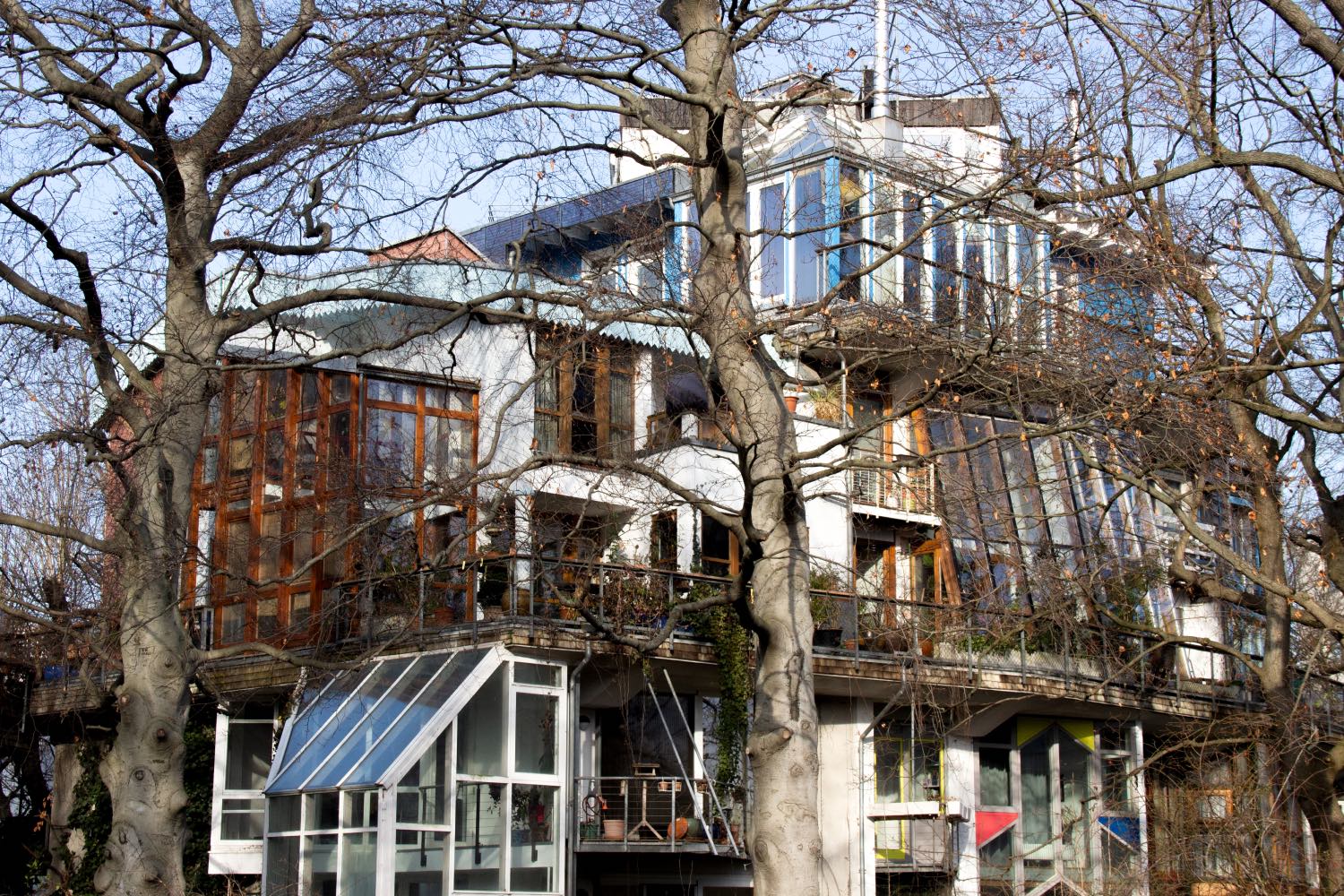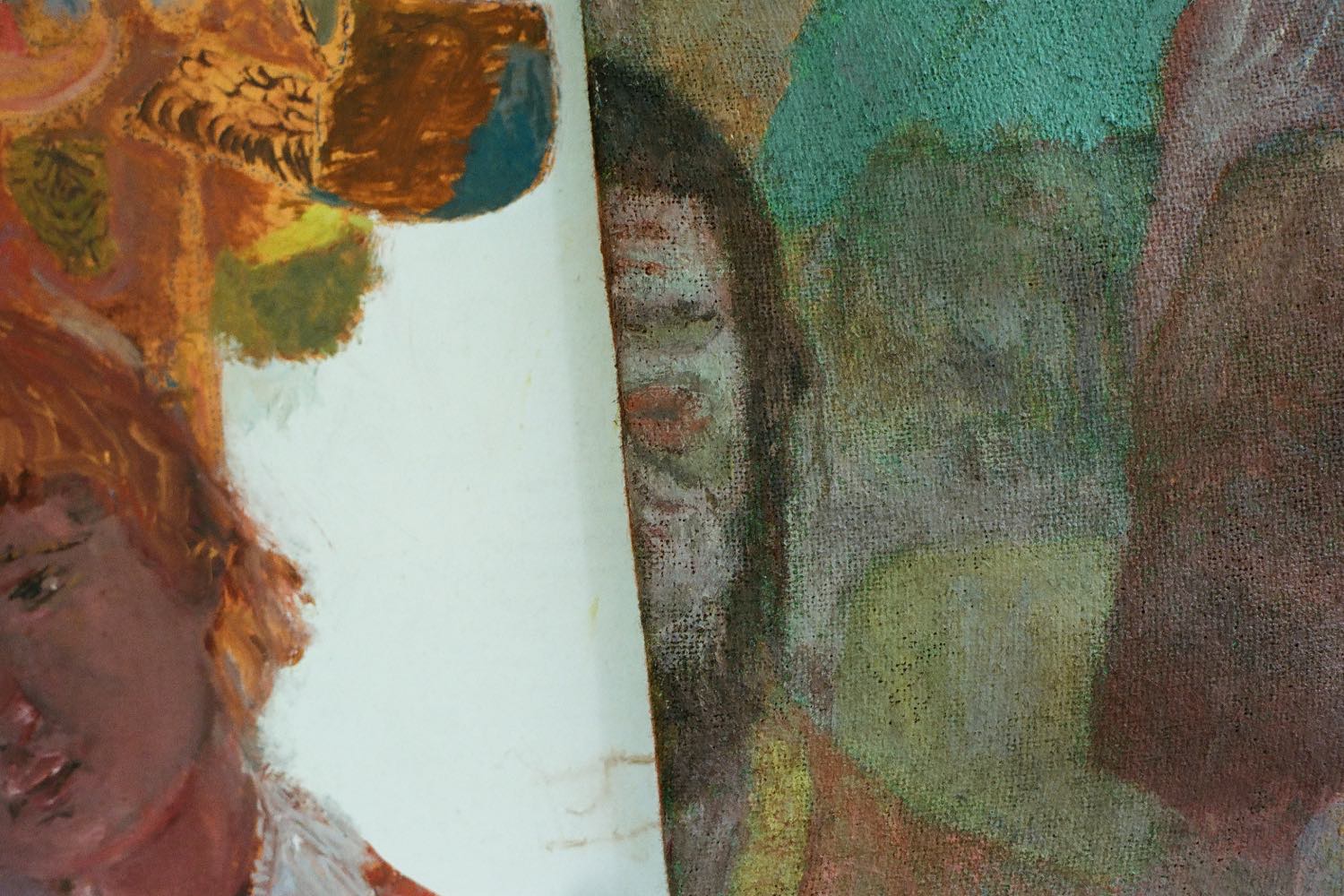
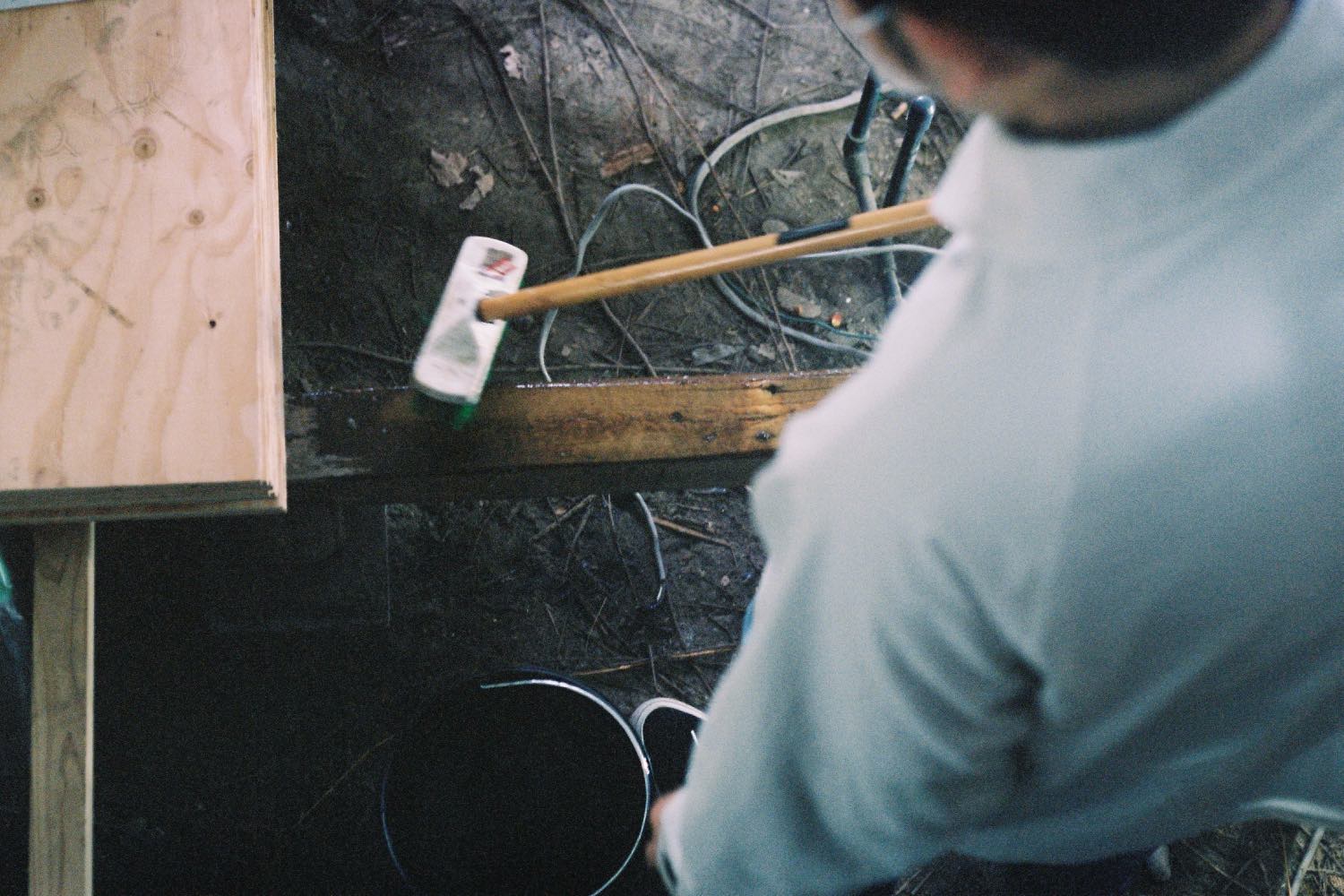
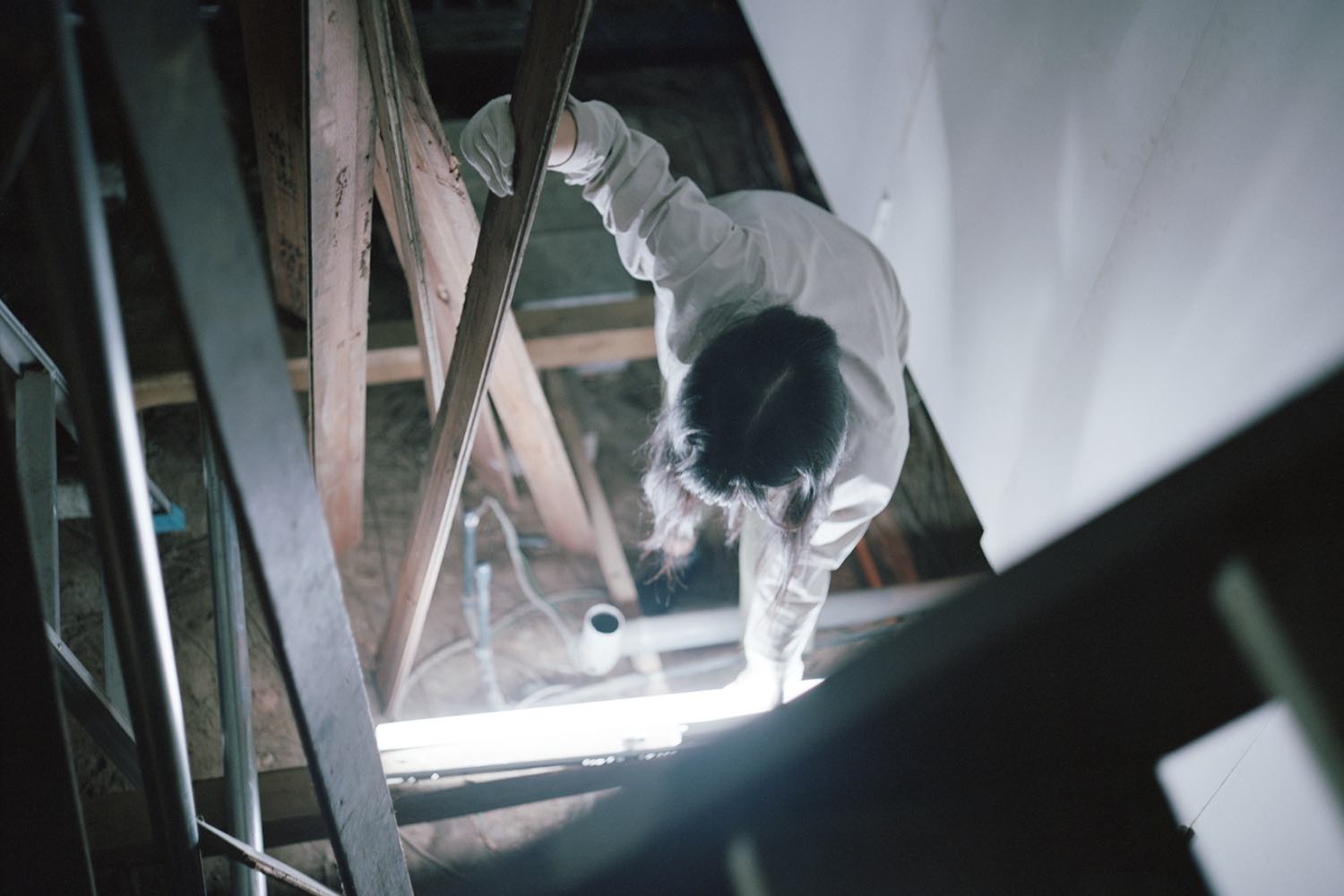
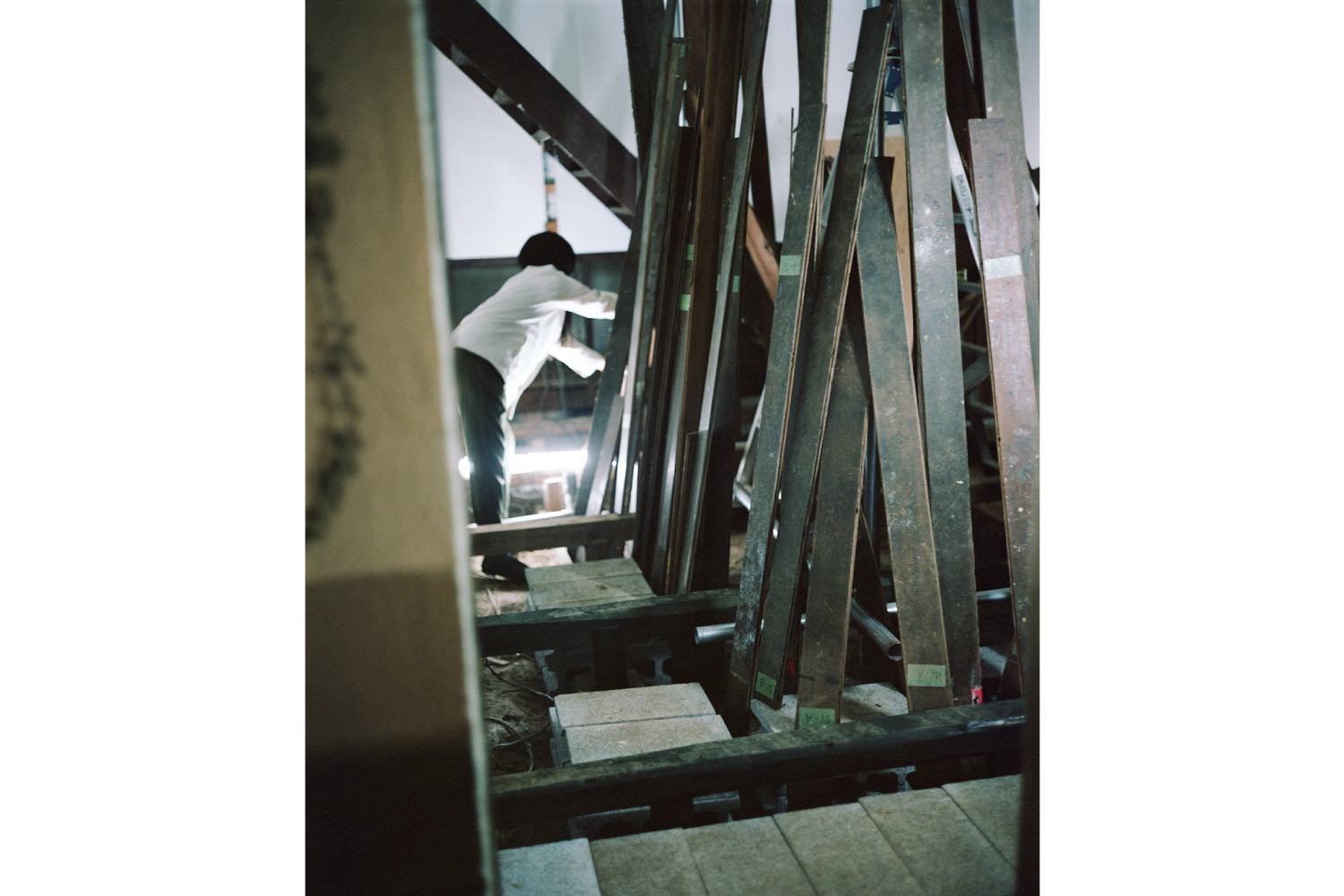
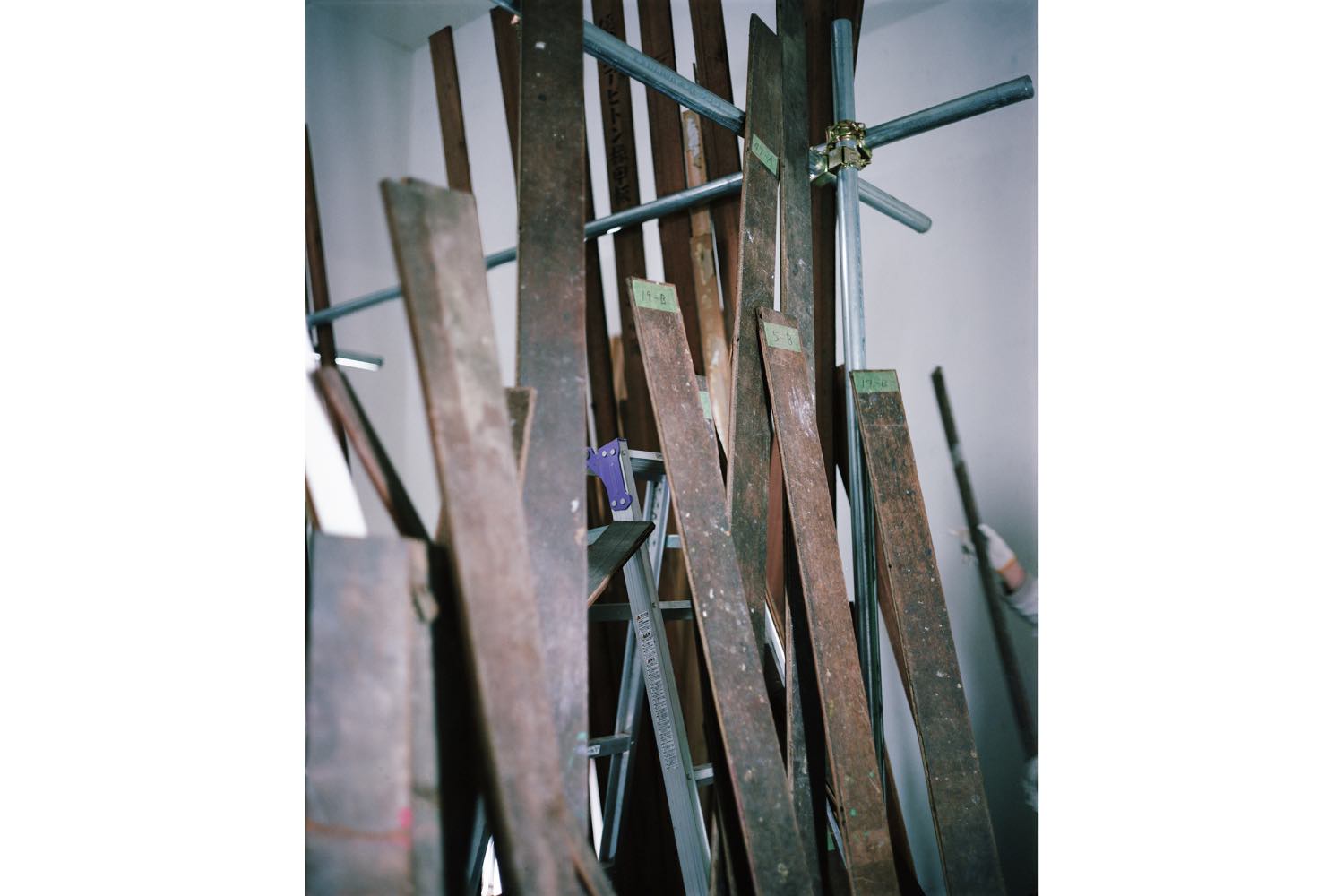
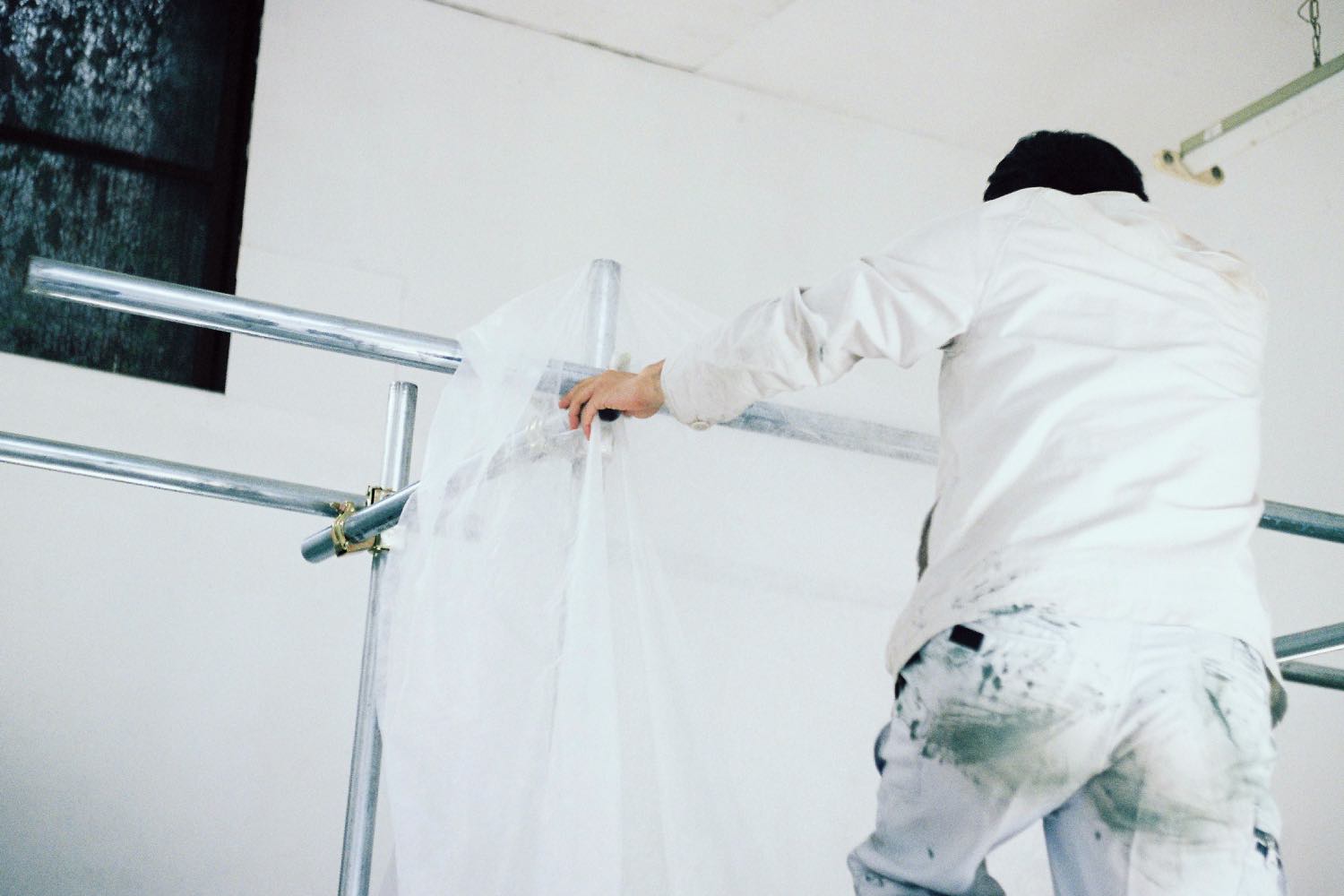
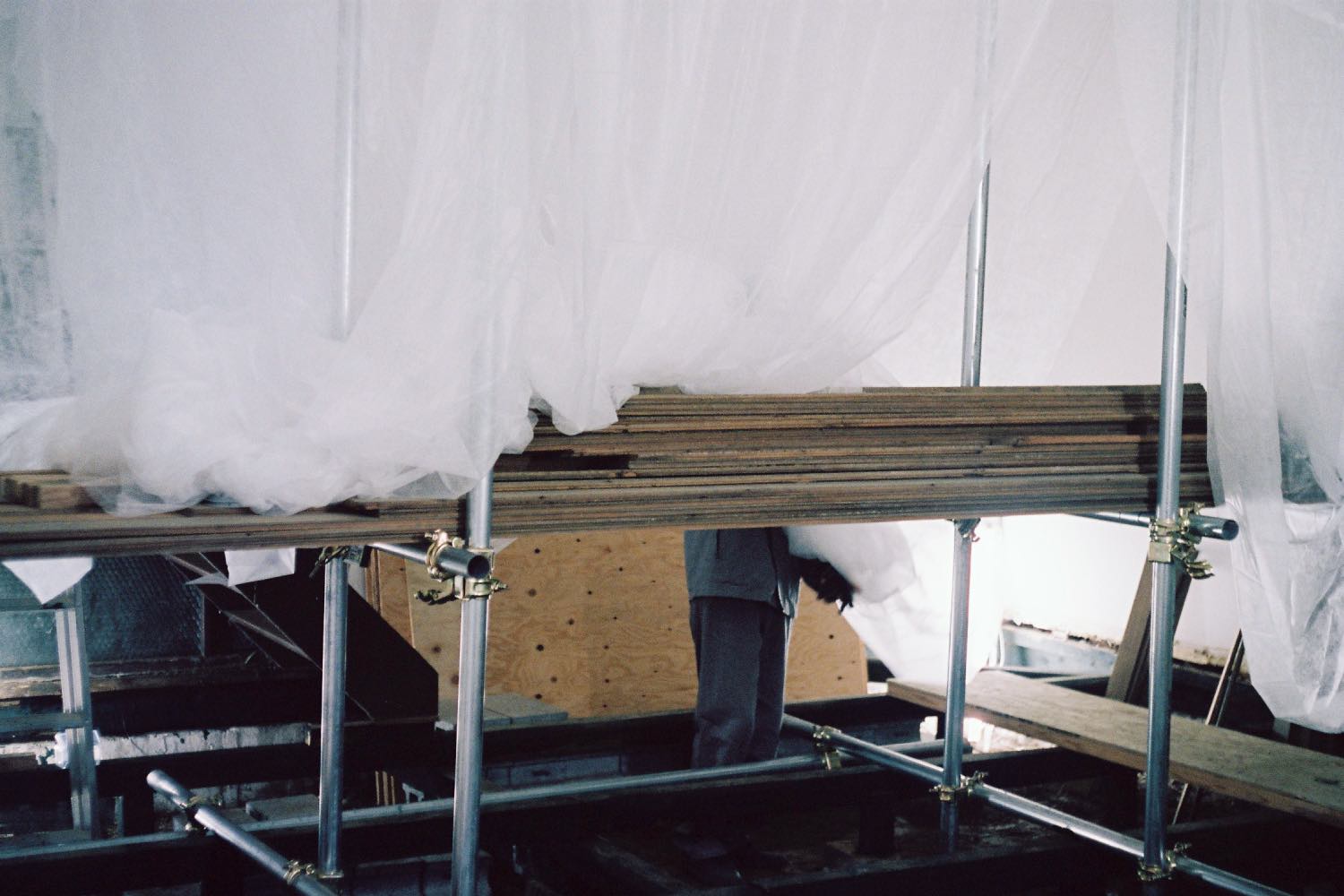
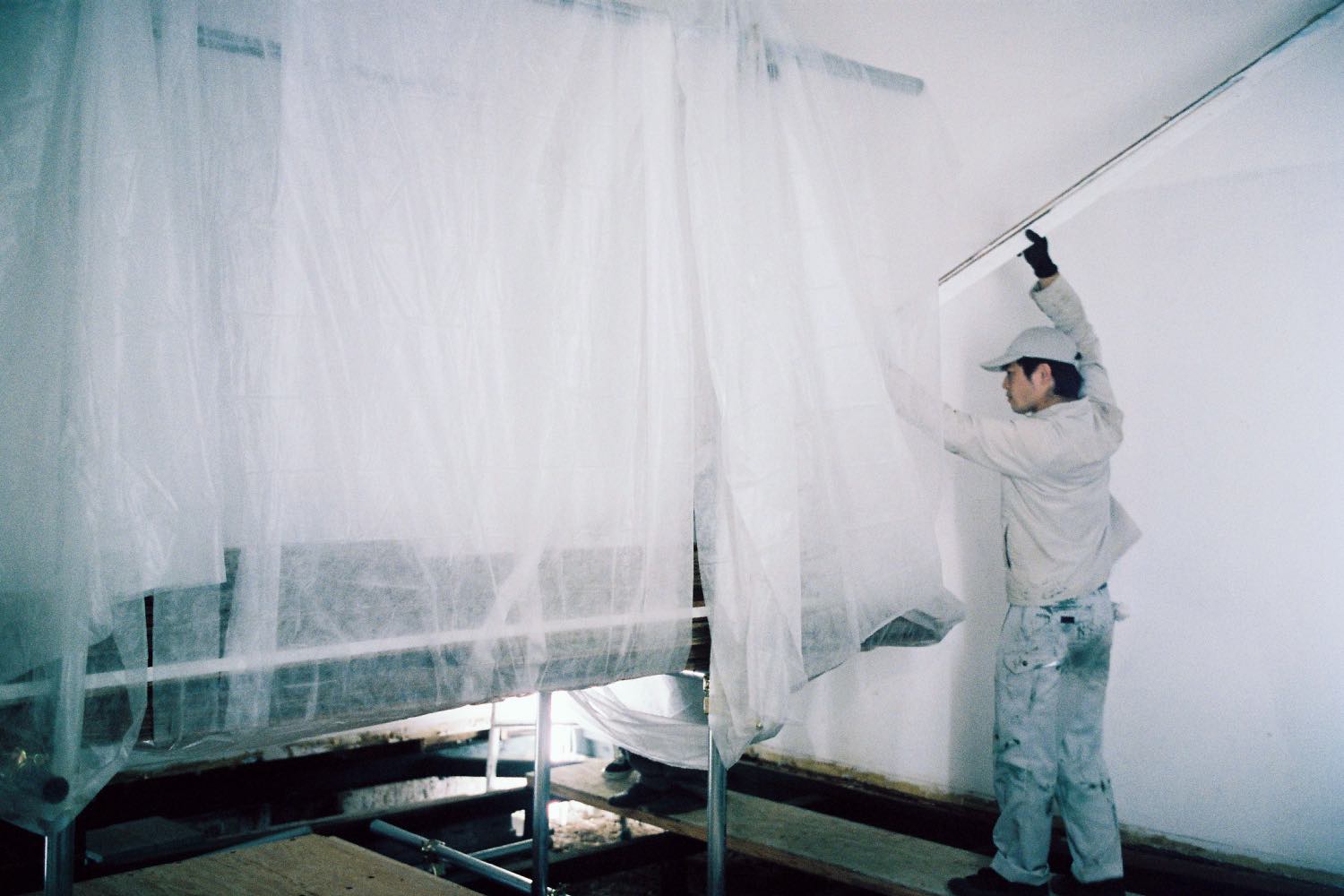
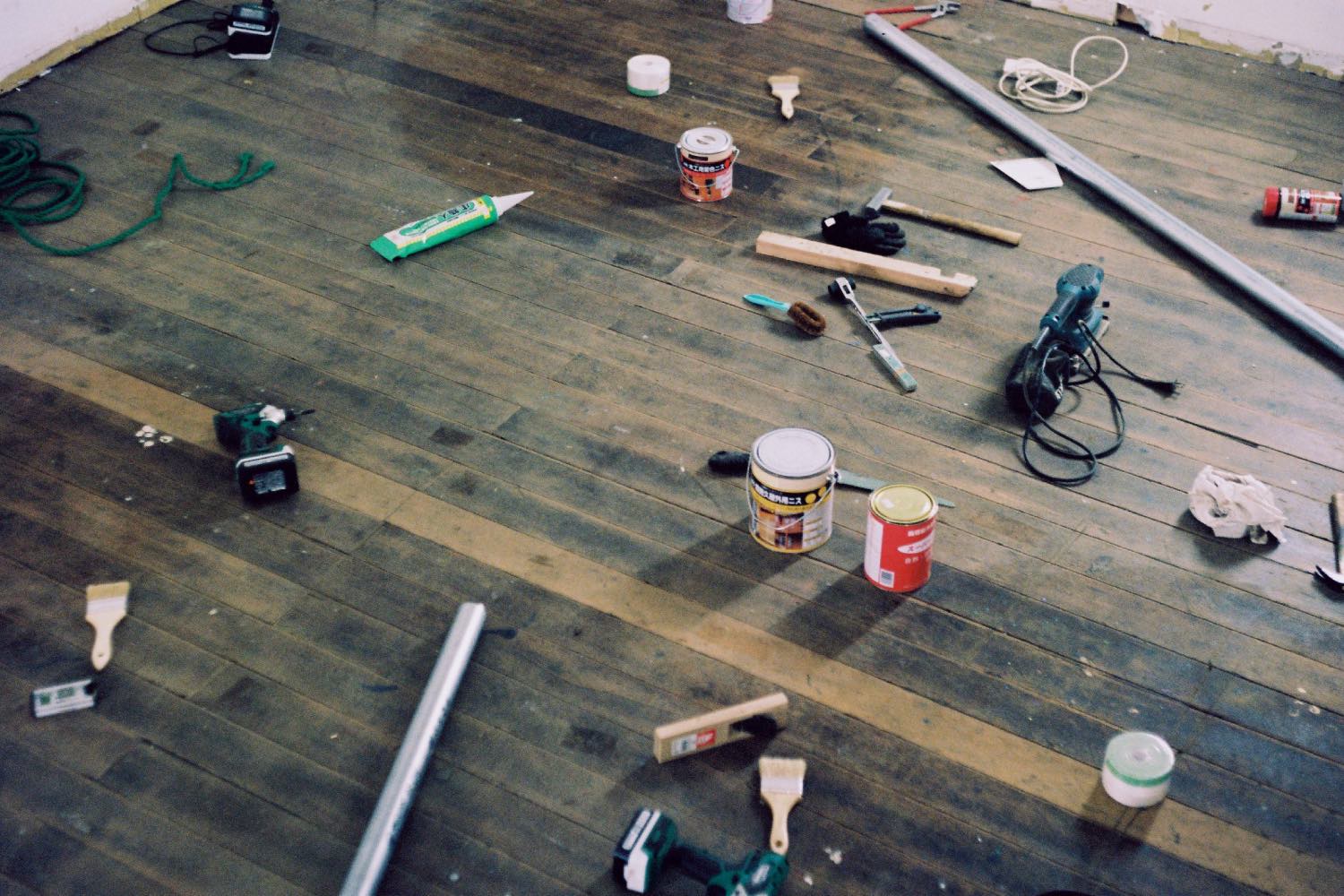
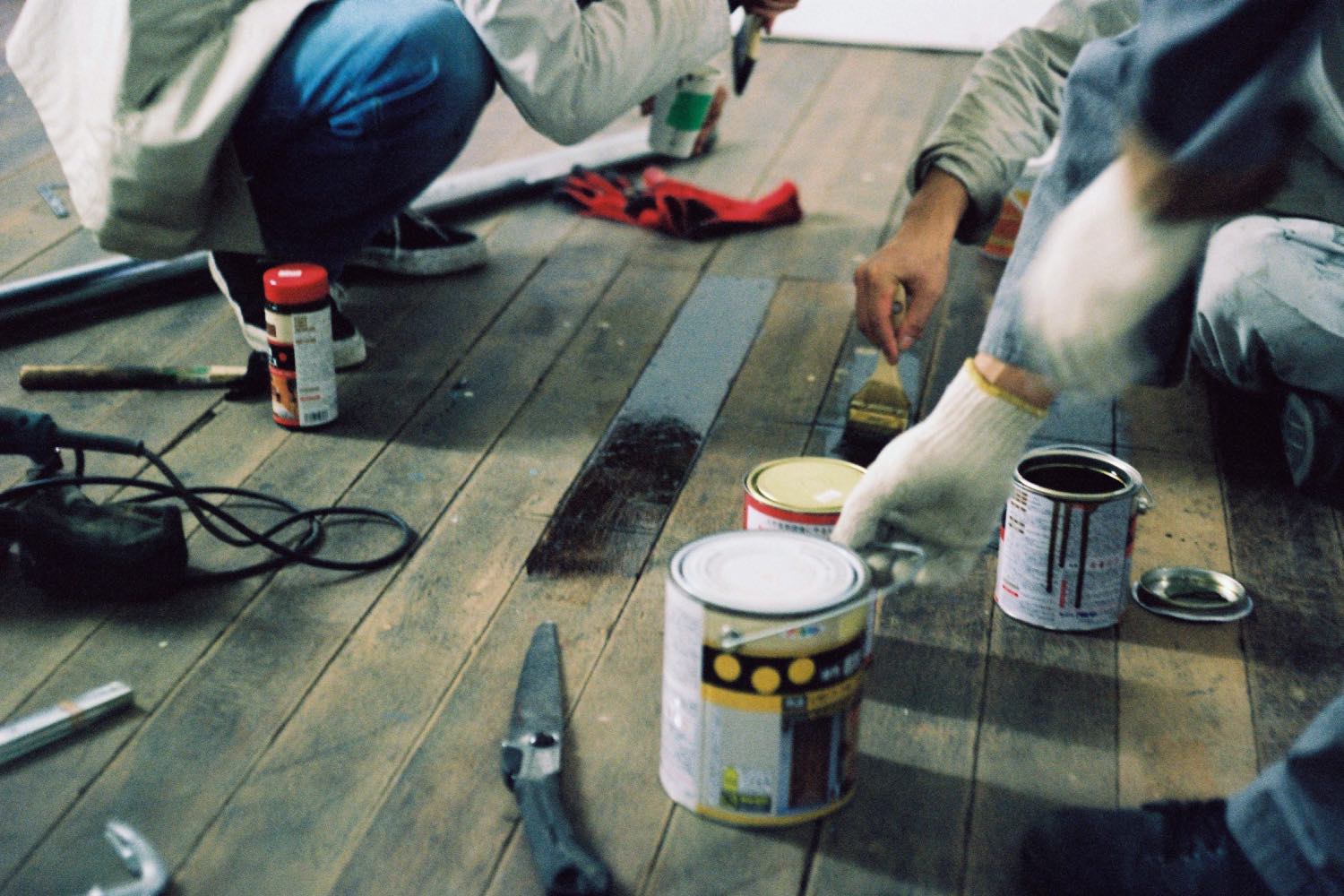
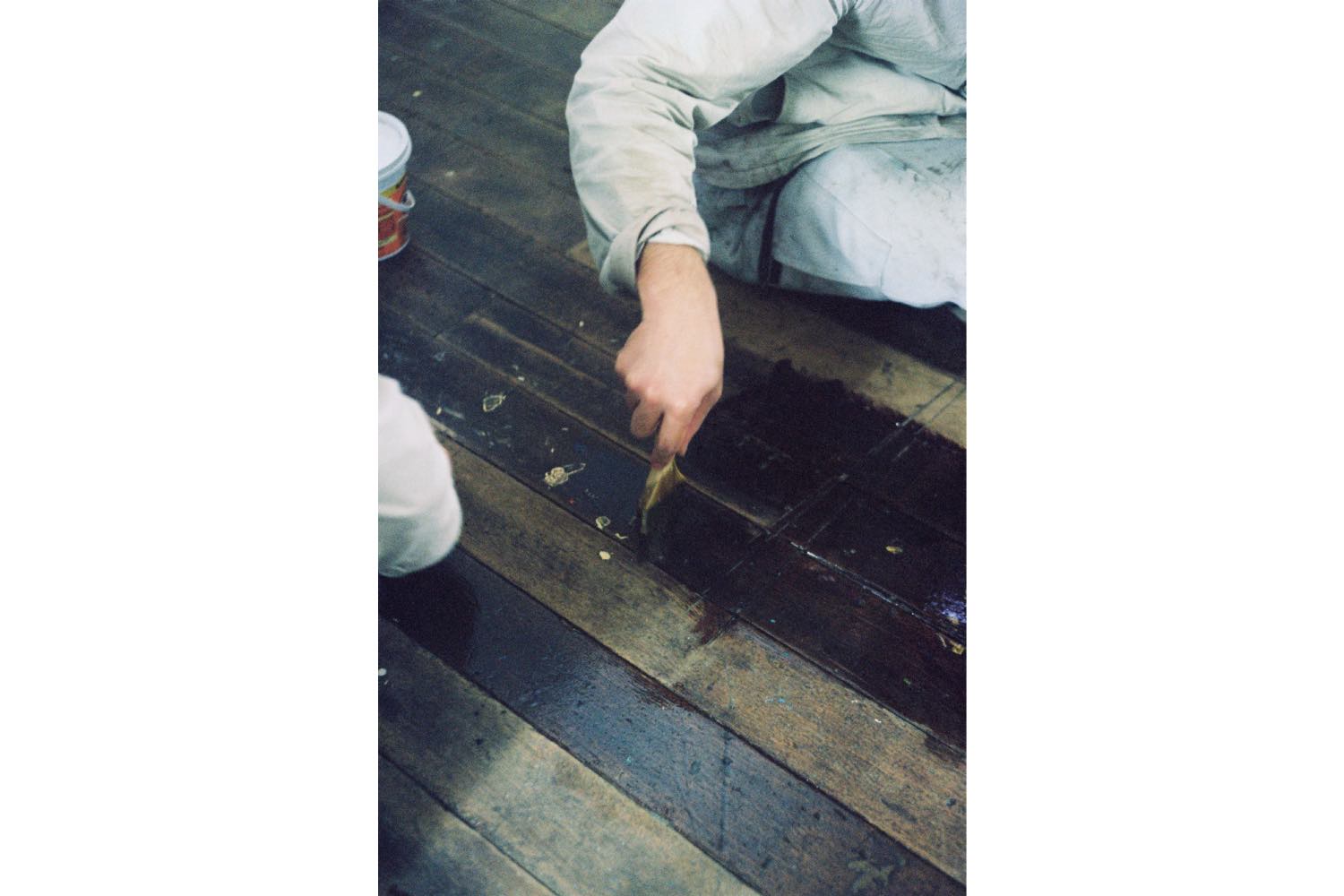
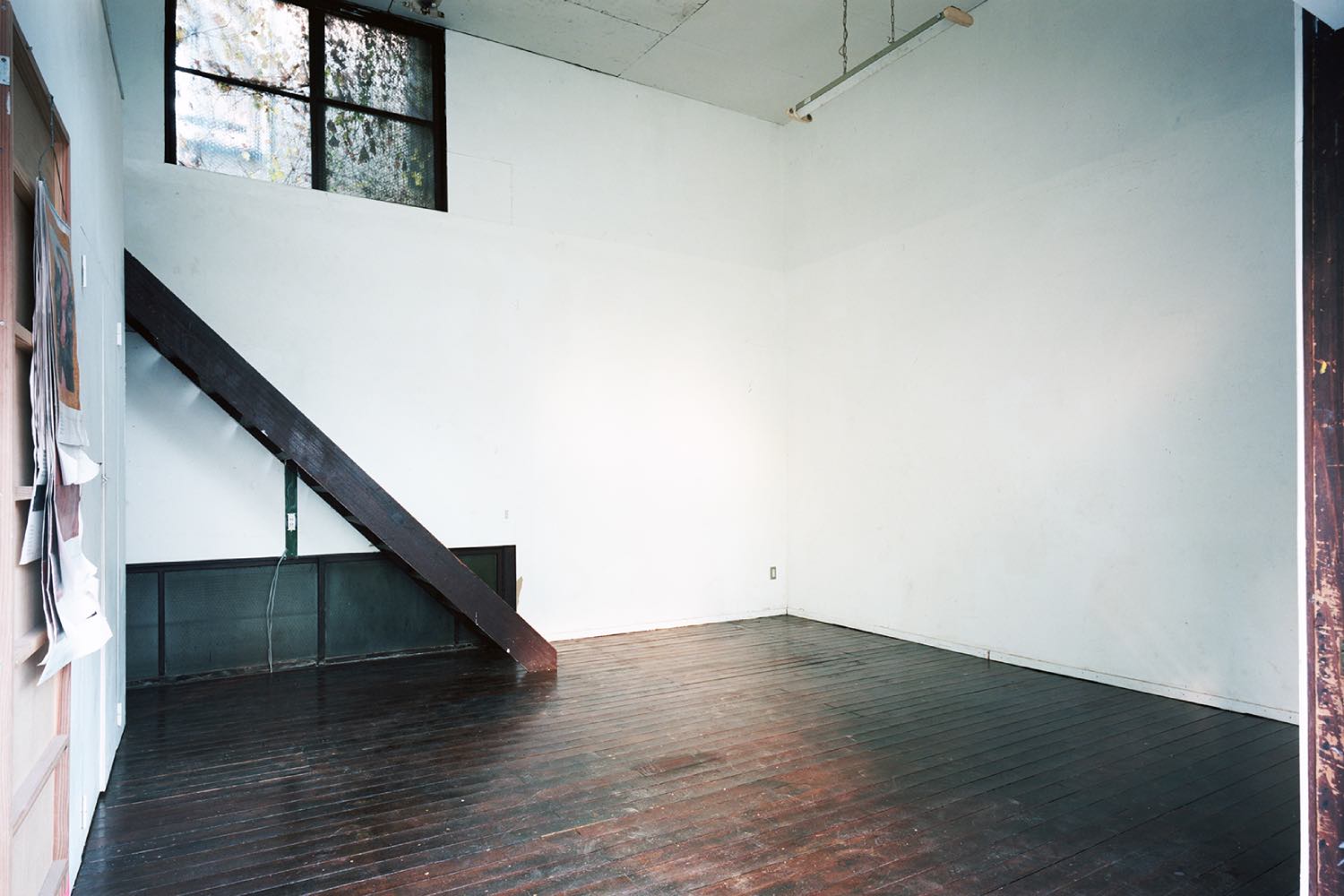
We held a solo exhibition titled “TEIRE / Repair” (2021) at Whitehouse in Shinjuku. The exhibition centered on repairing the gallery’s floors. Typically, construction follows a predefined sequence of procedures. In this case, we incorporated acts of “repair” (TEIRE) that had historically occurred in Shinjuku into the standard floor repair process.
Completed in 1957, Shinjuku Whitehouse was Arata Isozaki’s first architectural work. Originally designed as a combined atelier and residence, it later functioned as a café and a studio for contemporary artists. In 2021, following renovation by GROUP, it reopened as the Whitehouse gallery. Before “TEIRE / Repair,” parts of the building’s foundation had deteriorated due to surrounding vegetation and rain, posing a risk of floor collapse.
In Shinjuku we reinterpreted the actions of individuals who originally had no place to belong but created their own spaces within the city as acts of “repair.” We studied how they established these spaces, and playwright-photographer Arata Mino adapted their actions into a script. This script was then integrated into the repair process. Materials from the play were repurposed for the floor repair, while materials from the repair process were incorporated into the play, forming a reciprocal relationship that became the core of the exhibition.
Creating spaces of belonging in Shinjuku often involves redefining one’s relationship with the ground in an environment where the natural soil is absent.
The events addressed in “TEIRE / Repair” are as follows:
GREEN HOUSE (1967)
In the summer of 1967, the green space near the east exit of Shinjuku Station (now in front of Shinjuku Alta) was known as the “Green House.” This area became a gathering spot for young people who watched passersby, took sleeping pills, danced to jazz, and engaged in free love. Dubbed the fūten-zoku (idler tribe), they numbered around eight hundred, mostly unemployed, bearded, and dressed in T-shirts and jeans.
SHINJUKU RIOT (1968)
On October 21, 1968, the radical leftist groups Chūkaku-ha, ML-ha, and the Fourth International held rallies at Meiji Park and Hibiya Open-Air Concert Hall. Afterward, approximately two thousands demonstrators armed with wooden staves and iron pipes clashed with riot police at Shinjuku Station. Around 9:00 p.m., protesters gathered at the plaza near the east exit and stormed the station. The following day, the Japanese government invoked anti-riot laws, arresting 743 individuals.
CARDBOARD VILLAGE (1998)
From 1992, homeless individuals built cardboard homes in the underground plaza of Shinjuku Station’s west exit, forming a community known as “cardboard village.” On February 7, 1998, a fire destroyed more than fifty homes, killing four residents. After the incident, the area was fenced off for renovations, and residents were relocated to facilities provided by the Tokyo Metropolitan Government, leading to the dissolution of the cardboard village.
TOH-YOKO KIDS (2021)
In the summer of 2021, teenagers began gathering near the Shinjuku Toho Building. Originating in Kabukicho around 2018, they called themselves the Toh-yoko community. They sat on the streets, drank alcohol, took cold medicine, and chatted while using smartphones. The group attracted increasingly younger members, some as young as twelve or thirteen, and continued to grow until stricter regulations limited their gathering spaces.
REPAIRING COLUMN (2023)
After serving as an artist atelier and gallery for decades, a Shinjuku building’s roof, originally designed by Arata Isozaki, began to fail. GROUP, responsible for its maintenance, initiated a dialogue between Tokyo and New York, reminiscent of Isozaki’s own correspondence. This exchange between GROUP and ANY gave rise to a new “repair column.” Like its predecessors, this column entered the stage as a protagonist, holding up the bending ceiling with both hands.
During the exhibition, past events where tools and materials were exchanged reciprocally were displayed alongside the floor repair process. After the exhibition, the waxed floor appeared polished, though largely unchanged in appearance. However, it now embodied the acts of TEIRE (repair) that had taken place in Shinjuku.
“TEIRE / Repair” was more than a technical restoration or archival display. By integrating its form, resources, and cultural significance, it created a continuum of the past, present, and future in a rapidly redeveloping Shinjuku. Though subtle on the surface, these changes fundamentally redefined the foundations of both architecture and the city.