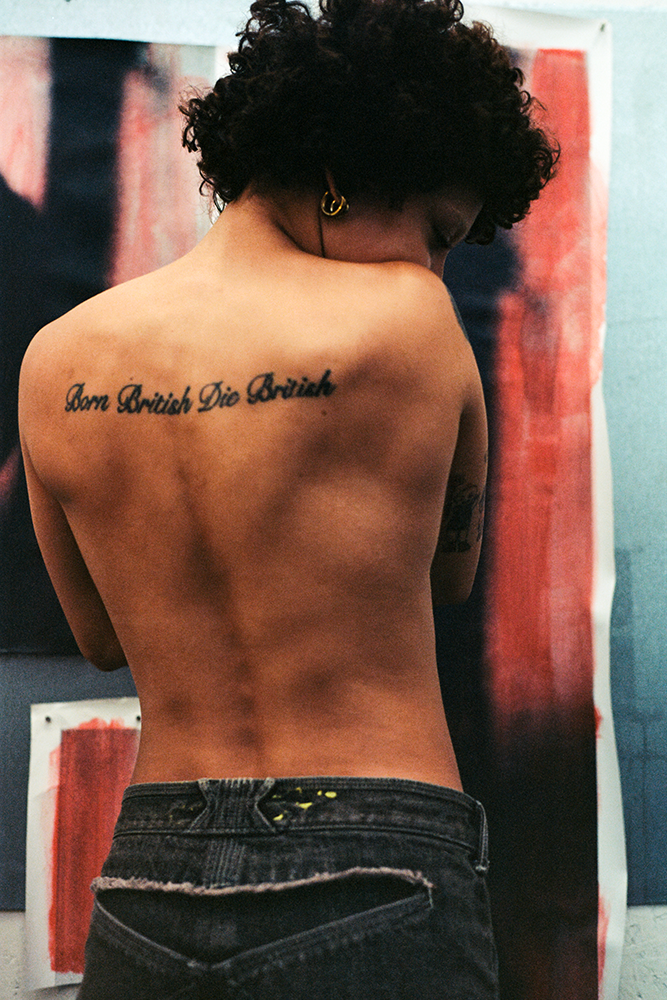
One of the earliest works by Rene Matić is a video that documents their back torso being inscribed with the far-right slogan “Born British Die British” by tattoo artist Lal Hardy. For Matić, it was a way of questioning the relationship between the all-too- evident subtext of such a slogan, that is, the desire for a nation-state founded on racial hatred, also known as “whiteness,” and their existence as a person who was born from interracial love.
Guided by an ethnographic methodology of the Self, much of Matić’s research navigates their body and happenstances of their own life, relatives, and queer BIPOC community as a compass for acknowledging and salvaging memories from the margins. With vulnerability and defiance, the image-making process of Matić creates disturbances in the hegemonic understandings of national, racial, sexual, and gender identity in a never-ending quest for self-determination.
Before we met in their studio, I proposed Rene to do a mutual crash course into what, culturally, has been significant to us. Among books by bell hooks and James Baldwin and artworks by Arthur Jafa and Glenn Ligon and music by Nina Simone and Patti Smith that Rene shared, I chose to watch Shane Meadows’s film This is England.
Rene Matić: Well done! I wrote my BA dissertation on the major fighting scene between Combo and Milky in This is England (2006). I dissected every single element of it and went into the deep depth of what everything symbolizes, for example, when Milky — the only Black person in the film’s skinhead crew — talks about his family cooking rice and peas, or the moment when he smiles at Combo.
Bianca Stoppani: Which triggers Combo to brutally beat Milky.
RM: Yes, it’s this moment of jealousy. For me, that scene was the beginning of understanding the dynamic between whiteness and blackness — it made me look at whiteness in a sympathetic way. Racism, or any other prejudice, comes from a lacking, not only of comprehension, but also of something that’s purely material. It has nothing to do with Black or Brown people and everything to do with white people.
BS: That scene is heartbreaking. Milky describes his life in a way that is purely out of love and gratitude for his family and loved ones. Because he knows that the more he tries to bridge the (racially fabricated) distance and communicate his own humanity, the higher the rage and violence against him will be.
RM: Milky is being generous by talking to Combo in the first place. He’s also talking about the generosity of his family. And I think that’s what happens in my work. I have had the privilege of the generosity of the people in my images, the people in my work, their stories. To me, it’s about keeping that alive. I go back to This is England every time I have a blockage in my practice because it does everything. Also just aesthetically that film is amazing. Obviously it’s got that skinhead culture, which is the reason why I went to it in the first place.
BS: And what made you go to the skinhead culture before that?
RM: My dad is a Black skinhead. He became a skinhead when he was nine years old because he was outsourcing a family. The skinhead became his family and his culture and therefore my family and my culture.
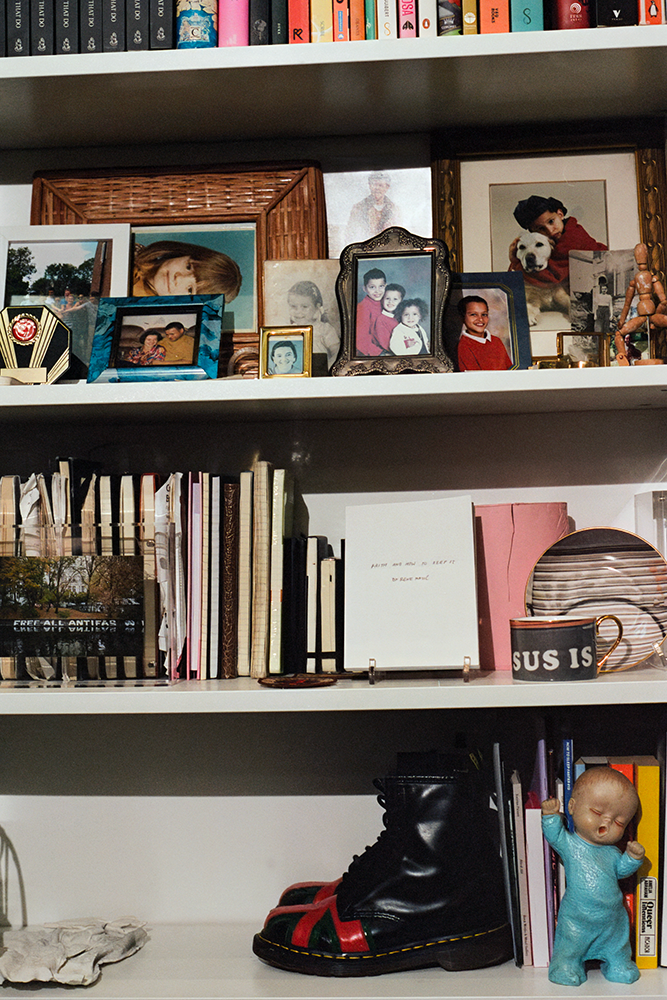
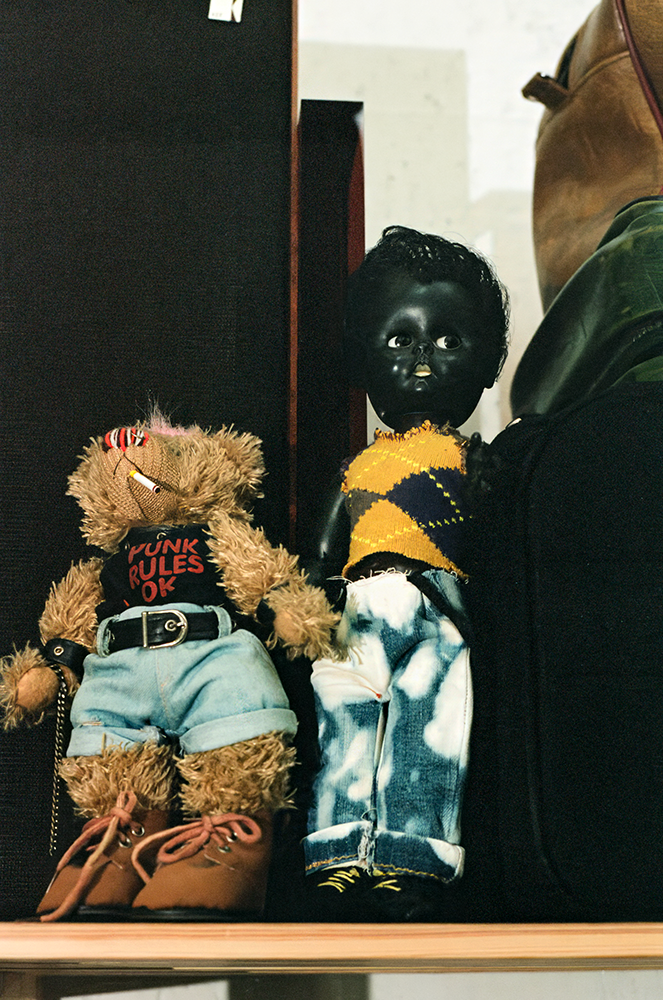
BS: Like that doll on the shelf?
RM: Yes, it was one of the first Black dolls that I found, but she’s not part of Restoration (2022– ongoing) because I need her here. She’s got the Chelsea haircut, bleached jeans, and a top I made out of an argyle printed sock that was my mother’s. I’ve always loved sewing — probably because I was raised to be the perfect housewife — which is why I first studied fashion design at Ravensbourne. Then, for the end of the year project, we had to design a shirt. Mine was about the erasure of Black women in the Civil Rights Movement. We had to do a catwalk and instead of putting my shirt on a model, I just put it on a chair because I didn’t want to put this thing on any body. I realized that the research that I wanted to do did not fit into fashion at all. So I dropped out and went to art school instead. Fashion still matters in my work, but more as a tool for coding.
BS: How did the collection of second-hand Black dolls in Restoration come into being?
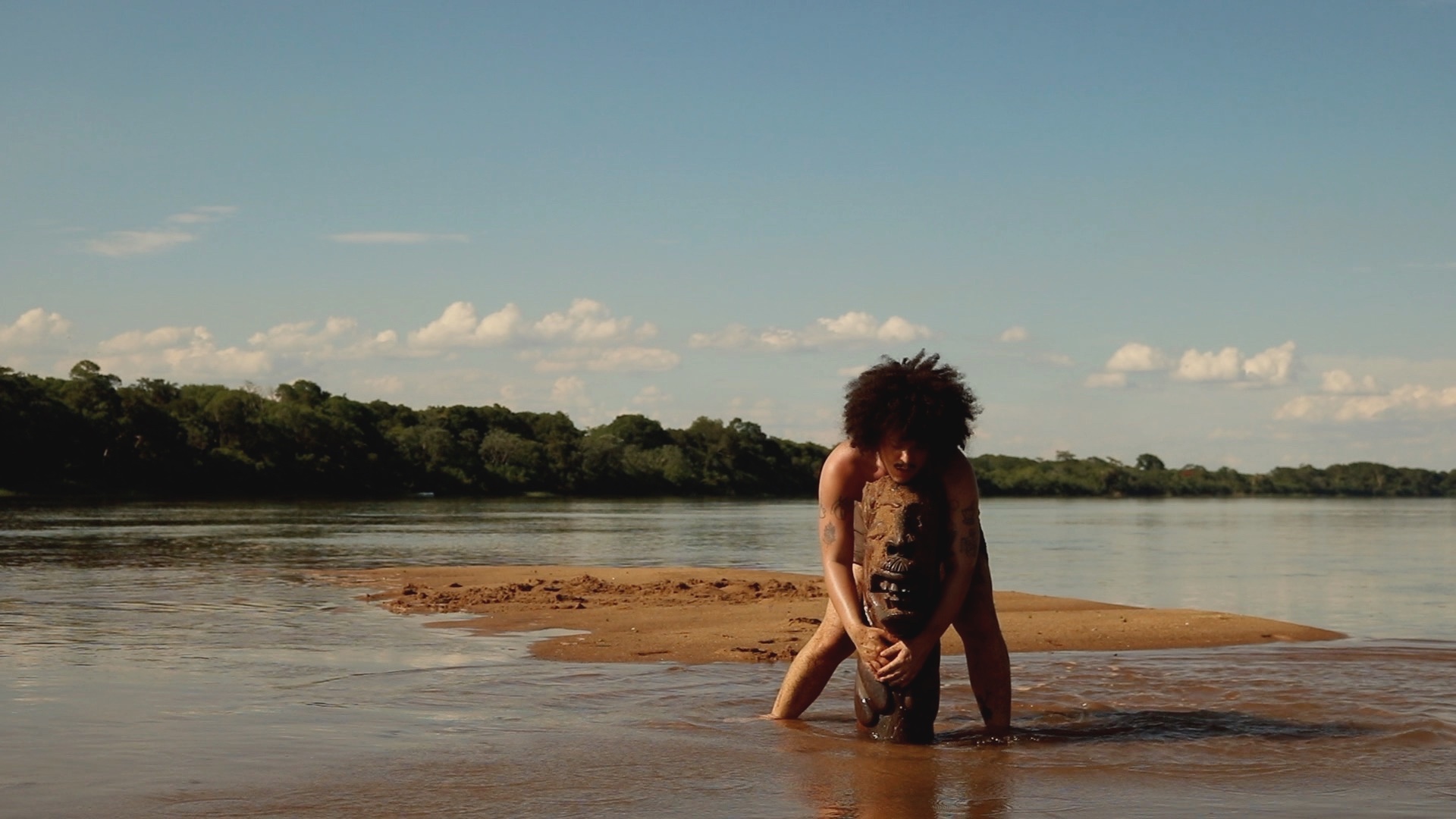
RM: I started collecting Black dolls after my wife, Maggie, got me one from a charity shop. It felt like a saving to me. Since then, I’ve bought dolls online to look after them and make sure they are in good hands, which I thought was just a childhood obsession. Then when I made the film Many Rivers (2022), I recognized in the dolls an affinity to the story of my dad being neglected, passed around and abused, which meant that his future was difficult for him. It became a practice of coming to terms with the consequences of that and of loving something that wasn’t perfect and that was never ever going to be perfect because it had so much history before it reached you. The opportunity to show that collection arrived by chance for an exhibition at CCA Berlin in 2024 because there was already a shelf in the space. Showing them to an audience was interesting and it was reminiscent of showing Many Rivers, because it felt out of my control and hard to protect. For example, a lot of white people thought they were Golliwogs, but these dolls are not, even if their features are problematic because, obviously, they are not the true representation of a Black person. Some models have caucasian features which have been just painted in black. Others are more geared towards a racist idea of what a Black baby would look, i.e., with red lips or yellow eyes. It was interesting that what people immediately assumed I was doing was showing something that was inherently racist just because I was showing a lot of Black dolls. But I was mostly trying to show that there’s an opportunity for love to continue, even if they are “beyond repair.” They deserve a chance too.
BS: What about the collection of statuettes on your desk?
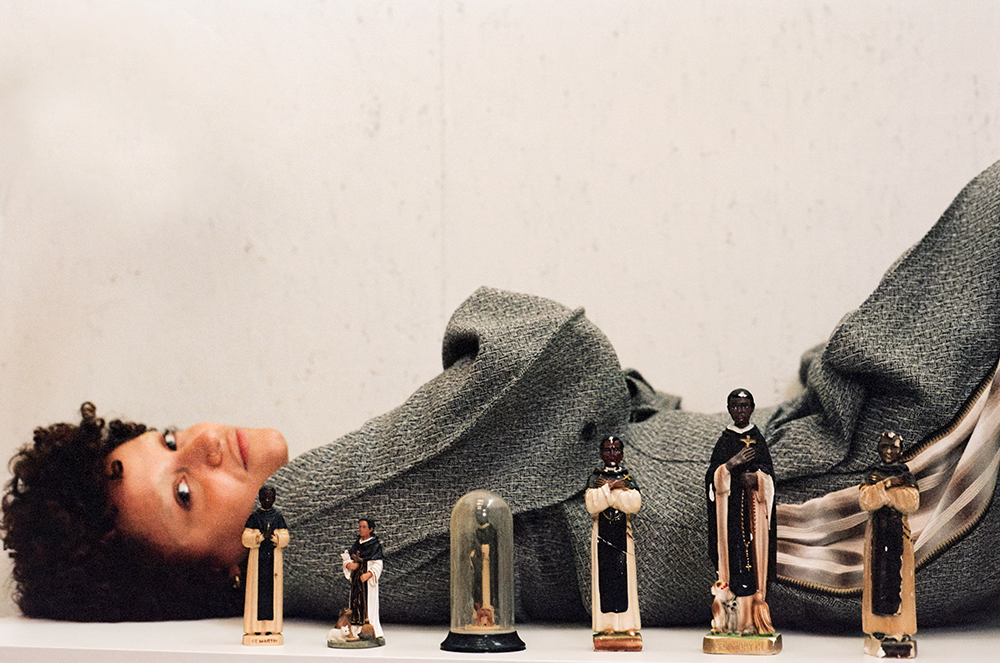
RM: I have been thinking about this recently, because showing the dolls made me realize that all I’m doing is collecting stories, images, and things that I love. I came across Saint Martin de Porres in a wine bar where there was a big statue of him, and I started collecting his statuettes — however, because they are expensive, I’ve only got six so far.
BS: I’m looking this up now and understanding that he is the patron saint of racial harmony, being himself mixed-race.
RM: Yes, this work too is related to my dad’s history, somehow. I like to think that his white, Irish Catholic mother, even if she could not keep him because he was born Black and out of wedlock, found out about this Black saint and gave my father “Martin” as a middle name after him. It’s not true, but I do like this fantasy. The statuettes live as a collection and as a picture I took of them (Rene’s St Martin De Porres figures, 2025). It was about recognizing the things that you search for to find yourself. I don’t know what I’m going to do with him, but I feel very safe around him.
BS: It seems that religion has been a way for you to talk about belonging. Traditions and rituals shape the identity of a person and a community. They’re psychic places where you can find yourself or your lineage, whether it is chosen or contextual. But also, you’ve been interested into physical places like the pub, the church, the dance floor as sites where communities gather and become themselves. They are based on faith and devotion towards both the people around sharing a moment with you, but also towards an idea.
RM: It’s just such a human need to find a place, isn’t it? And yet, it is all imagined. bell hooks said that if we didn’t imagine ourselves out of slavery, we would still be enslaved. My work deals with the evidencing of that and celebrates it. I think that’s the urge that I get when I want to take a photo. It happens when a moment of faith and spirituality comes.
BS: It makes me think about what Mark Fisher wrote about the role of emancipatory politics, that is, to relentlessly reveal what surrounds you as contingent. In this way, imagination becomes one of the few political tools to reach a way out of whatever is proposed to you as “reality.”
RM: It’s exhausting, but one has to continuously imagine. That’s why I talk about the skinhead subculture so often, because it happened even if it was a utopic thing. I try to look at what worked in the past and bring those histories in, rather than looking to the future.
BS: I wanted to ask you about the red-washed photographs that you have on your right. They look to me like a reworking of the shadow portraits that you presented in the show “Baby” at Chapter NY (2025).
RM: Exactly. That was the first time that I worked with black-and-white silk screen prints and I adore them. The original image was red because of the light in the club where I took it, so l’m trying to find a way to inject the red back in. It’s nice to have some tactile intervention into the piece. I really enjoyed working in the darkroom and having that much intimacy with the materials. I want this all the time now.
BS: When it comes to photography, what are the devices or printing techniques and materials that you have been drawn to and why?
RM: Material wasn’t important to me for a long time. All my early 35mm are developed in Snappy Snaps shops because that’s all I knew and it served a great purpose. It’s the image that leads the printing and the framing for me now. It tells me what it needs. Does it need intimacy with me in the darkroom or does it need to be held in a different way? Silk screen printing feels heavy and harsh. It’s punk. The darkroom is sexy and romantic. Sending them off to be developed and printed gives distance and time that I’m also grateful for.
BS: In those images, is it you looking directly into your shadow?
RM: It’s every time I’m bumping into myself and becoming aware of the shadow self who walks in front of me.
BS: So it’s an encounter with another version of your self, maybe a more fleeting one?
RM: It is the absence of me. No matter how many times I repeated the technique. I was really emotional when we started to install it.
BS: I’m noticing that for the first time in your work, there’s no precise indication of place, rather there’s a texture, like water or tarmac.
RM: I couldn’t remember where I was either save for the fact that a lot of them were taken in America. It was also my first time doing iPhone photos, so there was a new instantaneous aspect in the process. I enjoyed the opportunity to have abstract images and run with that. There are things that people can recognize and others not so much.
BS: Your shadow is tangentially present also in the film redacted (2024), where your body constantly shifts between light and darkness, between visibility and invisibility.
RM: It’s an interesting connection. The work was inspired by the reception of Josephine Baker’s performances in Vienna in the 1920s and the US Lantern Laws. It’s me using my body, dancing different languages of dance such as Northern soul, Charleston, voguing, and coming in and out of a spotlight. At that time, I was struggling to understand my position with showing photographs of bodies and the issues related to their visibility and invisibility. I questioned where and if I could strike the perfect balance in keeping safe something so sacred to me but also telling and having that story be visible. redacted is about coming in and out of that question and not finding the answer. Often I use my own body because I can be accountable for myself, with the hope to know how best to do it with other people’s. I’m always trying to figure out different ways of coaxing people into looking at my images through me because my gaze is one of love, so in turn the audience’s gaze becomes one of love too. It’s a fantasy, of course; it’s not something that I can control.
BS: In the film Brown Girl in the Art World III (2018) you say that you’re interested in “the creation of an image of what I feel I look when I’m free.” This speaks so much about your practice, where image-making emerges from the desire to communicate a feeling more so than to demand political recognition.
RM: I don’t want my work to be politically relevant. I want my work to become redundant, actually. I feel Brown Girl is dated, in my opinion, which is brilliant because it means that some of those political preoccupations have been achieved. I haven’t thought much about freedom since then. I don’t know if that’s sad or if I’ve turned freedom into love, or if I now recognize love as the closest thing to freedom.
BS: Was freedom what you craved the most at that time?
RM: I crave and still do crave the freedom to make the work that I want to make and for it to be looked at in a way that isn’t through the limited lens of my identity, even if that’s something that I can never be outside of. Maybe since Brown Girl, I’ve tried my best to figure out how I can be free in this image of myself. Not necessarily in the world, but in this image. And I think that that’s a question that I am trying to answer in every single work that I make.
BS: It’s something that I thought about also in relation to the portraits of your loved ones in Feelings Wheel (2022–25) or in the show “Idols Lovers Mothers Friends” (2025) at Arcadia Missa. Because it seems to me that you have extended this line of inquiry to the community that you live with. You depict very ordinary scenes. In fact, there’s nothing extraordinary or heroic about what they do and who they are sexually attracted to and which color their skin is save for the fact that in these pictures these people are able to be themselves.
RM: We’ve learned ourselves how to be miraculous, we’ve internalized that performance ourselves, because we’re other, that’s the point, right? Maybe I’m craving ordinariness. Even if everyone in those images is sparkly and brilliant in and of themselves, at a dinner table, at a club, looking after a baby, looking after each other.
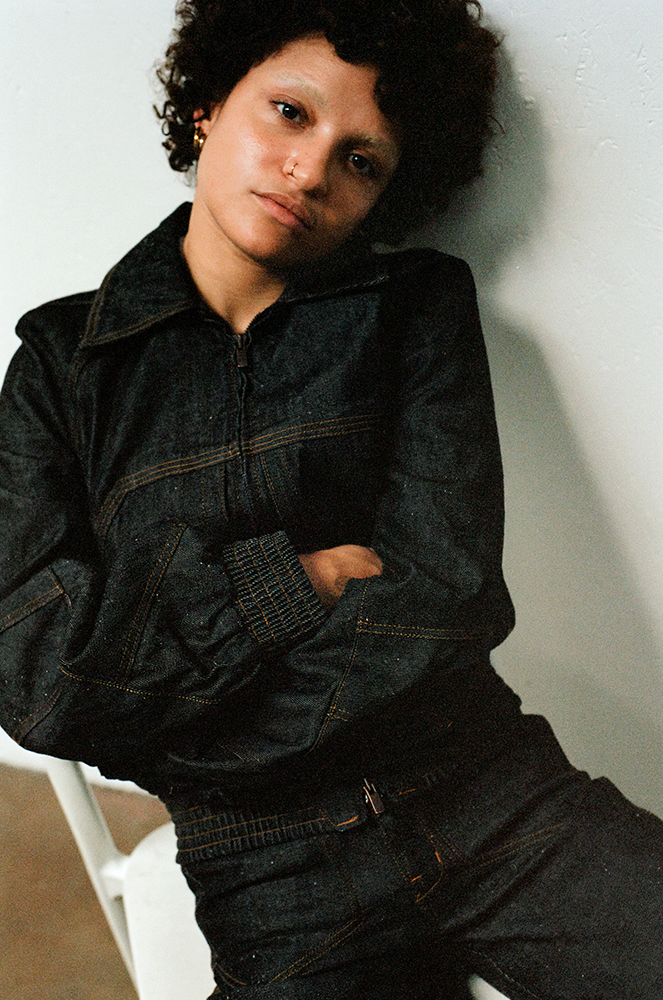
Artist: Rene Matić
Photographer: Benedict Brink
Creative Direction: Alessio Avventuroso
Production: Flash Art Studios
Clothes: Kiko Kostadinov
Location: Artist’s studio, London