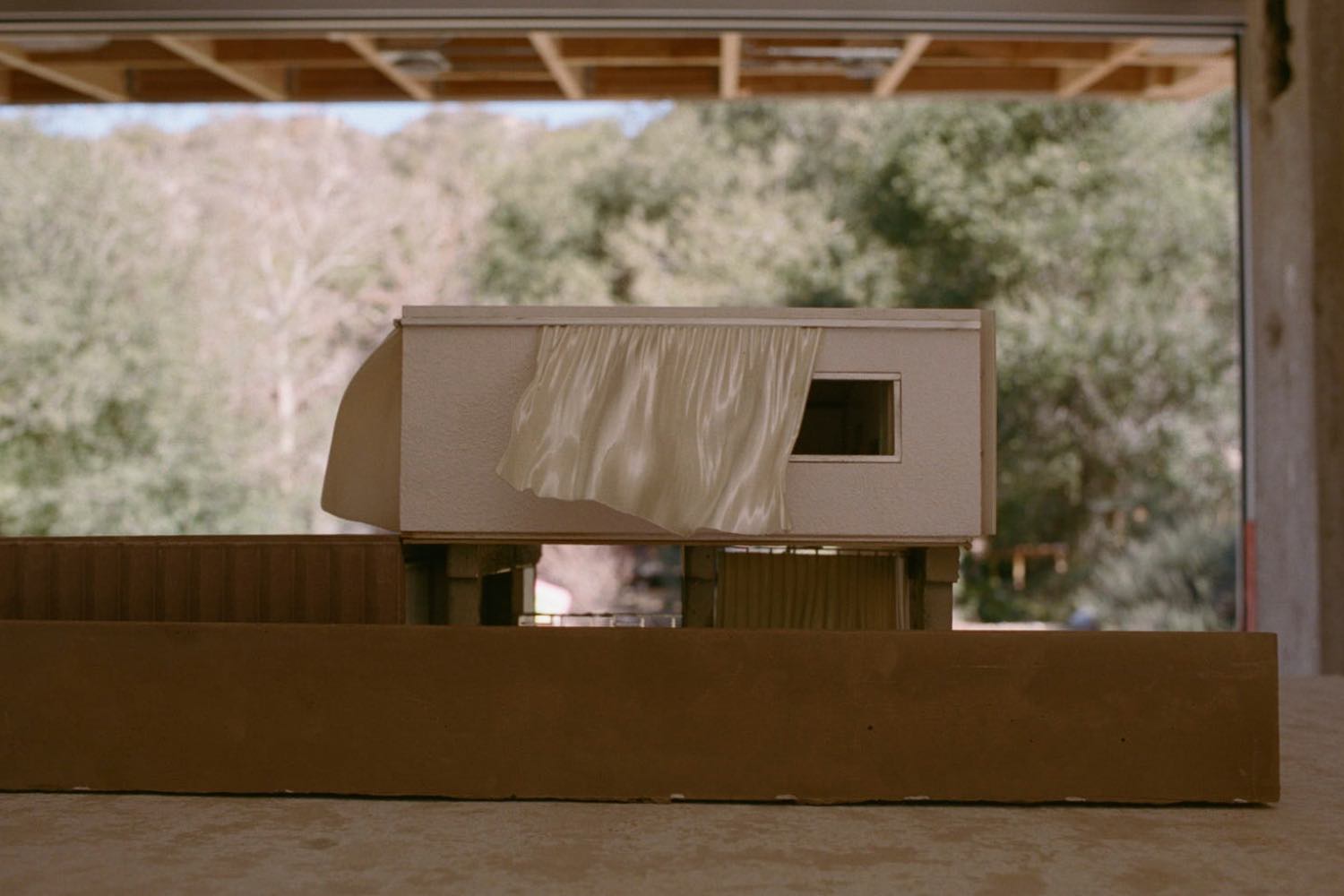
Michael Abel: I studied and practiced with you in graduate school nearly a decade ago — an experience that shaped a lot of my thinking. At the time, you were working on “New Massings for New Masses” at MIT, which I saw as a tangible, formal response to political, technological, economic, and ecological issues. I wanted to start there because you’ve been clear that style is, more or less, futile. I’m interested in discussing this project through the lens of action — doing more, pushing beyond formalism — and thinking about the ontological shifts from orthography to real-time processes in architecture as they manifest as collectivity.
Zeina Koreitem: This is how John and I started working together. One of the things that we were first interested in was: How do we gather? How do we collectivize? How do we come together? Although we always push for beautiful spaces, unusual objects, and experimental materials, we are not interested in architecture or design as an isolated pursuit. We are not interested in form outside of lived life. This is what it comes down to in the end.
Those are political questions. And at that time, it was unique to our work amongst our contemporaries, most of whom had no interest in social or political issues. The politics of collection and gathering is still present in many of our recent projects. We looked at histories of bathing, staging, sharing, ceramics and eating etc. which we’ve studied specifically as collective routines within various cultures, but which have become individualized and isolated in contemporary Western culture.
John May: The context of those years is important to remember. Twelve years ago, we were in the second Obama administration, and it seemed like progressive causes were safely and steadily on the rise. We had our first African American president and First Family. The political climate was so radically different than today. I was already writing some very critical things about neoliberal architecture and urbanism, in particular around the discourse on “sustainability,” which I saw as a completely bankrupt concept. This was during a very particular moment in American academic architecture, which had become completely immersed in irony. Things were cute, or funny, or deadpan, and there were conferences about a return of postmodernism and kitsch. The critics loved it all as well. There were a few great ironists at that time — Michael and Hilary (MOS Architects), for example. But when that general tone began to devolve into imitations, it lost all of its force and originality.
There’s nothing wrong with humor. But what Zeina and I were facing in that moment was an entire generation that seemed almost structurally incapable of being serious. We were outliers during those early years. MILLIØNS wasn’t invited to the party. We were off on our own, asking completely different kinds of questions, which demanded a certain seriousness —questions about the isolating tendencies of neoliberal space, and questions of thermodynamics, etc. The MIT project you’re referring to is deeply serious. Of course, now everyone is waking up to realize just how serious political life can become when aesthetic culture ignores it.
ZK I was coming from an entirely different context. Beirut is historically and politically layered and loaded. Context is unavoidable. Urban geography was the dominant theorical discourse. David Harvey, Henri Lefebvre’s “Right to the city”… While I admired this discourse, I was excited by the conceptual formal discussions happening here. But I also understood that there was a trend amongst a specific group of younger architects in Los Angeles and the East Coast, rejecting any political thought.
In Toronto, I noticed another design trend, Adobe Illustrator science fictions about ecology, the environment or urbanism.
JM Objects vs. systems. The object people had their heads in the sand, with an ironic affect that quietly declared anything serious as uncool — history, theory, politics, energy, etc. And then you had the systems people who just sort of dabbled in scientism. And I say scientism, not science, meaning they trafficked in this sort of aestheticized greenwashing, creating graphs and charts about how sustainable their approach was.
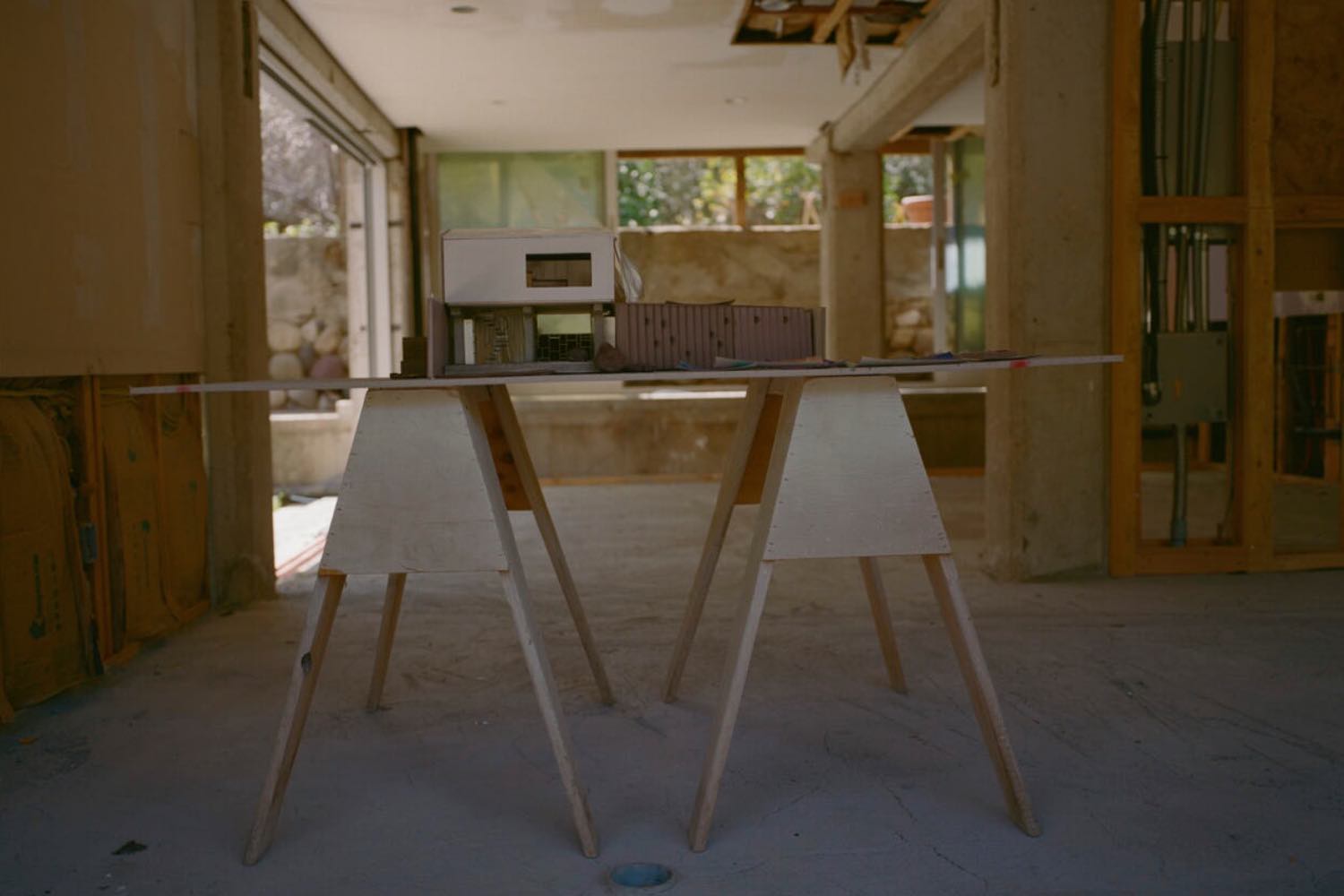
ZK The systems group had a technophilic approach, with a conviction that technology would solve our problems. John was writing a ton in those years, trying to find some conceptual, linguistic rigor to would make sense of the world architecture was operating in. And we were both trying to figure out what it means to practice in a world where you’re neither of these categories, but somewhere else, on some other plateau. I saw architecture as a place where culture could be taken seriously. I was not necessarily seeing myself as a political activist, but as an architect, using the tools of the profession, to imagine ways of living differently.
MA When I was studying, there was a return to the modern box — but stripped of its political ambitions. Now, much of that language has been absorbed into a new political project that’s emerged over the past decade. The discourse around it is crucial, but there’s still a gap between understanding these politics and translating them into form. That’s why I wanted to start with the Collectives project — it did multiple things at once. It reflected our conversations about multidimensional communication while also engaging formal strategies like the raumplan, variations in wall thickness, and material shifts that affect solidity. These elements offer a tangible framework, much like Le Corbusier’s Five Points — a way to push, pull, and design with embedded political and technological meaning.
JM We’re finishing a lengthy essay right now that probably will be the first time we articulate all those things together at once — a kind of manifesto for a politics of thermodynamics. The first actual built test case of these ideas is the House with Several Climates, which is under construction now. It’s really the first time we’re testing out a whole series of ideas that we’ve hinted at in different fragments of texts — our essay on the “Temperamental Interior,” for example – drawing on a lot of colleagues’ work in energy and building technology.
We’ve felt for a long time that some of the most radical political work in our field is being done by a very small subculture of building technologists who loosely form a new generation. Today, students go to their Building Tech class, and they’re still reading a textbook from the late twentieth century that’s been updated seven times, and it’s pretty much energy efficiency and HVAC and passivhaus. You have a small group of people — Kiel Moe, Salmaan Craig, Forrest Meggers, Billie Faircloth, and Jonathan Grinham… the list is growing — who, for a decade or more, have explicitly rejected what Zeina and I refer to as the thermostatic interior. We’ve been able to take their work and, I think, push it into other dimensions, as a radical critique of modern program, a radical critique of housing, a radical critique of domesticity. That body of work has been crucial for us. And you were actually in the first studio, when Zeina and I had just begun working together, that asked the question: “What is poché now?”
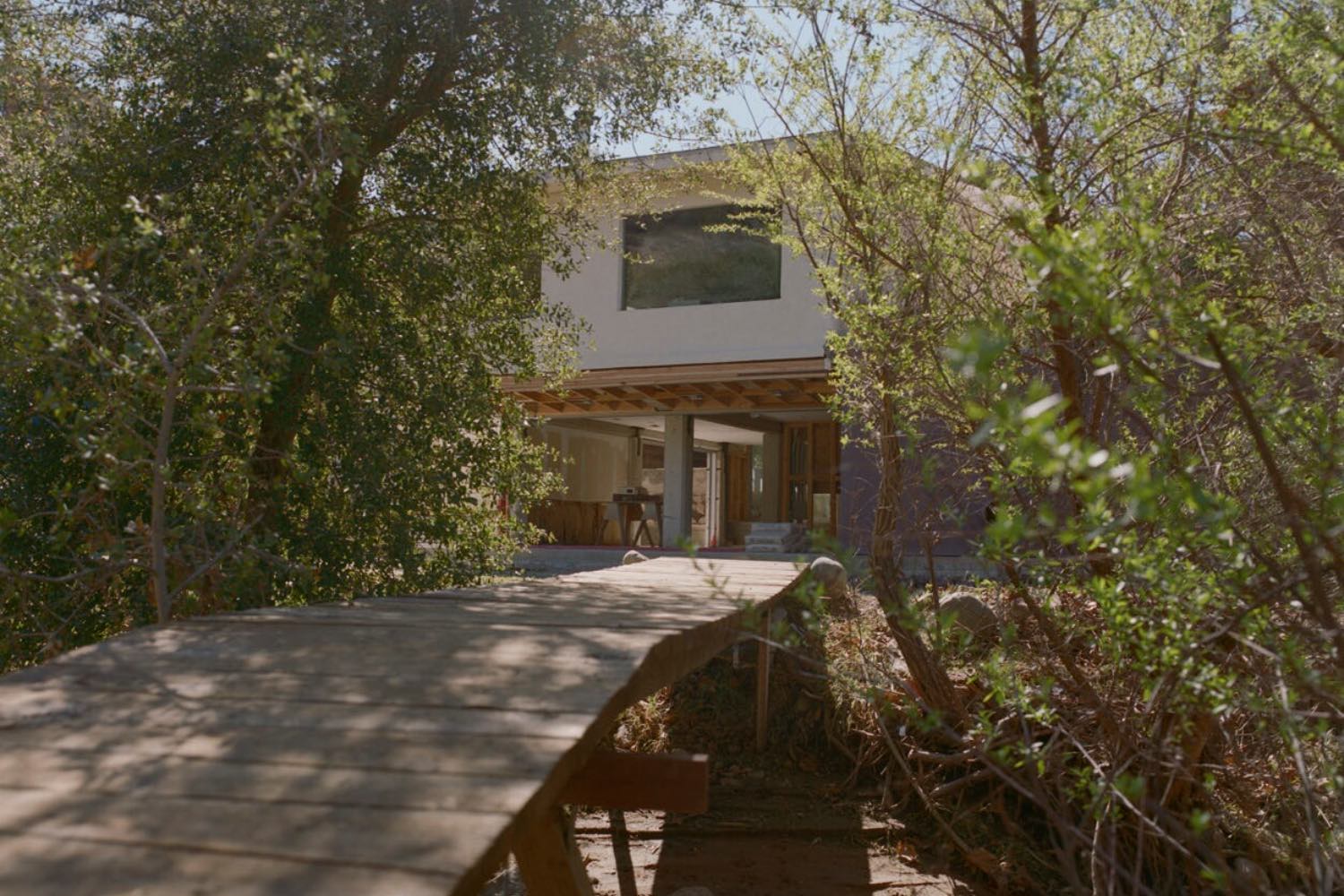
ZK Ancient buildings and their construction produced excess, thickness and true solidity. We were interested in this as a formal and technical idea. How can we fabricate or simulate this today?
JM We didn’t know Salmaan when we produced the Collectives projects, even though we were already thinking about nomadic program, thermal mass across diurnal cycles, and seasonal cycles. One of the crucial tools he gave us was the simple fact that airflow is topological, not geometric. Meaning: if you want to work with a building as an open system, and you’re a formalist, then the best thing a building technologist can tell you is, “these principles have very little impact on your formal interests”—which was not what everyone was being told by the discourse on sustainability. At that time, sustainability had become a kind of aesthetic of symbolisms, you know, exaggerated shades on windows, parametric facades supposedly derived from sun studies. But to have a brilliant building technologist say, no, actually, you’re liberated to do what you want to do—it can look like practically anything, any form, just as long as you help me “tune” your building for air flows. And that’s when we designed the Beirut rooftop, and a whole series of other projects from that point on. Now we’re finally building one of these living experiments.
ZK We wanted to reject the semantics of energy efficiency and debunk the notion that the façade, when liberated from its interior, can simply get dressed with technology and fix our problems.
JM It wouldn’t work in every climate, but it works here in LA, and any other similar biome.
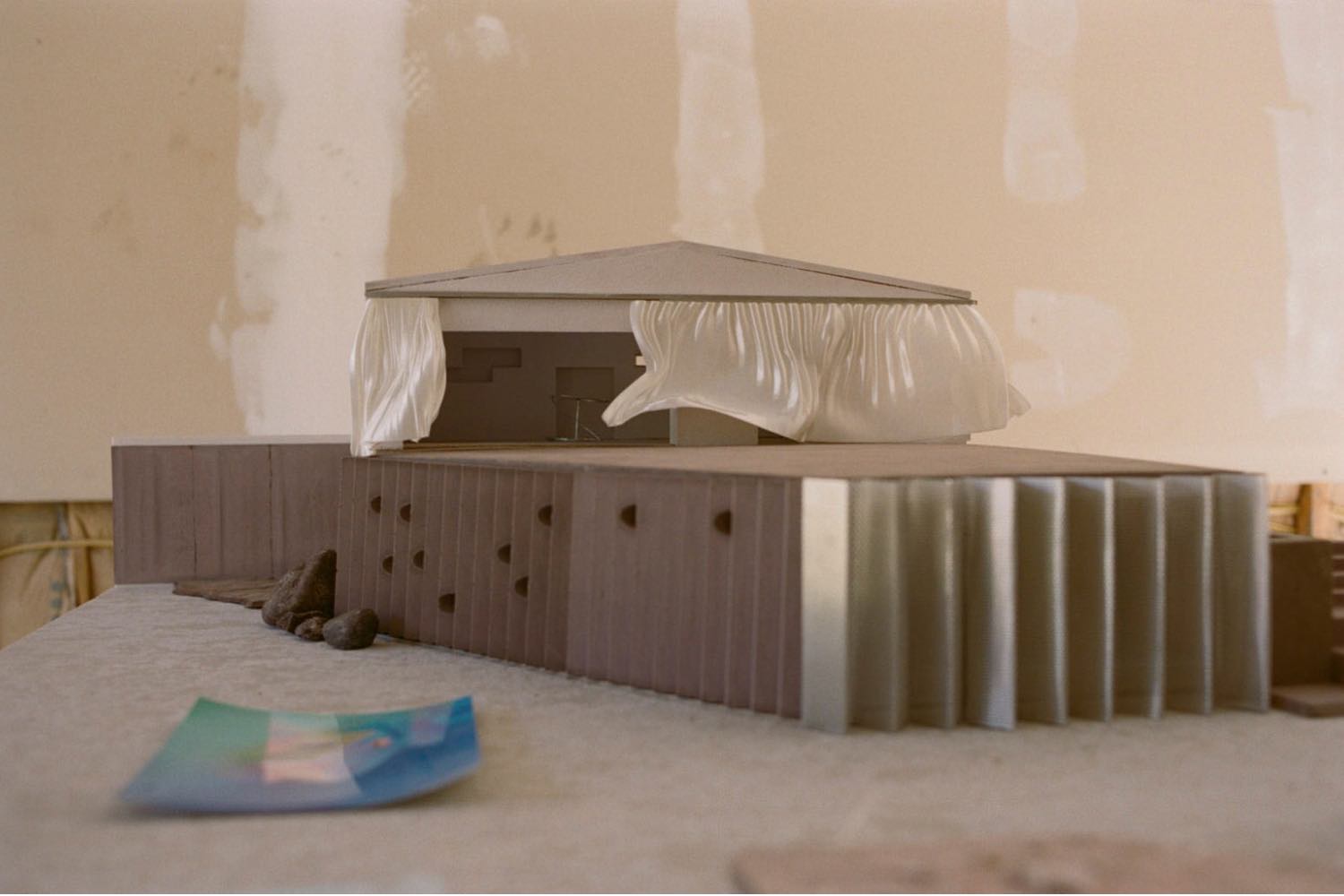
ZK Beirut Rooftop was a commissioned project that fell through in the wake of the Syrian civil war, but we persevered with these formal and cultural thermal ideas and produced what is, energetically, a highly excessive piece of architecture. In the American context, and in this economy, we are constantly forced to ask: How can we produce excessive thickness and thermal mass using cost effective systems like type 5 construction? Not only is it the most combustible type of construction out there but we are also dealing with a culture that only wants thinness and hollowness.
MA It’s a real reckoning. There’s a reason the “digital process” project was abandoned — you call it excessive, but it was more like gluttony. The world is increasingly polarized; people see something and immediately react against it. I try to take what’s useful and leave the rest, which is why I haven’t lost faith in the digital project. There’s no escaping it. These conversations, at their core, are about understanding what formalism is today versus fifteen or twenty years ago — and whether it is able to hold meaning.
JM I’ve written explicitly that one way of viewing the Archeology of the Digital project at CCA — which was a fantastic project, incredibly rich — is you could say it was the collective biography of the last geometers. Scott Cohen is a master geometer, maybe the best in his generation. This was a young architect with full command of three, four, five-point perspective, tumbling forms, manually and laboriously, for days on end, through orthographic space on paper.
I can point to many reasons why this ended. You could say it was excessive. You could say that the next generation has to kill the previous style. One very simple technical reason it disappeared is it became too easy. It’s just a command in Rhino: Boolean subtraction/union. This then expanded into the aesthetics of discretization with Grasshopper etc. The entire history of descriptive geometry, reduced down to a half a second. It’s not that students hated parametricism, it’s just that it wasn’t interesting anymore. It wasn’t a problem. My students’ crises today is akin to what Michael Pollan called the “omnivore’s dilemma.” We can make anything. They’re not sure how to make decisions within that framework, and so they default to what they think is the most morally responsible, which is adaptive reuse.
ZK Students are deeply skeptical of the legacy of modernism, the western canon, formalism and building new in general. Can you blame them? I’ve come to realize that it is my role as an educator to help untangle these challenges. Why is architectural invention and aesthetic culture important, even when it does not always have the ability to solve concrete socio-economic-political problems?
Architects and educators who are holding on to this outdated notion of the digital project refer to this sentiment as “anti-design”. But the way I see it, young architects are invested in the ethics of building, or what I call the ethics of footprint — all of which are completely in crisis. Students feel the heavy and real burden of a century old architecture discourse rooted in the modernist idea of tabula rasa. There is little interest in heroic architecture. Hence the return to “adaptive reuse”. I get it.
There is, of course, a big range of what it means to operate on existing buildings. But what is important to note here, is that there is a complete disconnect between what the older generation believes an architectural practice should do versus the reality of what a young practice can really do in the context of the US. The architect as a critical thinker and intellectual figure is in crisis because “we” are not able to engage in the most important questions of our time – from housing to the environment. These have been absorbed by corporations and turned into spreadsheets.
MA That’s exactly my point. I know you’ve both discussed practicing within what’s now called late-stage capitalism and the lack of opportunities it presents. But it’s frustrating —architecture will still be built by firms like AECOM and Gensler, aligned with the wrong politics, while critical thinkers have largely resigned themselves to the temporary.
JM We edited a recent issue of Harvard Design Magazine about “multihyphenates,” and I think there’s been a bit of misunderstanding around that. It’s not so much that we should give up on architectural commissions, but rather that you can no longer count on a steady stream of them to build a stable practice. So, it might be wise to have a much more diversified total approach to your productive output. We do produce things that are temporary a lot of the time. But that doesn’t mean that we’re walking away from architecture with a capital A.
For example: We’ve been told on the front page of newspapers for our whole lives that low interest rates are a great thing. In truth, they have not been great for housing—or even for urban space as a fungible commodity. Forty years ago, big capital was not nearly as interested in real estate as it is today, simply because it was considered very slow-moving by comparison with other kinds of liquid commodities. It’s only in the 1990s that urban space across all of North America and Europe gradually began to be seen as a kind of liquid commodity. So capital moves at a speed that it never used to, often buying homes unseen via algorithms. The same development companies that are reshaping San Francisco are reshaping LA and Boston right now. If you’re a young practitioner, you better become familiar with that liquidity, because it moves way too fast for architecture.
ZK This is possibly why, certain younger practices are interested in ordinary American construction —2×4 framing systems, studs, vernacular gables — as something that should belong to the discourse of architecture and that previously was not seen as worth the attention. It might be because I’m not American that I have found it difficult to engage in this discourse, but I’ve come to understand that this approach is not simply a reaction to the sloppiness of the digital aesthetic. It is also symptomatic of our economic reality.
MA Well, your work operates within a different paradigm, one that has not entirely relinquished the pursuit of formal invention.
JM There’s nothing about writing that makes a good or bad architect. But among those few architects who feel compelled to write—not for tenure, but from some deeper motivation—we can describe two general types: there are those who write about their forms in order to justify them to the world, and those who write about the world so that their forms can find a place in it. My writing belongs to the second kind. I rejected, very early on in my architecture education, a certain model of postwar architectural theorization, which in essays I’ve referred to as the “juridical model”–the model in which discourse becomes the legal justification for form. It takes someone of a certain intellect to be willing to accept that model of architectural practice in which we may frustratingly say very little about our own architecture. We do occasionally write essays on our projects, and maybe we’re going to write a few more in the future. This is coming back to your question. Of course, we’re formalists. We just don’t feel the need to explain how we think about form. If you want to know how we think about form, look at something we designed.
ZK “Primitive futurism” was used to describe our work once. I kind of like it. There is an awareness that primitive geometries, are subtly modified, clipped, or destabilized to become not-quite platonic. It’s of course too reductive to describe the work in this way, so we’ve never been interested in this singular perspective.
JM The essay that we’re finishing now, will help create a discursive universe for a series of projects. But it’s still far short of the kind of parallel relationship between discourse and form that has come to dominate the American academy, following in the tradition of a figure like Peter Eisenman, for example. It is a very specific image of thought, or what it means to think.
MA Eisenman and Scott Cohen did cast a wide net, precisely because they understood pedagogy not just as a framework for instruction but as a generative mechanism for architectural thought itself. Architecture, I would argue, must re-engage this expansiveness — not as mere repetition, but as a recalibration of its own intellectual and disciplinary boundaries.
ZK Architecture cannot only be about solving a crisis. We are equally invested in aesthetics, atmospheres, effects, materials and formal processes.
JM But it needs to have certain forms of resiliency in the same way. When I see the word “polycrisis,” I think of the word polyconceptual. Our work is always polyconceptual. There are always multiple dimensions in every decision, nothing is ever siloed. It’s why we find it impossible to reduce our work to the simple form of discourse that wants to explain architecture as French Post-structualism, or Object Oriented Ontology, or whatever will soon be fashionable. If someone wants to engage with our body of work, they’ll have to be comfortable with ambiguity—a very carefully constructed universe of ambiguities. Language has its limits. If it didn’t, we wouldn’t need most of aesthetic culture.
Look at the Unité d’habitation, in Marseille. We’ve interviewed elderly residents there who said it was an incredibly rich way of life for three, four decades. That doesn’t mean it produced a permanent utopia, but that’s what interests us — right now in this moment—how can architecture also be a way of dreaming of better versions of ourselves, our lives? The Unité belonged to a different time, different conditions, but the underlying question is the same.
MA You’ve described the concept of program in architecture as “ossified modernity,” arguing that it’s no longer a radical concept. So would you say the goal isn’t about simply replacing one system with another, but something else entirely?
JM We’re always interested in how and when such special concepts became crucial for architectural thinking, and what becomes of them under changing historical conditions. In examining program, and the role it has come to play in the twenty-first century, we suddenly realized that this concept we had been taught was the most important sociopolitical instrument for radical twentieth-century architecture might actually be the problem now, precisely because it quietly presumes and expects a constantly regulated thermostatic interior. We outlined this idea in detail in our “Temperamental Interior” essay.
ZK I’ve spent a long time thinking about the crisis of tradition and modernity in the context of Beirut, where there is an inherent skepticism in what modernity can do or has done. There’s a skepticism of solutionism, and an awareness of how it alienated many cultures, too. It turns out that — at least with respect to radical approaches to energy in architecture–the so-called “First World” has much to learn from what it long ago dismissed as the “Third World,” where less consumptive, frankly less “dependent” lifestyles abound. In that world, “resilience” is not some academic fad — it’s not optional.
JM For example, we in the West have developed an absurdly specific, and ultimately weak, model of what it means to “be comfortable” –– it means: perpetually thermostatically conditioned, while icebergs melt. We’re bio-physically comfortable, but psychologically clinically anxious. As architects, we should begin by seeing HVAC for what it really is: an exceedingly recent aberration in the history of human comfort.
What Zeina and I both knew, from the very beginning of our practice, is that you can’t make radical architecture without constantly sending out historical-geographic probes into different ways of living. We’re not naive about the past, so our searching is never a matter of trying to Make Architecture Great Again, or something like that. We’re not nostalgic for a past that never existed. But at the same time, historical forms of reasoning can unlock certain kinds of possibilities and forms that can be critically revitalized in the present.
ZK This constant searching and researching hsd allowed us to question the black-and-white approaches to materiality that emerged from this discourse around sustainability. We began to put everything relative to use, daily routines, thickness and thinness, annual energy consumption, durability of construction, day versus night. What we call the “culture of the architectural object” became really crucial for us.
MA I want to go back to your book, John, and the part where you argue that imaging — not everyday politics — has become the main space for political theorization. I didn’t read that as a rejection of everyday politics, but I’m curious how you arrived at that idea and what it means in practice.
JM I separate, on the one hand, a certain theoretical analysis of the structure and conditions under which politics happen, and on the other, what I call everyday politics–going out in the world and being an engaged citizen, voting and protesting, calling your congress person, etc. We have to realize that the actual structural conditions of imaging — not the content of any specific image — is where a specific and completely novel kind of politics is now being enacted. We can’t see that politics because we’ve been trained for so long to be critical of content, to read and critique content. But images have no actual content anymore. They instead operate at the level of attention, distraction, and exhaustion — mental exhaustion.
Anything on a screen is an image. I am interested in the politics of mental exhaustion and attention deficiency. We have to pay much more attention to the politics of imaging in our time to take it seriously. This has far less to do with the content of specific images, and far more with technical structure and pace and the carrying capacities of real-time imaging. Trump doesn’t have ideas; it’s a constant stream of content, and that’s the concretization of a project of imaging, of collective mental exhaustion. The phrase late-stage capitalism always strikes me as deeply optimistic.
MA I want to talk about the war in Gaza and Lebanon.
ZK Where to begin. I’m getting interview requests asking me what I think about identity, “communal traditions of the global south”, and the political terrain in the Middle East. It’s difficult to have critical distance when your own family, home and culture are under violent attack. I, of course have my ethics.
This question of community and identity truly gets at today’s zeitgeist. If traditional truths are challenged, the sense of self and belonging is threatened. As a Lebanese, I’ve experienced a complicated relationship between modern life and traditional life, and I find that I explore this in my work and teaching often. Between 2010 and 2012, I spent a few years looking at the preservation of modern structures in Beirut. Particularly structures that were built after 1946 and destroyed during the Civil War (1975–91).
I studied the City Center complex in downtown Beirut (also known as the Egg). The cinema structure was built in 1965 by Lebanese architect Joseph Philippe Karam and was partially destroyed during the civil war. The first mall in the region, with the first escalator. Very Koolhaasian, in a way. I wanted to understand why its preservation was so controversial and not established as an obvious recourse.
Like many, I was fascinated by its form, the soap shaped pre-tensioned concrete dome structure. I also understood that its identity, as worthy of preservation, was developed because a collective of artists and musicians (including myself) began to frequent it, trespassing for informal gatherings and events. This is when the name changed from the “City center complex” to the “Egg”. The thing became the image of the thing. The whole being of the so-called Egg and its iconicity is nothing but language and representation; texts, illustrations, scribbles, collages, photographs, cross-hairs in view finders, circulating images. The Egg took a life of its own and the City Center complex consequently dematerialized.
The egg became the object against which a collective emerged.
Beirut has always been a place where identities and collectives are born and reborn. In the academy, identity and personal stories are not acceptable entry points for a design project. It used to be completely frowned upon to identify yourself in your work.
Part of the polycrisis that you’re describing, the crisis of form and meaning, comes from the fact that most find more meaning in their own personal story but how can we design meaningful buildings without resorting to new-classical renditions or reductive images of the past?