To what extent are we willing to be fooled? Megan Mi-Ai Lee’s practice probes the affective pull that keeps us buying in even when the odds are terrible, tracing the tension between our desire to believe and the awareness that belief itself might be a trap. Working across a variety of materials and media, Lee creates replicas — or, in her words, “failed dupes” — of objects whose emotional charge far outweighs their material value, including signage, props, souvenirs, and magic tricks. Lee and I first met through the artist Heidi Lau, who brought me to Lee’s studio where we snacked on pastries and poured over her collection of pocket tricks and Las Vegas ephemera, all the while under observation by a clique of Lee’s faceless “Zig Zag Girls” (2022–ongoing).
For her latest show at IAH in Seoul, “The Cat’s Meow,” Lee reincarnated artifacts from Las Vegas’s self-proclaimed “BEST karaoke bar in the world” around a 24/7 livestream of the bar’s stage that cycles through the reverie of Vegas nightlife into the quiet routine of cleaning and setup under house lights. Removed from the thrill of proximity and out of sync with Vegas’s time zone, viewers are left to contemplate the fragile architectures of fantasy exposed under the light of day.
Marie Catalano: I love asking people what their go-to karaoke songs are. What’s yours?
Megan Mi-Ai Lee: At the moment, it’s “Stars Are Blind” by Paris Hilton. First of all, it’s an amazing song, but it’s also her first attempt at pop stardom in the mid-2000s.
MC: Let’s talk about your solo show that just opened at IAH in Seoul, which centers around a karaoke bar. How did you decide to invoke this particular site?
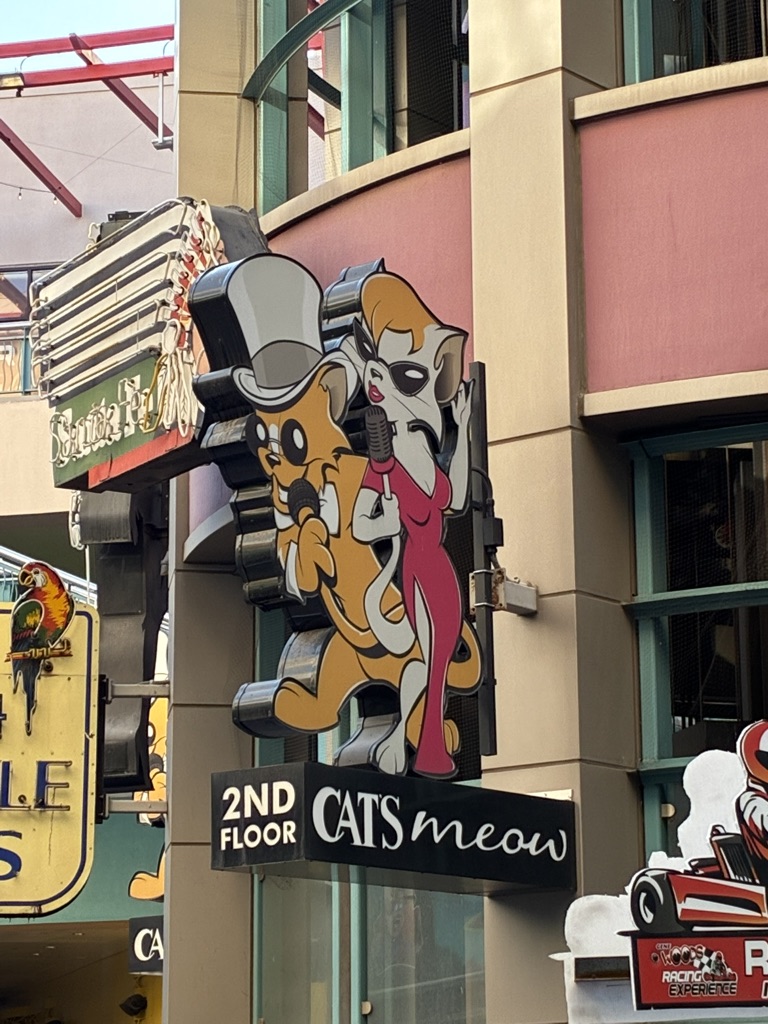
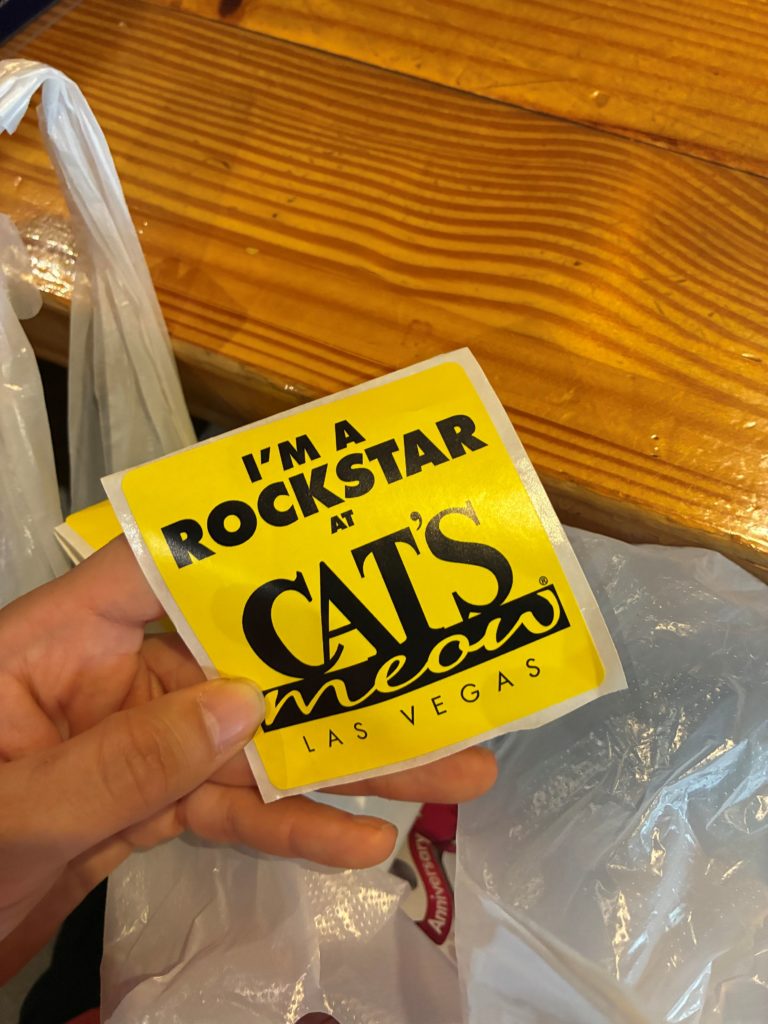
MML: The impetus for this show was a livestream of the Cat’s Meow, a karaoke bar in the Fremont District of Las Vegas, which plays on the monitor in the space even when the gallery and the bar are closed. I’ve been watching streams of people getting married at a chapel in Las Vegas for years now, and I found this one of the bar, which I became obsessed with. The interior feels like a fever dream — the stage is covered in leopard print, and everything is intensely oversaturated in neon. When Yoojin Jang, the curator, initially approached me, I realized that the time zones are perfectly aligned: daytime in Seoul is nighttime in Las Vegas. When the stage is active, there’s a constant flow of entertainment. When the bar closes, melancholy sets in.
MC: Your work often centers around artifacts charged by lore or urban mythology, but this particular bar doesn’t have that specificity.
MML: Totally. It’s more about self-mythologizing.
MC: Can you describe the mood of the show?
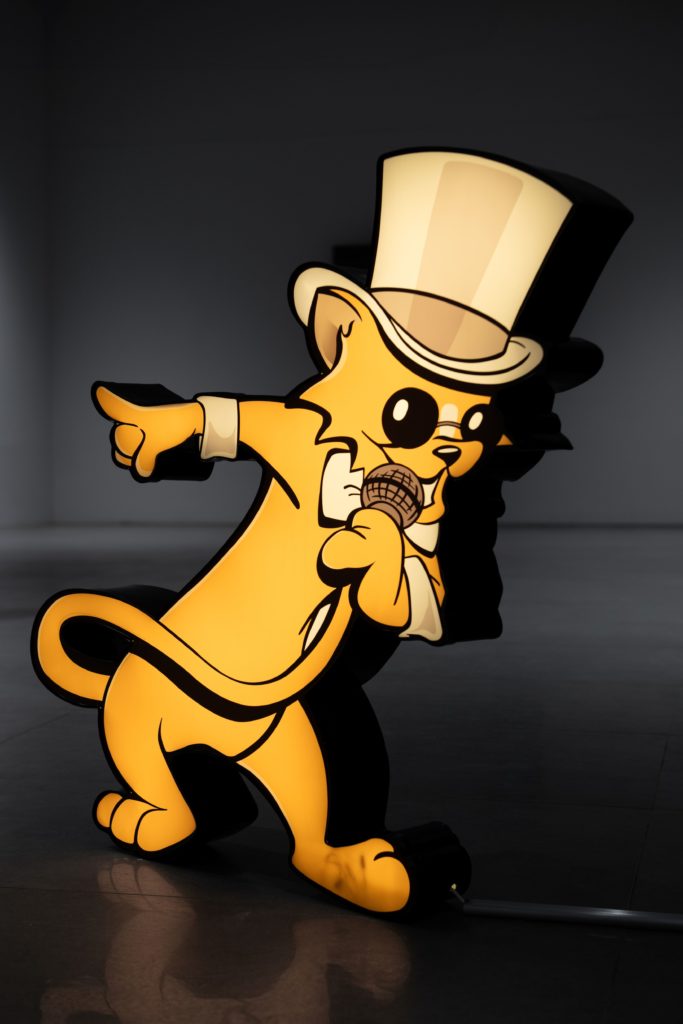
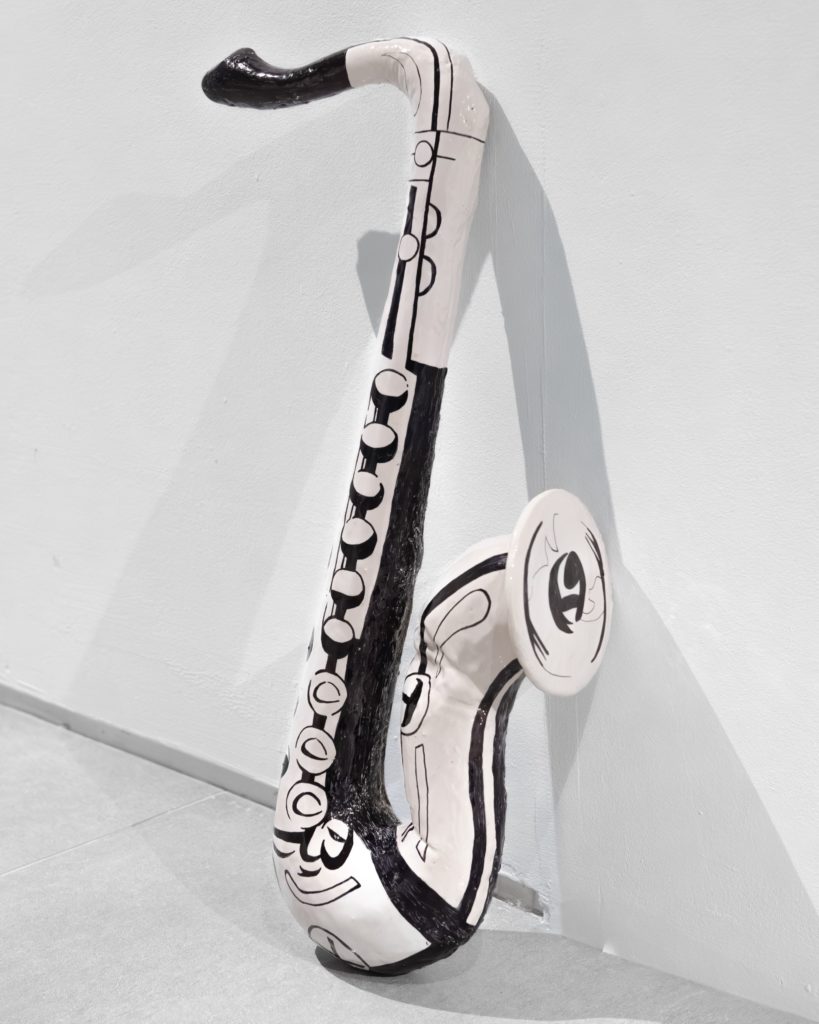
MML: I wanted it to feel hungover, like you’re seeing the bar in the light of day. The gallery space has a huge window, which sharpens the time displacement — like we are in this future space where the props used in the bar are now displayed as the aftermath. I recreated the bar’s mascots as stand-up lightboxes, which are like off-brand, bootleg Disney characters singing into their tails standing and lying in the gallery. There are cast inflatable saxophones littered around the space. Karaoke literally means “empty orchestra,” and I liked this idea of instruments with no players. It’s a sad scattering of objects in various states of inflation and deflation. The party is over.
MC: How did Las Vegas enter your work? At what point did you start to draw on it as a reference?
MML: My late father was a high roller, so I spent a lot of time there as a kid. My general interest in Vegas comes from my childhood exposure to the city over many years, through his gambling. But I first considered Vegas seriously as a subject when I read Learning from Las Vegas on the recommendation of Pam Lins, my professor at Cooper. It was my introduction to “persuasive architecture,” the idea that spaces can be designed to coax specific behaviors, and I started thinking about the architectural devices in the casino, like low ceilings, maze-like carpets, the absence of clocks and windows, and how they destabilize or erase the presence of time for the gambler. Also this idea of frontality, which is discussed extensively in the book, of communicating things from a distance. Some of my work involves signage, while other works function more like props or movie sets, revealing their one-sidedness or material flimsiness when viewed in the round. The book gave me permission to consider Vegas outside of my personal experience there, and to think of it as a prism through which we can think about American culture.
MC: There’s this sense of induced amnesia in these spaces. This displacement of time in the space of the casino, and sculpture as facade or prop reminds me of your 2023 solo show “Fidelity” at Room 3557 in Los Angeles. Can you talk about that show?
MML: The floor I installed for that show, “The Empathy Suite” (2023), referenced the hallway to the casino in the Venetian Hotel, which has this hypnotic, Escher-like tumbling block motif, but I used cheap, vinyl composition tiles. Around that time, I’d rewatched Vegas Vacation (1997),and there’s this incredible scene where Chevy Chase is on a tour of the Hoover Dam with his family during this trip where everything is going wrong. He nudges a pebble in the rock face and water starts pouring out. He frantically tries to plug it with bubble gum, which then inflates. The piece I constructed looks like a set flat: I made the rockface with paper pulp, the back is plywood propped with two-by-fours, and the bubble is blown glass. I was interested in this flawed character who has put himself in a potentially catastrophic situation. It’s an existential issue. And he’s using this slapstick gesture to desperately try to course correct.
MC: It’s a slapstick comedy, as you said, but your sculpture feels deadpan — there’s a translation there that turns the object into something else.
MML: I want the final incarnation to feel like it’s not to be trusted. Like there’s something unstable, or behind, or inside that is creating a precarity. When people are seeing the work, I want there to be a suspicion that it’s not what it purports itself to be.
MC: That idea of deception seems to carry into your works that reference magic tricks. I’m thinking specifically of your “Blonde in Bathtub” (2023–ongoing) and “Zig Zag Girl”series that we presented in the group show I organized this summer at Astor Weeks. What drew you to these objects and can you describe your treatment of them?
MML: “Blonde in Bathtub” is a vintage pocket trick I’ve been working with for a while. It consists of a nude female figure and a small plastic bathtub, each embedded with polarized magnets. When you hold them correctly, the figure stays in the tub — but if you hand it to someone who doesn’t know the trick, the blonde pops right out. I cast the components in pewter and set them in velvet frames, which makes them feel much more precious.
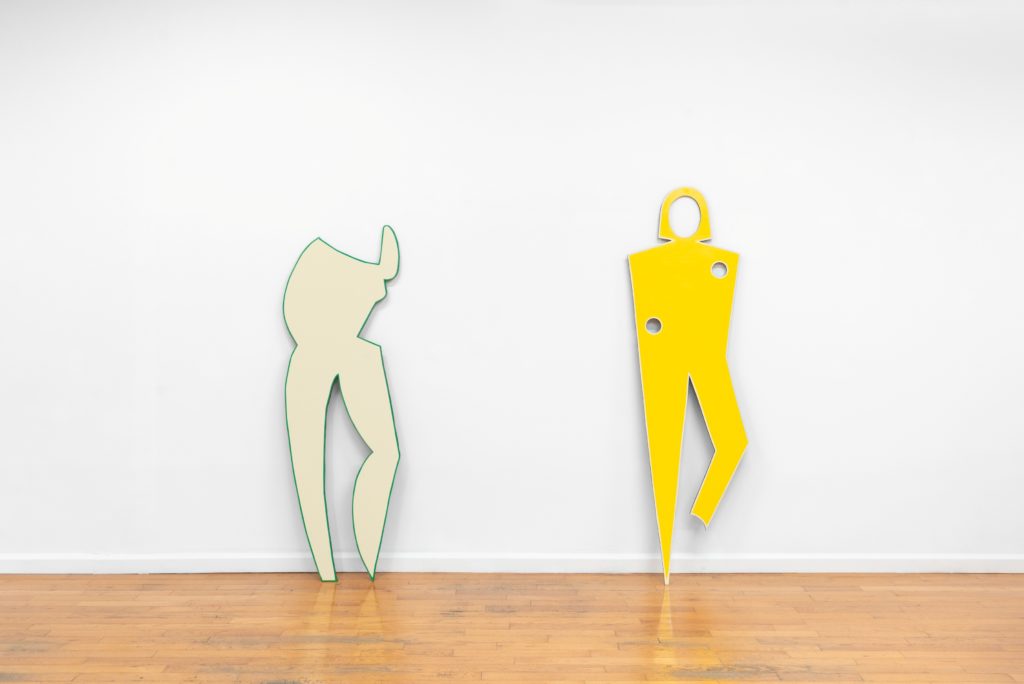
The “Zig Zag Girl” works are based on the stage magic trick of the same name. I think many people are familiar with it; an assistant steps into an upright box and is cut into three before being reassembled. But the detail that I think most people forget about seeing this trick is that there’s almost always this simplified painting of a woman’s body on the outside of the box. This surface treatment establishes the visual continuity that allows you to believe in the trick. I wanted it to read as if these paintings on the outside of the box had been jig-sawed out and propped against the wall.
In both these series I’m thinking about the trick’s mechanics. Witnesses to magic performances are often aware that they’re being deceived, but if the trick is performed successfully, they’re briefly witnessing the impossible.
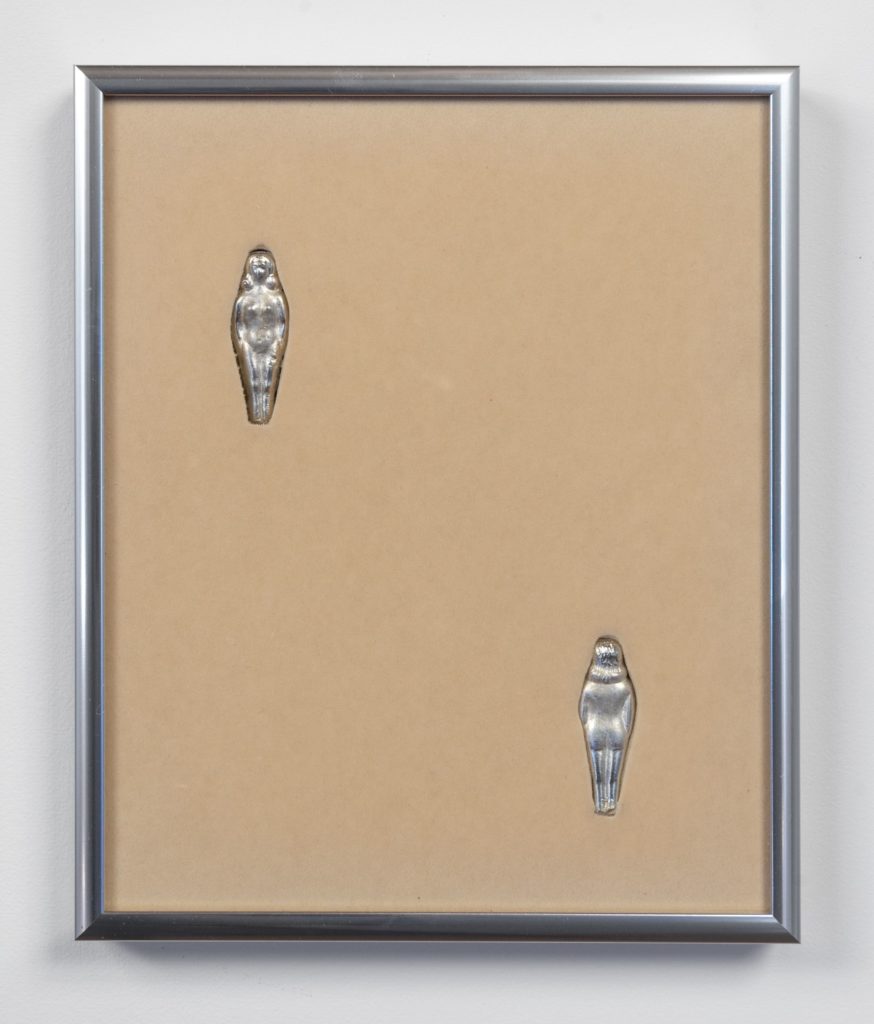
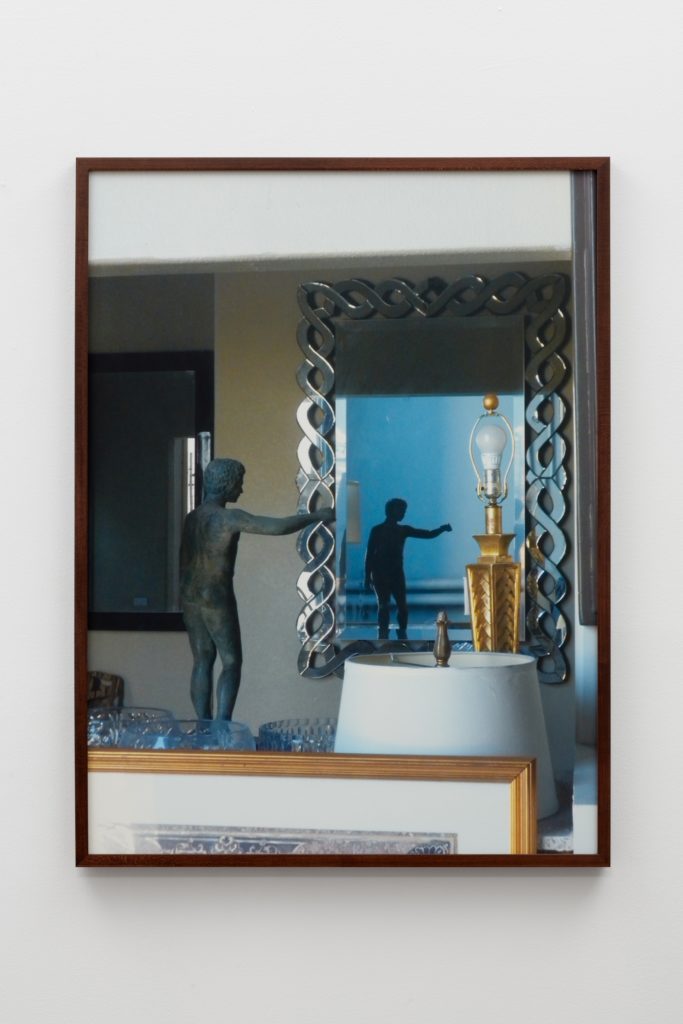
MC: What do you make of the feminization of these objects?
MML: It’s definitely not coincidental. If you think about “Blonde in Bathtub,” that trick could be composed of any two things. But I’m most interested in how their forms can be used as a foil for something.
MC: It reminds me of my favorite work of yours, So No One May Enter (After Howard Hughes) (2022), a giant high-heeled shoe based on the sign for the Silver Slipper casino on the Vegas Strip that supposedly tormented the billionaire because he thought it might be spying on him. Rumor has it he leased the casino just to have it sealed shut.
MML: I’m interested in the objects that spring from these absurd anecdotes and rumors, and then reimagining them through changes in material or scale. The idea of Howard Hughes having all the money in the world and being antagonized by this dainty little pump, to me, speaks to the agency that these trivial objects can have over their subjects, even if they’re famous men.
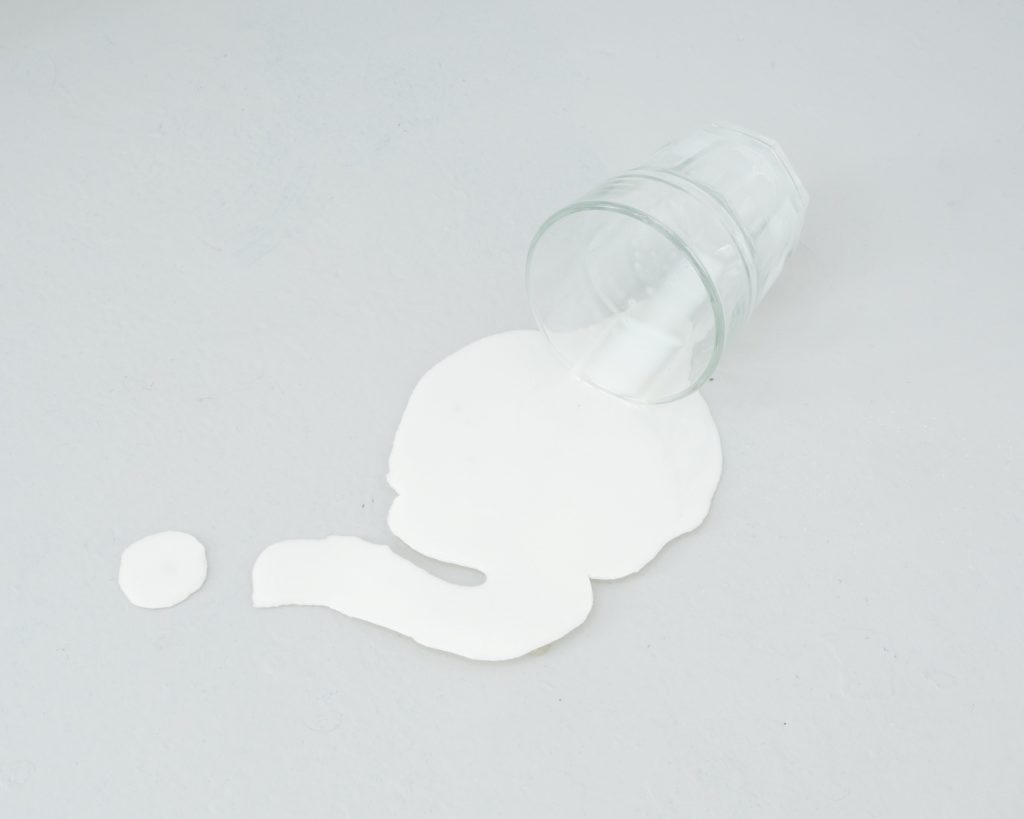
MC: The sources you’re drawn to remind me of what cultural theorist Sianne Ngai in her Theory of the Gimmick (2020) calls “overrated devices” — objects that work too hard or too little and make untrustworthy claims about their value. For her, “the conjoining of enigma and transparency in the gimmick points to a key shift in the way illusions become socially effective.”1 Thinking about that, and your interest in both deception and disclosure, how do you see these objects operating?
MML: All these objects contain a degree of ambiguity in their applied function, but they also feel disposable and disappointing. My ultimate interest in these different things — magic, karaoke, gambling — comes from the idea that you can, for a moment, project yourself into the realm of the impossible. Even if for a second, for the duration of singing a pop song, holding this inflatable saxophone and pretending you can play, or hitting the button at a slot machine, there’s this container of time — this split second — where you are not bound to the rules of the real world.
MC: They show us the lengths we’ll go to suspend our disbelief.
MML: Even if it ultimately manifests as a form of self-sabotage.
MC: It’s like the illusion of the American dream we keep buying into: if you just work hard enough you can have it all. Even as that dream repeatedly, utterly fails.
MML: That story we tell ourselves is split in two, right? You can work hard and get there, which we all know is not necessarily true, or you can have it in an instant. The fact that these two dreams exist side by side, seemingly with equal odds, feels particularly American to me; you can get something for nothing, or give everything for something, maybe.