How do you put a finger on Lutz Bacher?
Contemplating this, I walked toward Astrup Fearnley through a pocket of Oslo where glass-and-steel offices, restaurants, and apartments line the bay in a corporate, soulless continuum. Then you reach the sea — thin fog, gliding ships, early light on the surface. This shift from sterility to the sublime also constitutes Bacher’s allure. Working under a German, male-sounding pseudonym, she owns withdrawal as method — her hand absent, her interventions minimal, orchestrating relations between found images and viewers. Her ability to both punch in the gut and twist the heart — the tension between a deadpan dissection of visual culture’s libidinal economy and a near-devotional investment in the conditions of feeling — defines both her oeuvre and her first retrospective, “Burning the Days.”
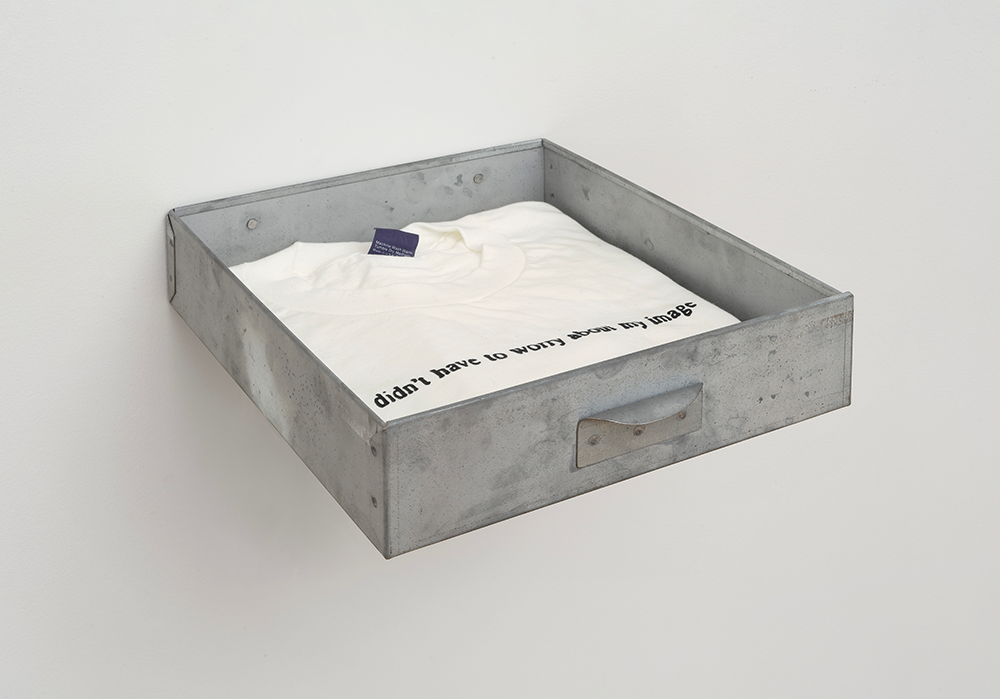
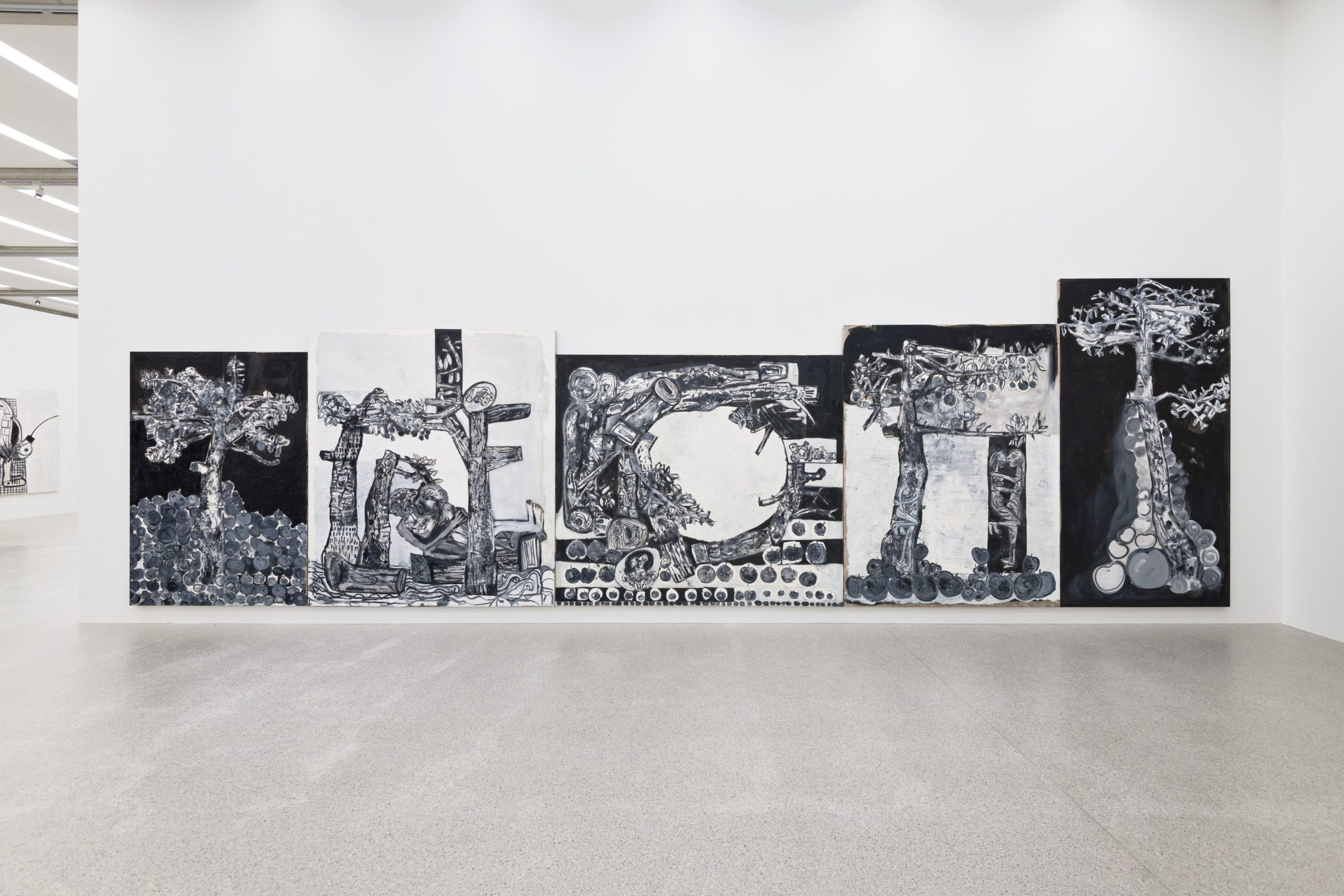
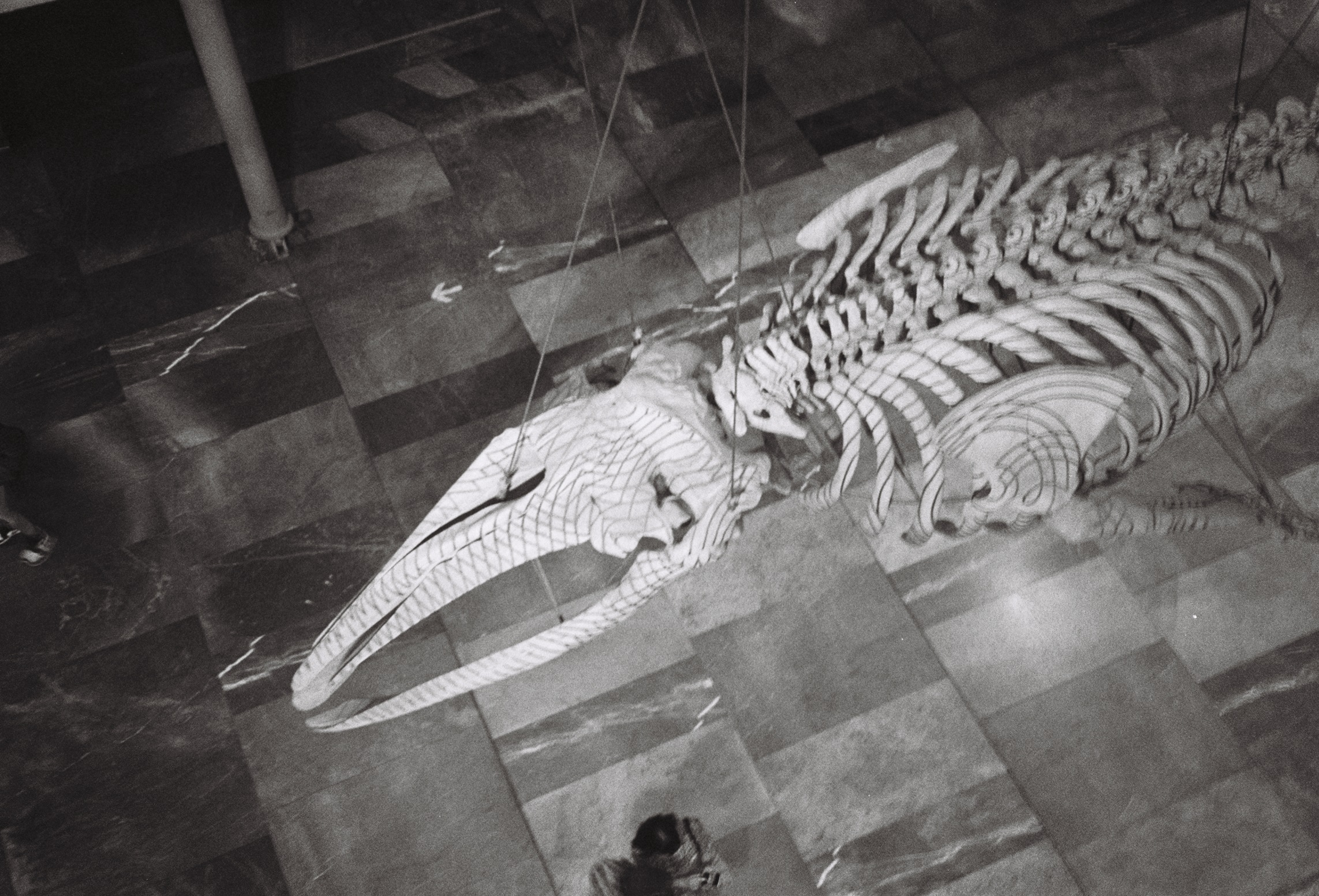
The exhibition opens with a fittingly enigmatic pairing: The Road (2007), eleven leaning photographs of a curving road lined with red numerical strips — coordinates or timestamps? — an image of unresolved suspense; and, nearby, Snow White (2009), two film canisters labeled with the Disney title, setting enchantment against standardization, nostalgia, and pathos embedded in material systems of circulation. From the outset, Bacher establishes a dialectic between affect and its exposure. From here, Americana unfolds across shifting registers — funny, sinister, confessional. In Jackie & Me (1989), enlarged paparazzi shots of Jackie Kennedy, paired with increasingly sinister captions, accumulate into a creepy pursuit choreography implicating the viewer in its ethics of looking. Bacher exposes the often-gendered violence beneath the parasocial fantasies of spectatorship and celebrity. Nearby, The Lee Harvey Oswald Interview (1976–78) turns to Bacher’s fixation on JFK’s alleged assassin. Typed Q&As overlay clippings and serial reproductions of Oswald’s face, adopting the evidentiary look of a police file while collapsing interview and investigation, biography and myth, thus informing her consistent methodology of shifting herself out of focus. Nearby, Bison (2012) — a shabby herd of chicken wire, papier-mâché, and clay — graze as skeletal ghosts of a mythic America, an anomaly that bears the artist’s hand amid her mass-produced aesthetic. Upstairs, extinct icons reappear. Chess (2012) assembles a cast of found figures — two human-scale chess pieces, Elvis Presley, Duchamp’s bicycle wheel, and a T-Rex — on a pixelated linoleum floor dissolving the chessboard into entropy, accompanied by Elvis’s looping falsetto. Along the mezzanine, FIREARMS (2019) enlarges pages from a gun-maintenance manual that assume the aura of austere portraits. Beneath, found relics underscore Bacher’s humor: a flickering bingo machine and supersized freestanding Levi’s stuffed with polystyrene balls. Their origins — price tags, annotations, mechanisms — remain visible. The final gallery delivers a punchline: Jokes (1985–88) are scuffed press photographs of 1970s public figures with crude one-liners, their abrasiveness amplified by Bacher’s act of repeatedly driving over them.
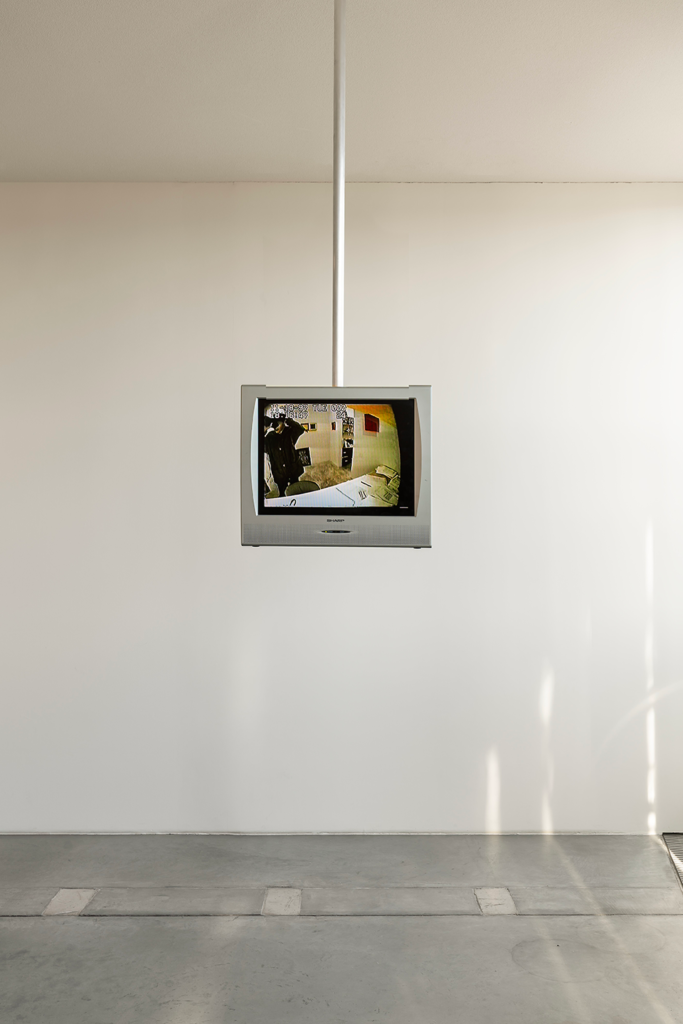
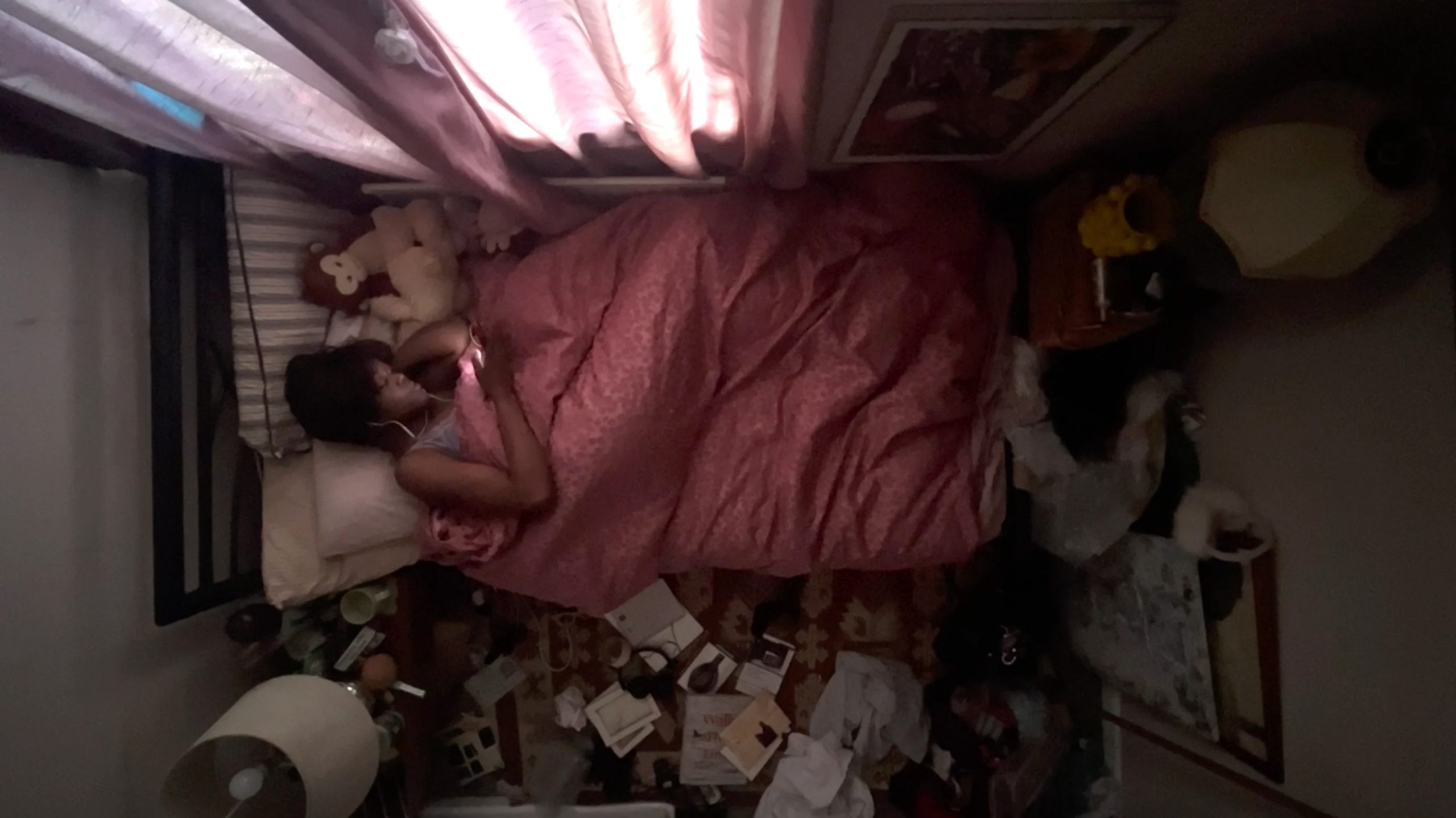
Playboys (1991–93) show original pin-up girl illustrations from the magazine with captions sexualizing everything from politics to feminism. Humor, sex, and power loop through the same libidinal circuitry: a fitting conclusion, though one that leans toward the Pop-inflected reading of her practice. I found myself wishing for one of her immersive installations to foreground the more elusive, time-based aspects of her practice. Intimate dedications surface as quiet counterpoints to this sardonic chronicle of a Great American myth. Closed Circuit (1997–2002) — footage of gallerist Pat Hearn’s everyday movements in her office during her final years of undergoing cancer treatment — plays on a retro screen, holding a ghostly, corporeal tenderness through a detached language of surveillance. Two galleries are devoted to her late husband, astronomer Donald C. Backer: The Celestial Handbook (2011), pages of spectacular space-phenomena lifted from an amateur astronomy book, and Stress Balls (2012), small black spheres scattered across the floor, create a chapel converging the trivial and the cosmic. In the next room, Yamaha (2010) — a stripped-down organ playing a pre-programmed tune that shifts between harmony and dissonance beneath a dome of leaning pipes — faces an early photograph of Backer’s fingers forming a mudra sign against his chest. Apart from the sonic registers of Yamaha and Chess, Sweet Jesus (2016), on the terrace, the only standalone sound work, slows James Earl Jones’s genealogy of Christ’s paternal line, omitting Jesus’s name. The absence of more hypnotic, time-based works feels like a loss, given how central music and duration are to her engineering of affect, like her works What Are You Thinking (2011) and PLEASE (LC) (2013–15). On the flight home, I listened to Sea of Love on repeat — a song she cites in Shit for Brains (2015) — picturing her readymade world of stress balls, Elvis, and T-Rex, the spinning horse of Riding Horses (2012) dancing with its own shadow. Perhaps you shouldn’t put a finger on Lutz Bacher. At a time when art demands instant legibility, her work insists on opacity; beneath its sleek iconoclasm runs a devotion to feeling itself — to producing moments of accidental openness and magic. I recall a fragment from The Lee Harvey Oswald Interview:
Question: Don’t people look different at different stages of their life?
Answer: Sure. But you’re not usually trying to decide something important about those people. […] Here you have a person changing and suddenly it’s important.
Question: It’s important to you.
Answer: I can wonder.