The questions of literary modernism have always been deeply entwined with those of psychoanalysis: both are concerned with the dissolution of narrative. But where do these twentieth-century forms stand today, in a time when our identities are so scripted and so fragmented at once? The twenty-first-century novel has still to be invented.
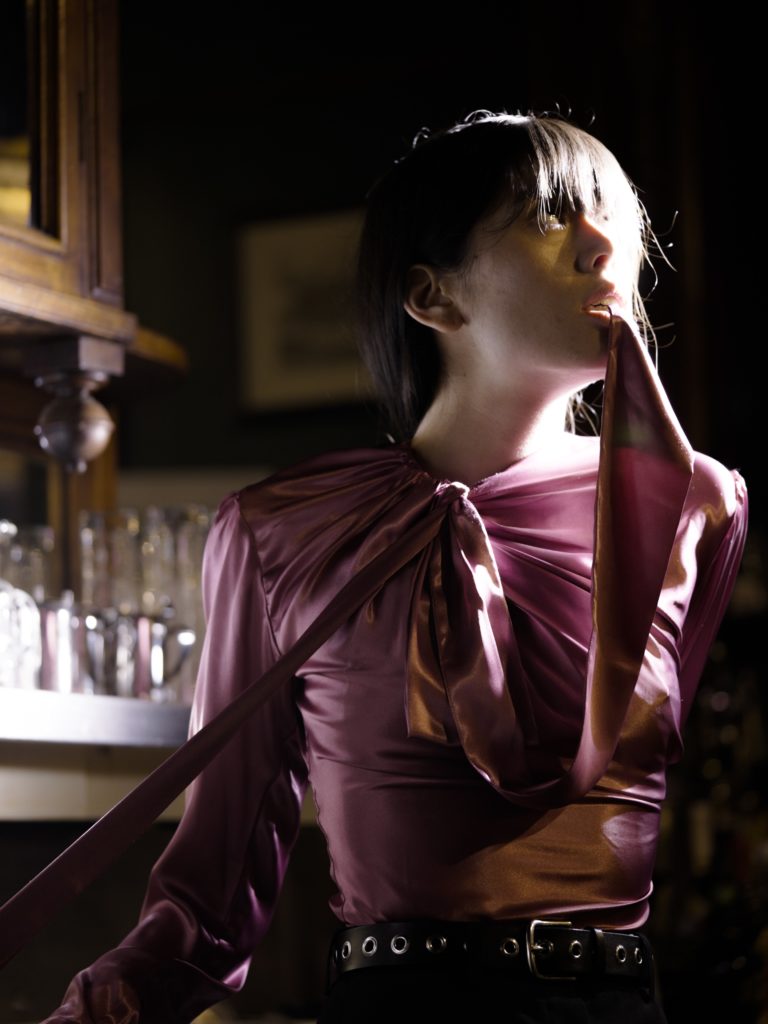
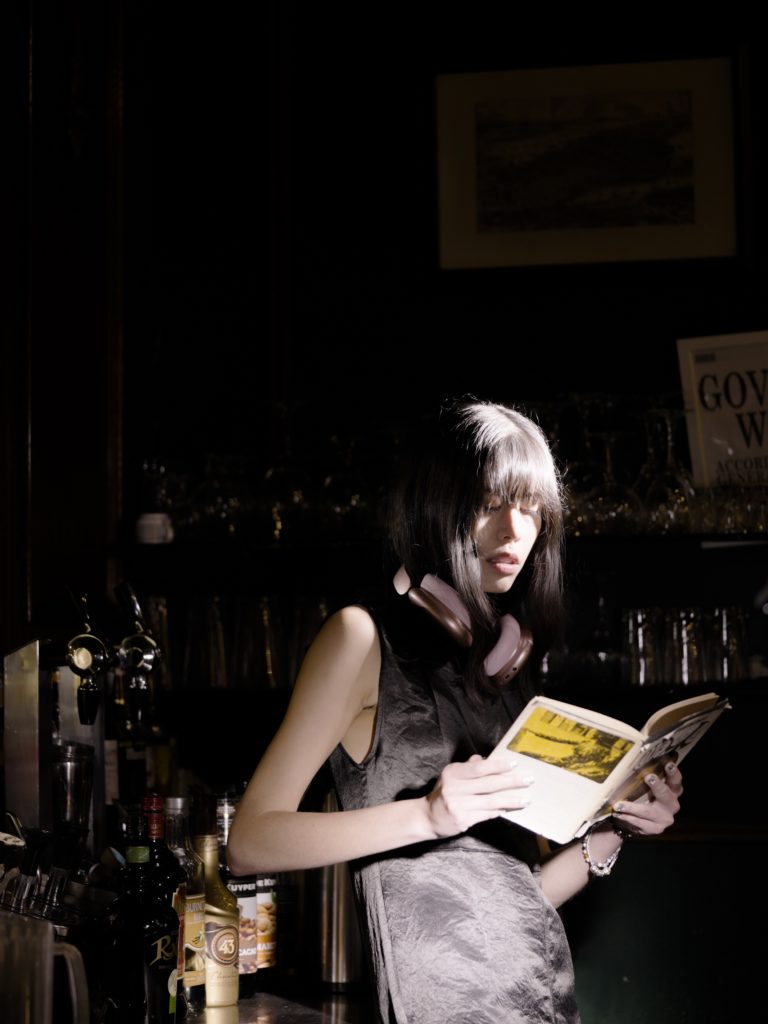
This is a task Olivia Kan-Sperling takes up in her work, with her signature style: a mix of lightness and seriousness that manages to play with our scripts, our dissolving identity, and our unrelenting attachmentto popular novelistic forms. She is, nevertheless, still in a twenty-first century trap: a woman who takes herself seriously is always condemned for it. Lighten up! But seriousness and lightness go together, and this paradoxical combination is often something that women writers bring to the table (which usually only provokes more condemnation, as Deborah Levy reminds us). Perhaps a trait of hysteric literature.
In Olivia’s first book, Island Time (2022), Kendall Jenner wanders around a psychogeographic island, that might be a virtual world game and/or a recursive music video, looking for Lil Peep. It’s less a novel than a multimedia work in the form of a text: on the page, Kan-Sperling often incorporates lyrics, cinematic conventions, games, and graphic textual elements. She has designed guided meditation voiceover tracks to accompany her writing, as well as installations that function as environments within which to read — or perform the reading of — her texts. Her work is often indebted to various forms of contemporary folk literature, from fan fiction to text-based role-playing games. In this conversation, we discuss her second novel, Little Pink Book: A Bad Bad Novel (2025), an experimental YA/coming-of-age/romance novel written in “Oriental English” that was originally conceived as a prequel to a film by the artist Diane Severin Nguyen.
Jamieson Webster: Why do you want to talk about your work with me, a psychoanalyst?
Olivia Kan-Sperling: A year ago, long after writing Little Pink Book (2025), this phrase came into my head, “hysteric literature” — almost like something heard in a dream. I’d read this essay by Gérard Wajcman on the “hysteric’s discourse,” and had been interested in psychoanalytic theory for some time, but only recently started thinking about writing through this lens. It became a retroactively constructed horizon for my work, a research project: discovering what a “hysteric literature” might be. I was recently reminded of a James Wood essay from 2000 in which he coins the term “hysterical realism” to criticize the work of Zadie Smith, Thomas Pynchon, David Foster Wallace, these writers of sprawling postmodern fiction. Wood’s issue is that their characters are “not really alive” — an odd accusation, given that they’re characters in a book — and explains that literature should be about “human emotion.” I agree, but I reject his implicit argument that the only way for literature to access emotion is through naturalistic representation of a human having an emotion. I’m attracted to thinkers like Lacan because they help us understand how syntax and language, art and artifice — everything that Wood calls “inhuman” — are internal to our experiences and emotions. All my writing has turned out to be an investigation of the line between character and (in)human being. In Island Time (2021), the protagonist is Kendall Jenner as a video game avatar.
JW: Right, the misogynistic understanding of “hysteric” is of a woman who is overemotional or crazy, but hysteria is not something inside a human: it’s an affective field — a discourse. I love something you said elsewhere: that language is the main character of your book, that you abuse your protagonist, Limei, the same way you abuse language. Hysterics are often accused of using language incorrectly: of exaggerating or performing. As we read LPB, we are continually confused by what the book is performing, by the difference between its language and its character.
This is produced by the slipperiness of your prose. For example: “Her room was chaotically kept, the girly room of a single girl who was all alone in the lonely world.” It’s a simple sentence. But then you realize — it’s also completely crazy. “A single girl who is all alone in the lonely world. In the square window, rain began to fall on the city.” You slip so quickly between these descriptions of character and the atmosphere, Limei’s feelings and the world — which is part of your lightness. But at a certain point you wonder, how did she do this, construct this feeling? So — how did you? What are you doing when you write?
OKS: I think few authors ask themselves this. So you have your own special little inner life that you’re expressing, but why? I care less about my character’s motivations than: What is the efect I’m trying to create in the reader? This is why I’m interested in the hysteric: she understands her audience. Through language, she constitutes herself as an object of desire, ofers herself up to be read — while also refusing it. I want to write something people want to read! But if I was writing something purely as an object of consumption, that would be a commercial romance —
JW: Which you can buy bulk on Amazon, twenty-five copies at a time!
OKS: Right! People are “addicted” to reading them. That’s one kind of “badness” I’m interested in, in novels. But how to create desire, then complicate it? LPB tries to do this through a certain cartoonishness. “Lovely Limei” is constantly being described as “petite” or “pretty” — the way they do in those romance novels. The prose doubles or triples down on every adjective, until it forces a question: If this is true, why insist? What does this almost pornographic obviousness conceal? Like the names of businesses in Chinatown: When I see “Happy Sweet Moment Café,” a doubt immediately appears, that this might not be such a happy place after all…
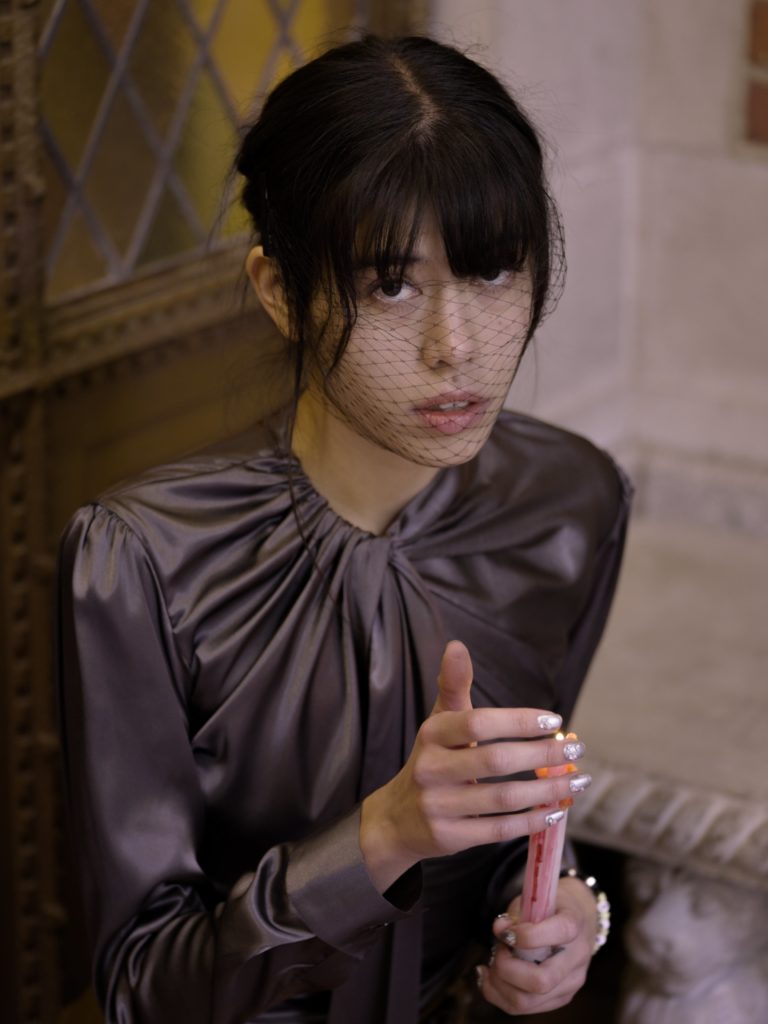
JW: You don’t give Limei a rich inner life. You thwart the reader’s desire for her interiority.
OKS: I wanted to create ambiguity, where one wonders — is this just a bad, bad writer? Is the narrator just ignorant of Limei’s “real self,” merely “objectifying” her? Or is Limei completely flat? Forcing the reader to write the story, inciting them to ask a question, perform some discursive operation that then reflects back on their own desires and motivations — this is hysteric literature, to me.
JW: And you are yourself rewriting someone else’s story, when you write fan fiction.
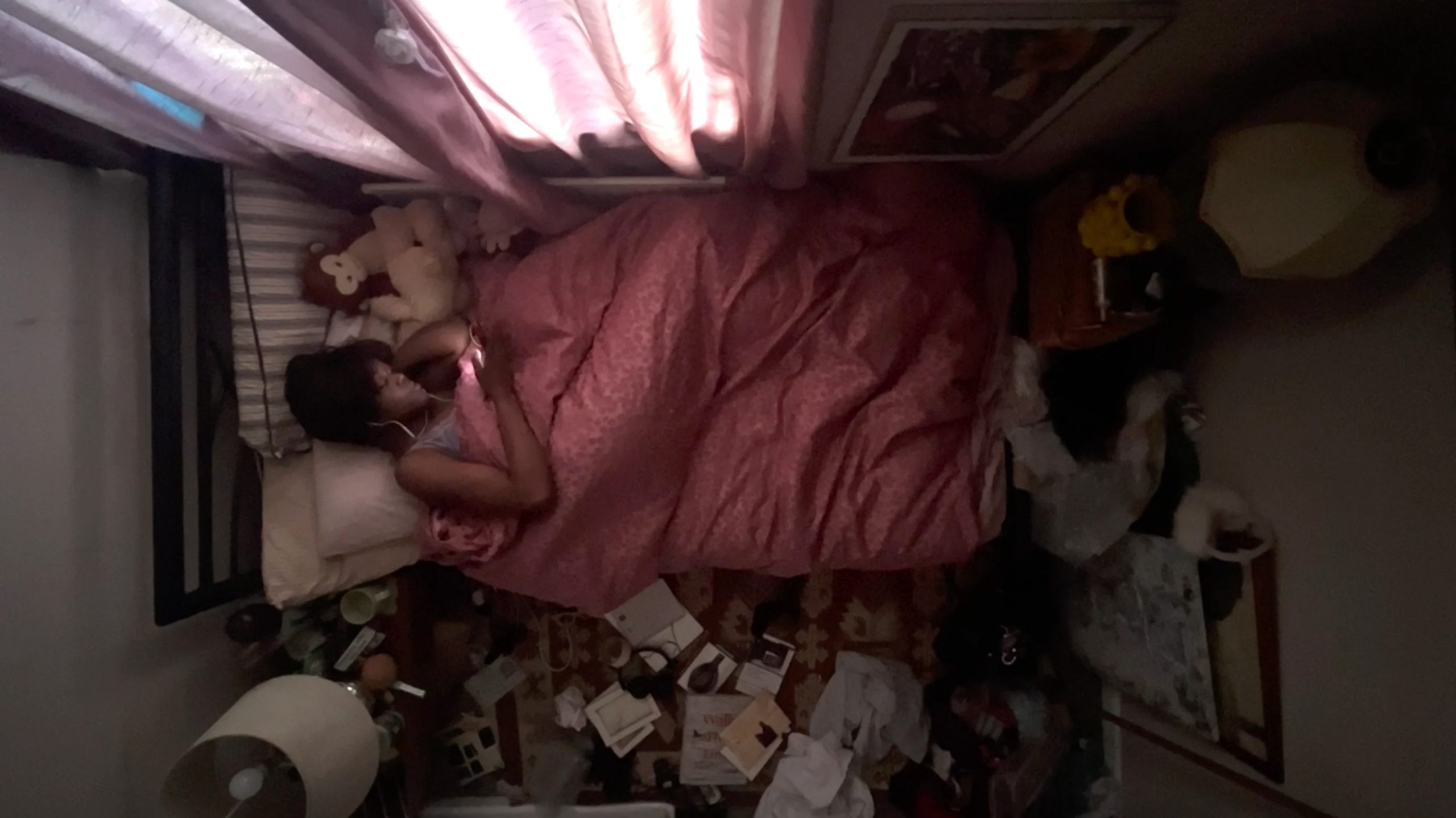
OKS: Right — the project was originally commissioned by the Rockbund Museum in Shanghai as a fanfic to accompany Diane Severin Nguyen’s film In Her Time (2023), about an aspiring Chinese actress. I was honored but also intimidated, because I neither speak nor write Mandarin. My grandmother is from Shanghai, but I’d never been to China before this. So the book became an exercise in trying and failing to imagine this world: a fantasy structured by my inability to represent my subject.
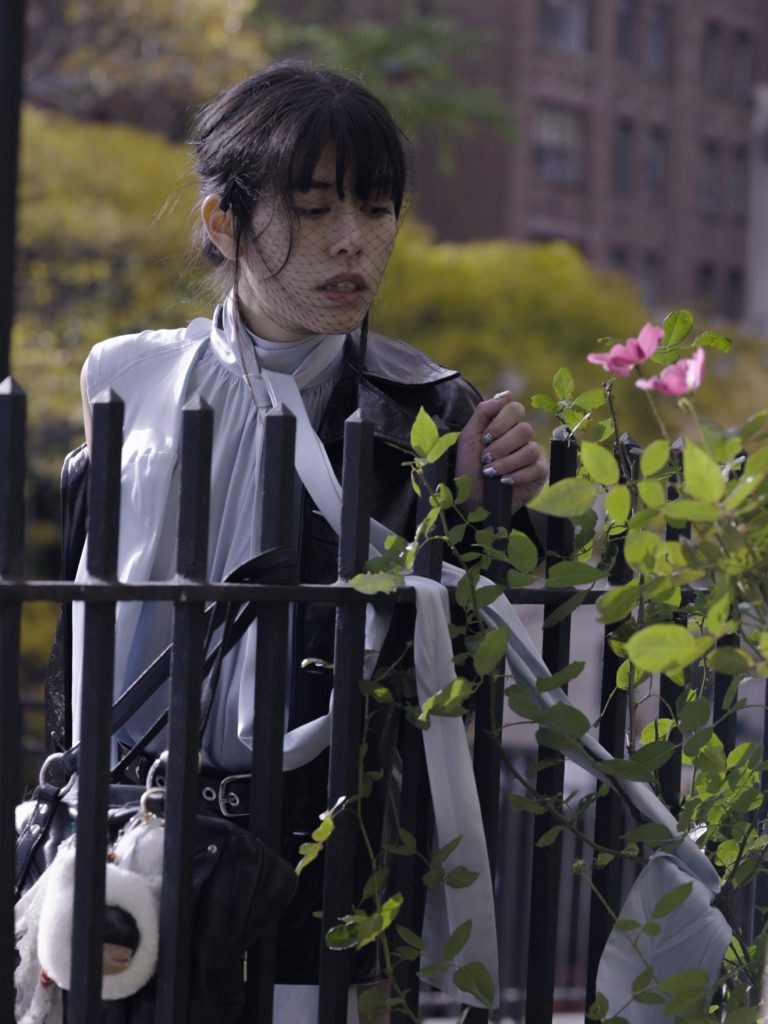
At the same time, I turned myself into an alien object. I was aware that I needed to be Asian — at least, half — to write this book. There’s a humiliating imperative to market your work through your identity or personal experiences — you can refuse but not escape it. A female character written by a woman will be read as a cipher for the author herself. You can ignore this, sure, but… in the time of personal social media, the distribution mechanism and context through which your work is received is yourself, and I’m not sure you can think of yourself as a serious artist if you fail to consider and integrate these “exterior” realities into your work aesthetically. So implicitly racializing myself through Lovely Limei was a way to give everyone what they want (including myself) — but also show them what they want, and to mock these desires, and, above all, mock myself.
JW: Exactly, this is another way of describing hysteria: understanding that you live in a trap. There’s no outside: at best, you work at the limit — which is what you do.
OKS: Yes, there’s no outside. Which also means there’s no inside. What is scary and beautiful about language is that it comes, originally, from outside. Romance novels fascinate me because their generic plots expose the universality of readers’ personal fantasies. Fan fictions, inversely, express private, individual relationships to shared aesthetic objects or characters, like the name/brand of “Kendall Jenner.” Proper fanfiction is something between “folk” and “outsider” literature: simultaneously an intervention into the collective cultural consciousness and, usually, a story that is bizarre and idiosyncratic, produced by amateur writers marginalized by both the literary industry and society at large.
LPB isn’t fanfic in this sense, because Diane’s film isn’t a mass-media object. But it’s an interpretation and transformation of her work — I think fan fiction is an aesthetic form of criticism.
JW: Do you want to talk more about Orientalism? The book is “Chinese,” in quotes: there’s the Mandarin translation of your text on the left-hand page, Confucian proverbs, the reference to Mao’s Little Red Book, the “bad English” of the prose itself…
OKS: Yes, and the overly flowery lyrical imagery. This idea of “bad English” also speaks to the subtitle: “a bad, bad novel.” I’m an editor; I know the rules of “good” writing: don’t use adverbs or alliteration or stupid long similes — definitely don’t double words. Be economical; don’t luxuriate; don’t self-indulge. The book became an experiment in inventing a “calligraphic” language that broke as many stylistic conventions of anglophone literary fiction as possible, an “Oriental English” that is grammatically correct but aesthetically alien. I wanted simple adjectives like “sweet” or “sad” to feel foreign: plastered on like stickers; “put on,” like a performance or a T-shirt. So I studied AliExpress products, amateur translations of Chinese e-novels, boba tea ads in Chinatown, and cocktail menus in Shanghai, trying to refine the aesthetic logic of these vernacular texts into a literary style.
JW: The question for analysts with hysterics is: How do you stop being an object? The answer Freud found was a change of discourse: a place where things can become quieter. I think your book does this. Halfway through, it begins to fragment: the character disappears completely within the literary artifice. By the end, you feel like you’re touching something behind the scenes.
OKS: Right, the novel ends with a table of contents, a list of chapter titles for the book’s sequel: suggesting the outlines of a story that the reader automatically begins to fill in herself. There is nothing hidden to be discovered in my text — “behind the scenes” is only the reader’s own imagination.
JW: For Wajcman, hysteria takes the form of a question. What was your question, with this book?
OKS: My work is always about the desire for meaning or creation or reproduction, because the question that animates it is always: Why do I want to write? Which cannot be answered. Half of LPB is printed in Mandarin, which I can’t even read — and that’s only the symbolic blind spot. Writing isn’t exciting to me unless it produces a sense of danger or unease. I tried to write a book so stupid and obvious — even the title, Little Pink Book, is so dumb — that it makes itself genuinely vulnerable. You have to risk something, personally and aesthetically, to be generous to the reader. Especially because I approach writing so conceptually. The text should be self-sabotaging and unresolved. No one really wants to read a book where the author knows what she’s doing!
Artist: Olivia Kan-Sperling
Photographer: Diane Severin Nguyen
Creative Direction: Alessio Avventuroso
Styling: Ketevan Gvaramadze
Production: Flash Art Studios
Clothes: Commission
Location: New York City