Here in these parts, flocks of grazing sheep are daubed in bile yellow or scarlet red paint to demarcate property: that of the farmer, or of the male sheep who has fucked and thus inseminated the female, leaving a streak of paint from his underside on her rump. In “Down Country”(2025), a photographic project compiled into a forthcoming book, Eloise Parry draws out these synthetic seams within rural space — space associated with the natural world. As someone who works on the land, I, like Parry, am wary of our conception of nature as something distinct from ourselves and the world at large.
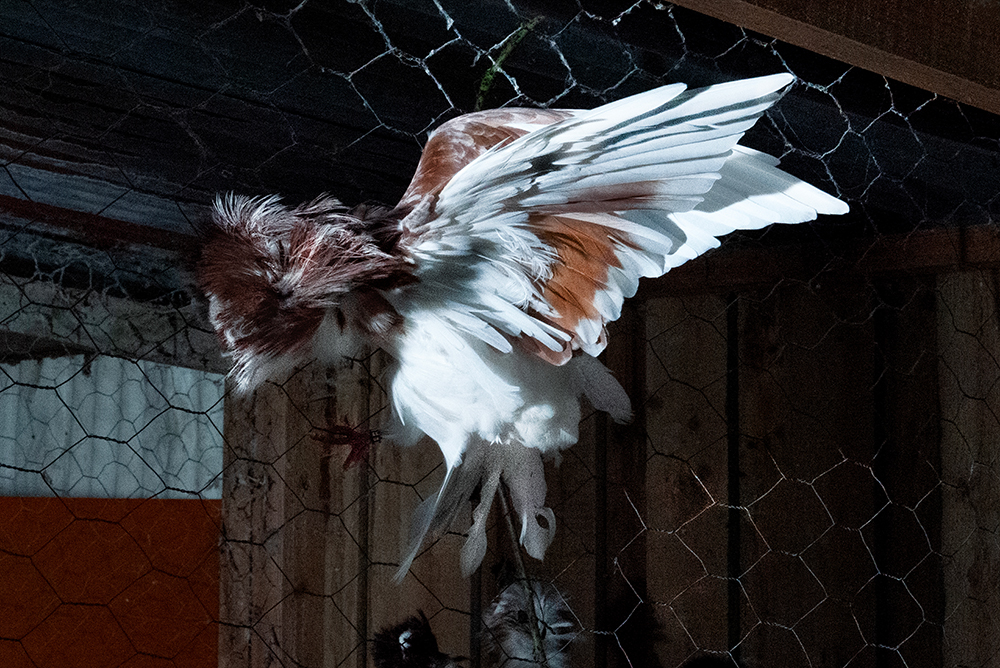
In 2020, Parry relocated to Cornwall and, over the course of three years, photographed its inhabitants. Through her heightened color photographs, exploiting high and long exposures, she reminds us that man’s imprint is everywhere: on the rump of an acid-yellow sheep; on a calf as it suckles from its mother under the artificial and stimulating lights of a livestock barn. It is imprinted on farm animals domesticated into the home and on the birds that are caged and curbed from taking flight. Crucially, these images are not romantic depictions of rural life — as twee and wholesome — but nor do they fetishize working lives — as cursive and messy. Conceived by wealthy, educated men from the city, the pastoral became an enduring genre for art and literature, imagining rurality from a distance. Parry’s images get up close, capturing the intimacies of a calf suckling his mother, its watery eyes both tender and vulnerable, the foaming and fleshy udders a stark reminder of our shared primality.
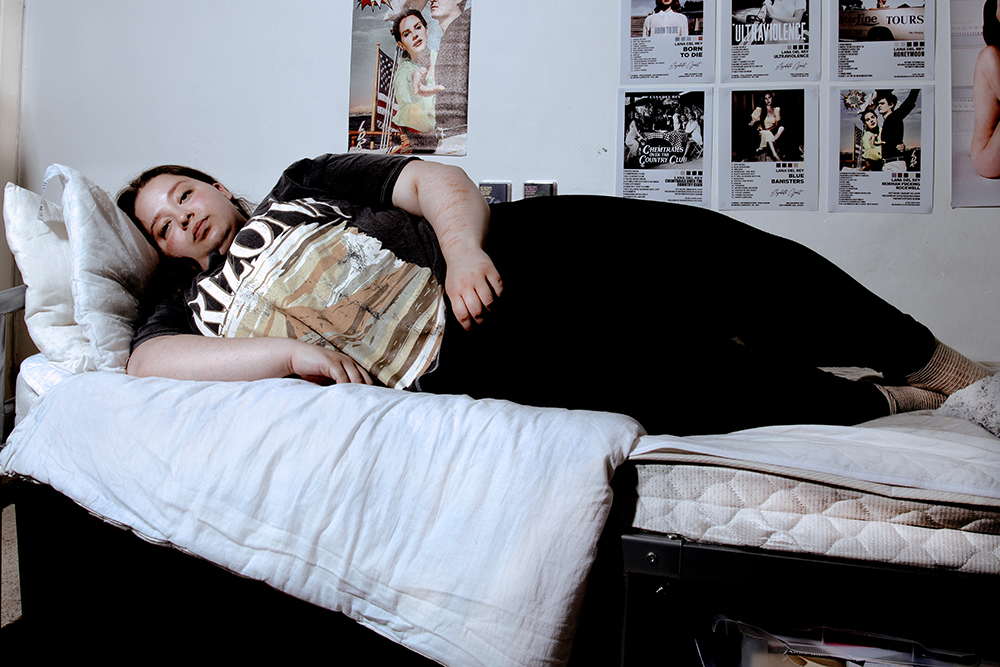
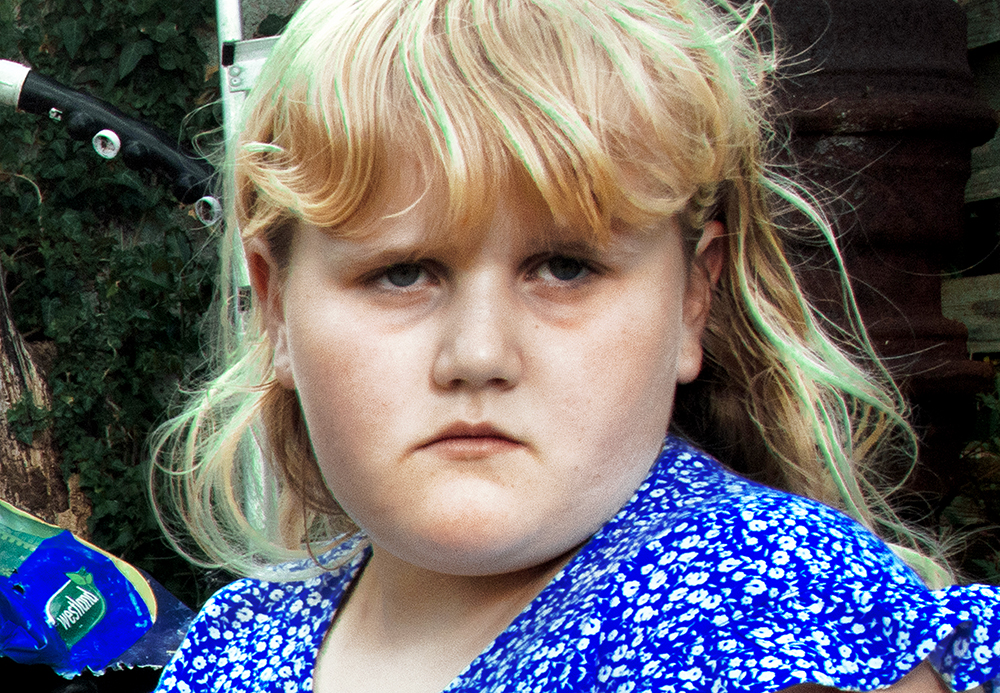
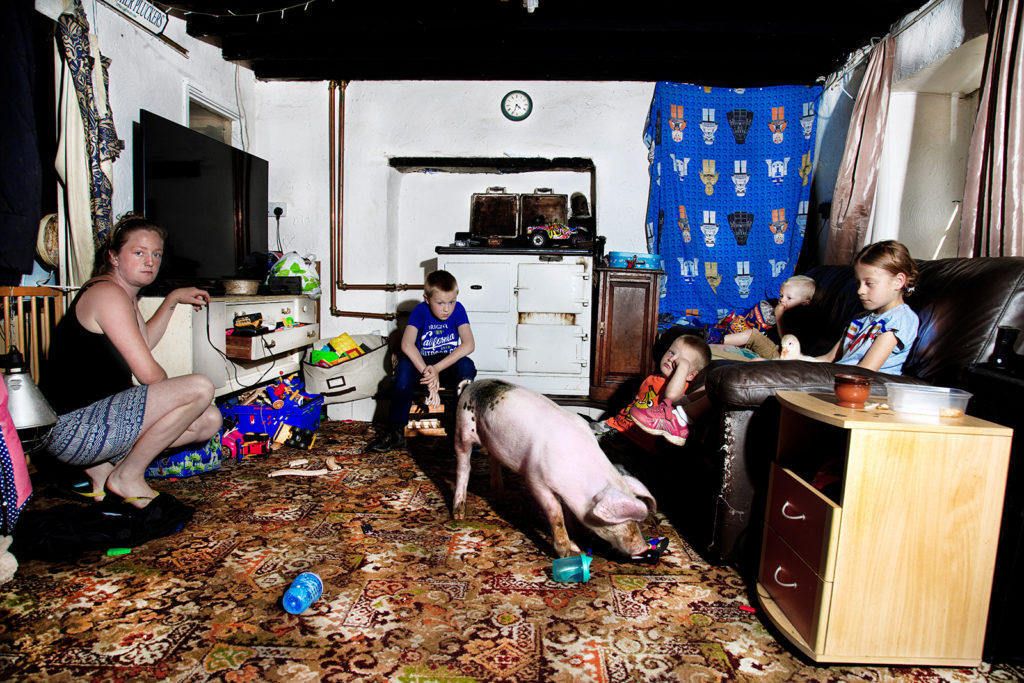
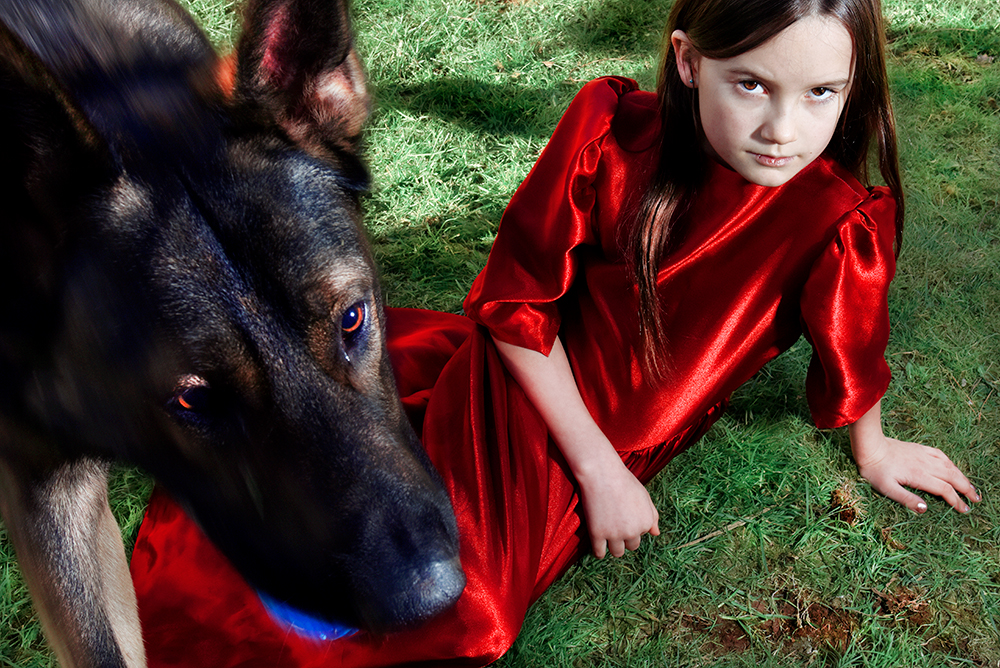
“Down Country” subverts bucolic imagery and the social hierarchies it upholds. She lets children and animals dominate the frame: a toddler smeared in paint, a small boy with postbox-red hair poised on a mini motocross bike, twin girls in matching blue tea dresses perched on a shabby sofa, a girl with her dog, a girl with a little yellow chick on her shoulder, an adolescent girl in her bedroom, a domesticated pig snuffling around sofas and children’s toys inside a house. Rather than inciting a cacophonous frenzy, Parry’s subjects bring a stillness to her compositions as they look directly at the camera — meeting our gaze. Their penetrative expressions demand something of us and capture what is complex about modern rurality.
Expansive green pastures are traded for interior and domestic spaces: livestock barns, family living rooms, teenage bedrooms. In one tableau — the term itself a diminutive of “table,” demonstrating a long tradition in art of subjects gathered at tables, from The Last Supper to Carrie Mae Weems’s “Kitchen Table Series”(1990) — three children, and a pony, are poised around a kitchen table. Rendered with the same attentive gazes found in a domestic portrait by the Le Nain brothers of seventeenth-century France, the children peer into the camera. A farmhouse loaf, cream, and jam sit resolutely on the farmhouse table between them. The composition draws directly from a romanticized version of country living, while the children’s saccharine toweling robes and dyed red hair propel us forward, into the current moment.
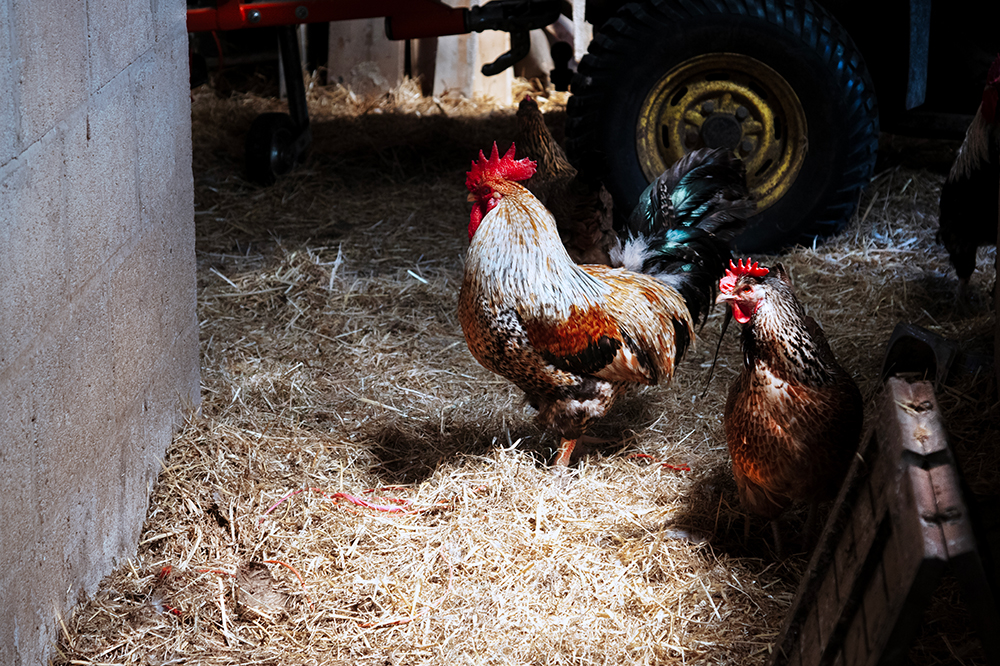
Parry forged a career for herself back in the late 2010s, straddling the frayed edges of fashion and music, working with London creatives from Claire Barrow to Evian Christ, and more recently with brands like Acne and the fiction-focused NYC literary magazine Heavy Traffic. “Down Country”brings a visual language associated with the city to meet the countryside: spray-painted sheep evoke graffitied buildings and underpasses and, in turn, the graphics of street and skate brands; the fluoro lighting of cattle barns conjures dance floors, while the frenzied flight of caged birds imagines a rave gone awry. In “Down Country,” Parry reminds us that natural and built environments are not in fact worlds apart or distinct entities but a single hybrid space.