alfatih doesn’t really do interviews. So, our conversation happened as it could. Talking to alfatih these days means organizing a moment to stop between our endeavors and in various places stretching across time zones. My questions were sent out via voice notes in a chat we had established almost a year ago about interviewing and being interviewed in general: “What to say” and “How to say it.” I recorded from train stations, airports, and sometimes candidly before sleep; his replies arrived from the other side of the world, in the midst of a tour in China. I can hear him as he’s riding a bike or the ambient noise from a train while he’s comparing the journey between Shanghai and Beijing to commutes he’s taken in Switzerland, where he’s based. What we’ve accumulated for this interview is a series of transcribed voice notes which have been rearranged for coherence.
The interaction for me, my role as interviewer, felt like a lived instantiation of game theory, much like the scenarios alfatih proposes throughout his work. Suddenly, our note exchange evolved into a quest, like navigating one of alfatih’s pared-down kinetics or following the prompts in his found-object sculptures; along with the somnambulant CGI-animated game spaces and videoscapes in his installations, he creates situations in which the audience is confronted with (or encouraged to make) a choice.
My line of questioning became interdependent on what I anticipated in alfatih’s response. What could be used to move closer to the endgame? Are there latent variables? Any cheat codes? This back and forth illuminated the elaborate rationality across alfatih’s work, based on methodologies for gaming complex systems, their underlying tensions, and the potentially objectionable outcomes (or value). These are the same precepts that deliberately govern and control international relations, arms races, voting systems, algorithms, political economies, evolutionary theories, urban development, and so on, designed to reward strategic thinking.
Voice Note 1 [Jazmina]
Hey, I’m resending the last voice note I deleted. I’m late because I had to jump on the last train from Turin to Milan today… I forgot I had a flight the next day. So, it’s been a bit hectic, and I couldn’t send this question to you until now.
While I was on the train, I was thinking about what questions to ask you. I realized that the very experience of sitting on the train had become the backdrop to your 2024 hallucinatory video work switzerland. What is it that happens to you when you’re traveling between cities in Switzerland, where the “window seat panoramic” appears to be industriously curated?
Voice Note 2 [alfatih]
Hey, it’s good to hear from you. I can’t recall exactly what happens when I’m traveling by train in Switzerland, because the last time was maybe over six months ago. I have the memory of a goldfish when it comes to remembering feelings.
Though right now, I’m on a train from Beijing to Shanghai as I listen to your message. I’m mainly focused on the sun. It’s been relatively low on the horizon for the past few hours. First, it appeared as a yellow halo behind the fog. Then, at golden hour, it bathed the train’s interior with a strong orange light, and moving shadows were projected onto the seats. Before setting, [the sun] turned into a larger disk with sharp edges. It was red, like the persimmon fruit I’m eating, which my friend Xiaoming offered me before I left Beijing.
Trains offer time to process things, whatever has come my way.
Voice Note 3 [Jazmina]
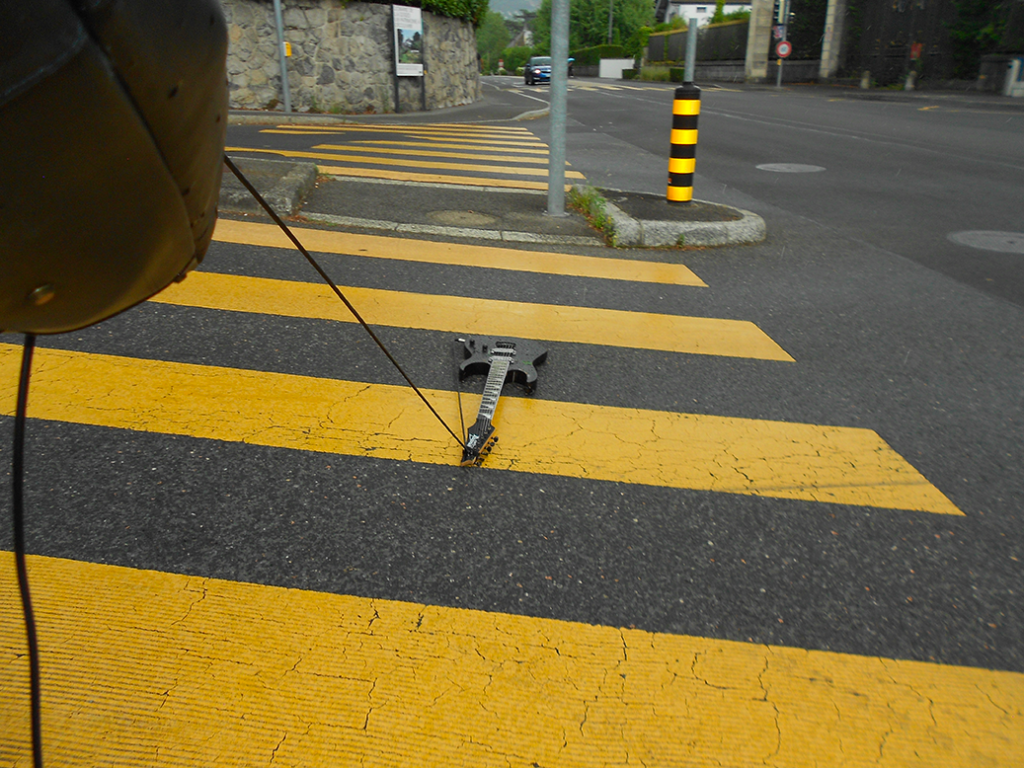
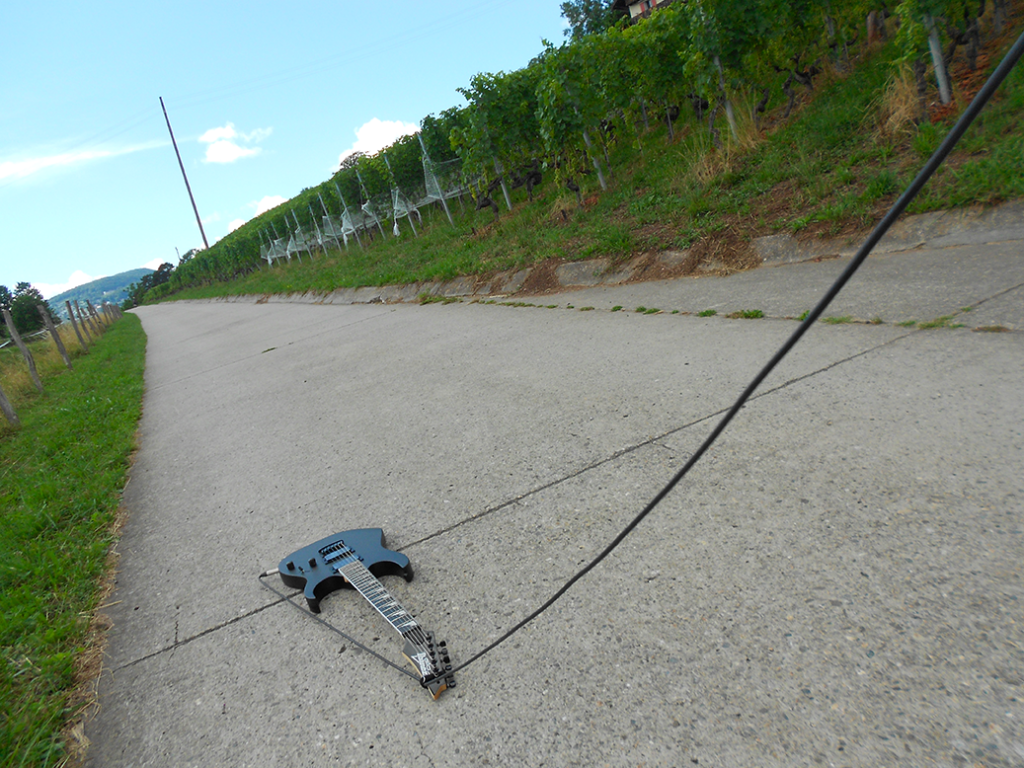
By the way, did you know that Nietzsche had a breakdown in Turin after he saw someone whipping a horse? I think that’s the story. This story resonates with your research at Le Becque, Songs for a Horse on a
G string, you described it as an, “interest extended to the decline of horses in agriculture, transport, and heavy-duty labor following the Industrial Revolution, and to the rise of the ‘leisure horse’ in Western countries like the USA, Canada, Belgium, Switzerland, and France.”
Voice Note 4 [Jazmina]
I meant to say Music for Horses on the G string, 2025.
Voice Note 5 [alfatih]
Hey, I’m riding a horse up the mountain in Yunnan province. It’s a breed that once carried tea along the Silk Road. I’ll reply to you later.
Voice Note 6 [alfatih]
Yes, I’m aware of Nietzsche’s story and the film The Turin Horse (2011) by Béla Tarr. I actually tried to watch it during my residency at La Becque, and wanted to create an ideal projection room to screen it under the best possible conditions. I refused to watch it any other way — sometimes I have very stubborn fixations like that.
With summer hours, this meant I had to start the screening around 10 PM, when there was no sunlight or ambient light, to keep the room perfectly dark. The problem is that when I start watching slow films very late, I tend to fall asleep easily, and so I did. The next day, I wanted to watch the film from the beginning, rather than picking it up from where I had fallen asleep. That, too, was another of my stubborn fixations. I wanted to really sit through the whole film from beginning to end, and not watch it in fragments.
Some games operate in a similar, almost masochistic way, where you have to start again from the beginning each time you die, instead of resurrecting. So yeah, I fell asleep again, and I repeated this for a few days. Each time, I kept falling asleep until I finally gave up. I ended up watching the beginning on repeat. There is this iconic opening shot where a horse is pulling a cab with a man through the snow. It’s a stunning and intense image that stayed with me. It became instrumental while I was working on Music for Horses on the G string.
This happens quite often: I extrapolate from an incomplete experience or misread something, and use it as a foundation to build on.
Voice Note 7 [Jazmina]
The next question is, maybe it has more to do with the status of an artist and how that sort of functions for you in your work. What do you, or how do you see the status of an artist, and why is it important for you to address this?
Voice Note 8 [alfatih]
No comment.
Voice Note 9 [Jazmina]
And what have you been up to in Shanghai these days? You’ve been traveling a bit, but maybe you can share some ideas you’re working on with me, since you’re seven hours ahead of me, and I won’t see your response for a while.
Voice Note 10 [Jazmina]
I’m about to go to sleep, but I’ll send more questions when I’m at the airport.
Voice Note 11 [alfatih]
Before coming to China, I was reading about kite flying as a leisure activity and a form of play. I thought it would be a good start for a new work, given that kite flying has its origins here. It would also extend my interest in play and games.
I’ve seen a few kites being flown in parks, and a few more tangled in tree branches. I have seen drones as well. Some people were flying them in parks and even in places with clear signs reading “NO DRONES ALLOWED.” I’m aware that in some areas, food delivery is carried out by small drones, though I haven’t witnessed it.
As the research progressed, I started drawing some parallels between kites and drones: for example, the kite festival in Weifang (the kite city) and the drone shows in Chongqing. Later, I looked into their use in warfare, notably through sound. Kites were reportedly used to frighten enemies with devices that vibrated in the wind and produced loud sounds (an aeolian or “wind” harp, essentially). For drones, the buzzing sound is often used to exert psychological pressure when they are flown over people for extended periods of time. Speakers are also attached to create more targeted effects. I’m currently looking into this.
Voice Note 12 [Jazmina]
Hey, it’s nice to hear from you again. I just got to your voice notes only after a long day of travel, and now I’m sitting at dinner with a follow-up question.
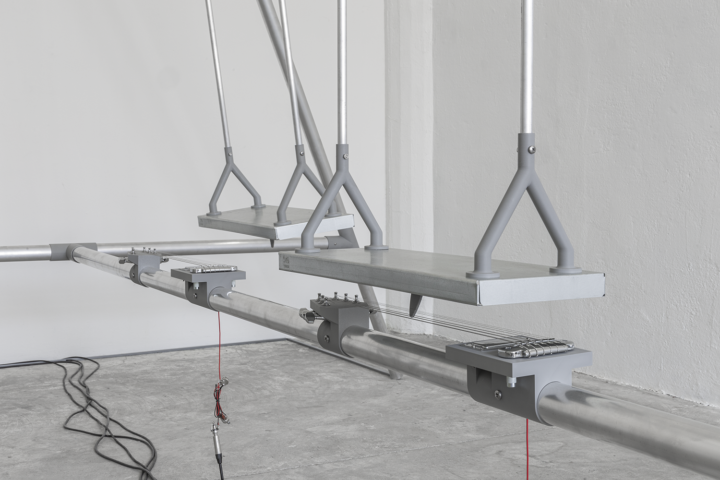
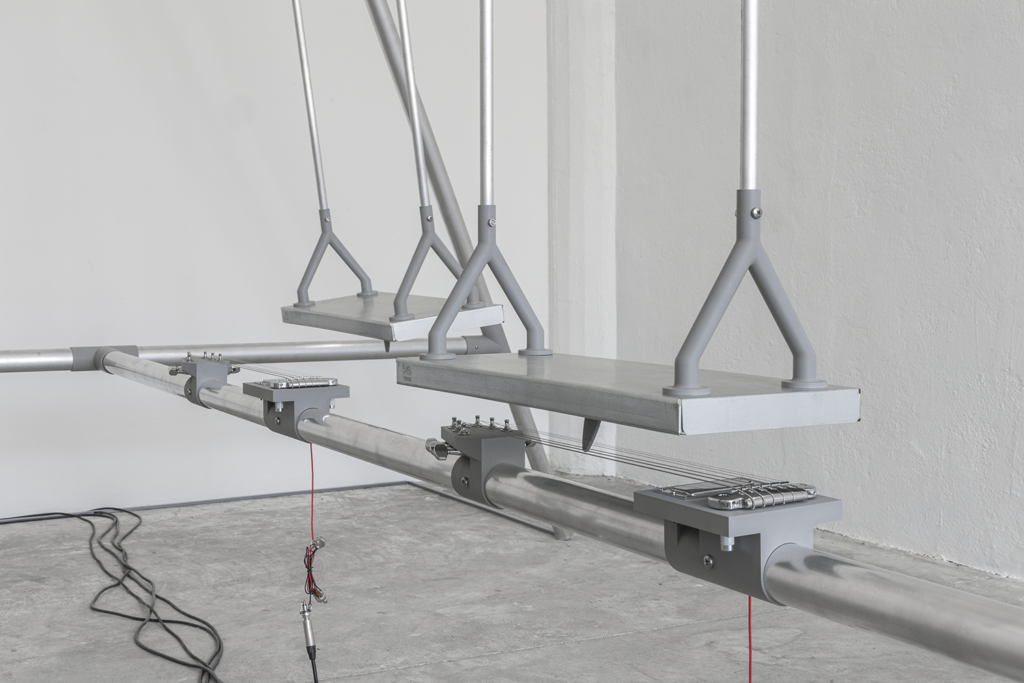
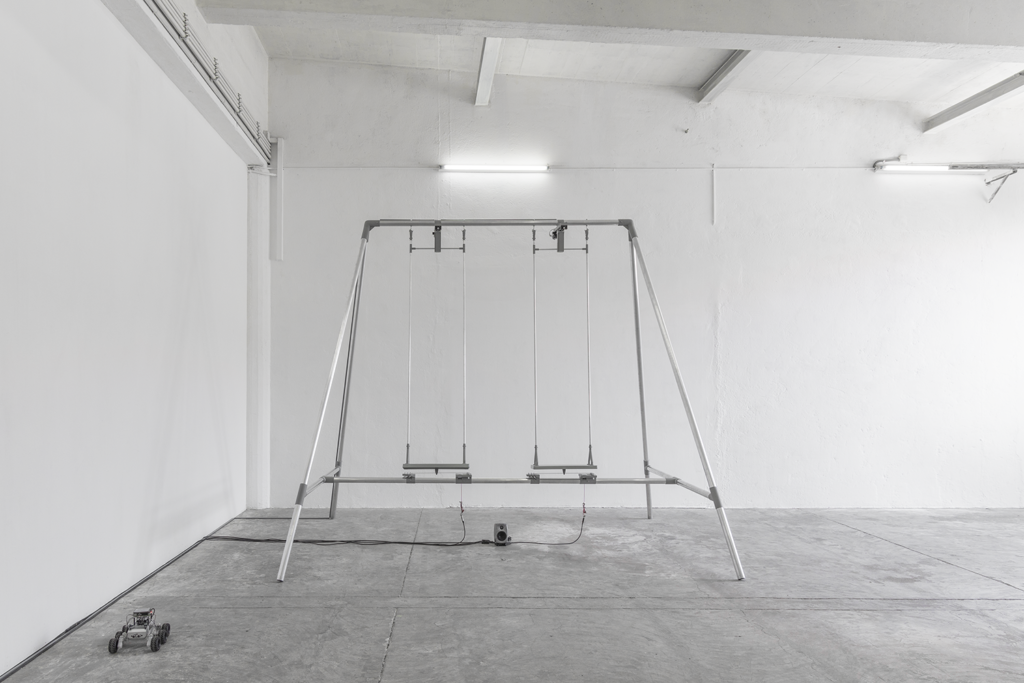
I see a strong through line in your work, particularly in pieces like ssloop.enterprises, (2025) (a literal videogame with a cooling system made up of your own blood), and Looking Good as the World Falls Apart, 2024 (mechanical swing as a system processing its own motion and sound by strumming), where you bring together ideas of gameplay and machine logic. Could you speak to the human element of play and machine systems?
Voice Note 13 [alfatih]
Hey, thank you for the message. I’m back in Shanghai now, my friends went to get a massage, so this gives me time to record this audio, sitting in one of the countless latte shops.
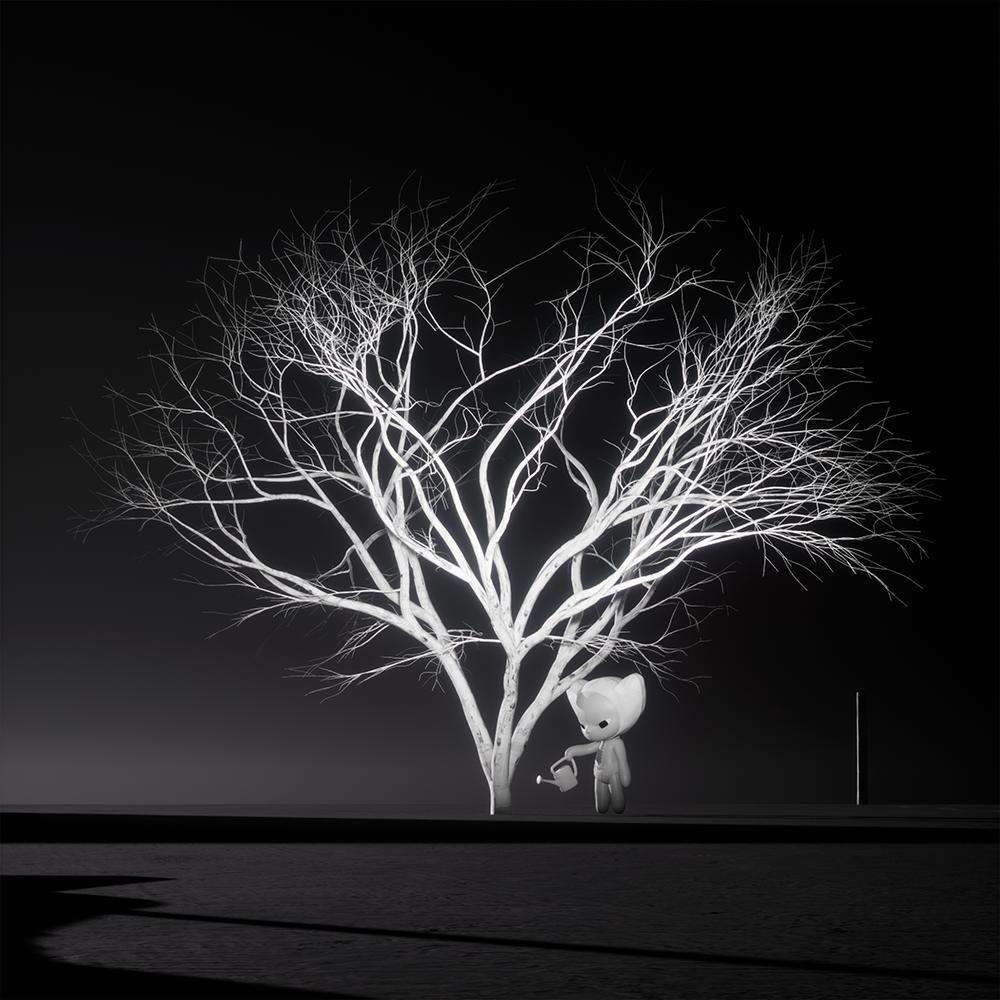
Yeah, that’s a pretty loaded question, and the answer could be very long, so I’ll keep it short. What interests me in games is that, as a player, you submit yourself to a set of rules within a limited time and space. You can experiment and explore new ways of being an agent. When you assume different roles, like parent or child [See: A Way out of Time, 2024, in reference to the architectures of control we navigate daily], there are social and agential implications.
The toolkit game designers use to sculpt the player’s agency is, in the end, made up of visuals, sound, and storytelling. I’m not making games or developing gameplay in the literal sense. Still, I use the language of art and the prescriptions of artworks, whether they be videos, sculptures, kinetic works, or through the use of infrastructure—sometimes I will intervene or simply use it as is [See: Day in the Life, 2023]. This includes using text to give instructions or purposely mislead, or to issue directives to gallery attendants.
All these sets of tools allow me to influence behavior in time and space. These tools shape how people act in a specific place and moment. This way of working shares links with fields such as architecture, governance, and design. I’m interested in soft power and how that functions, through subtle means. I wouldn’t call it manipulation because it’s not coercive, though there are proven strategies that guide or influence.
ssloop.enterprises is an exception where I tried to make a game in the literal sense. In that case, it was all about how a game can be presented in an art museum.
Voice Note 14 [alfatih]
I’m sending a voice note, not because I’m replying to something, but just because I can’t text while riding a bike. Red lights. Oops, almost got run over. No, I’m good. Bye-bye.